

March 18, 2026, 4:28 pm | Read time: 4 minutes
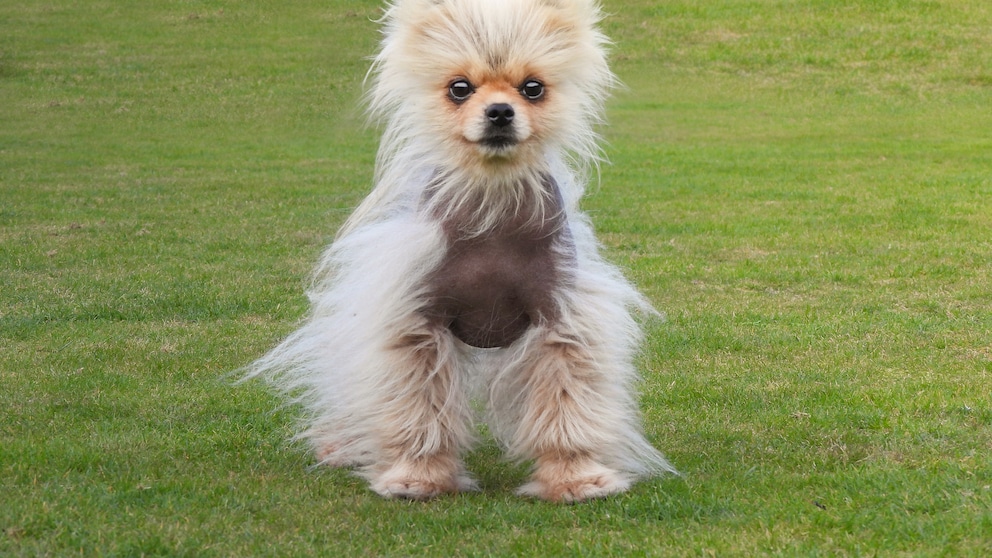
Initially, it primarily affected Pomeranians with their fluffy, extremely thick coats. The small Pomeranians suddenly lost their splendor and became bald in places. They became the epitome of “Alopecia X,” the so-called black skin disease. However, poodles and all breeds with undercoats and lots of fur are now affected. The diagnosis still raises many questions for owners. PETBOOK author Manuela Lieflaender herself had a Pomeranian and frequently exchanged views with breeders who have been observing the phenomenon with concern for decades.
Dogs with “Double” Coats Especially Affected
It often begins quite inconspicuously. First, the hair around the collar breaks a little, then the “pants” on the hind legs thin out. What many owners initially think is an extreme shedding often turns out to be Alopecia X—also known as black skin disease. A phenomenon that primarily affects dogs with dense, double coats.
I still remember how an experienced breeder told me that she saw the first bald Pomeranian female in Holland in 1994. Back then, no one knew what kind of disease it was. Today, it is known that dogs bred for maximum “plush” are particularly at risk. The fur of affected dogs often feels hard, straw-like, and dry.
Hormones, Genes, or Too Much Fur?
Many breeders now have an interesting theory: Due to the enormous undercoat, hardly any oxygen reaches the skin. It literally can’t breathe. When sunlight hits the bare spots, the skin thickens and darkens—a natural protective mechanism that makes it even harder for new hairs to break through.
The search for causes is like detective work. There are already studies that have examined the relationship between coat condition and Alopecia X. However, they mainly showed a difference in the condition of individual hairs. These were particularly fragile in Pomeranians with black skin disease. The so-called trichorrhexis nodosa, a common hair shaft anomaly characterized by brittle, dull hair with small, white nodules, was also particularly high in the group of Alopecia X dogs.1
Hormones as a Key Factor
It is clear: It is often a hormonal imbalance. Researchers have long suspected an altered steroid hormone metabolism as the cause of Alopecia X. But it wasn’t until 2017 that a study could show a first verifiable connection. The researchers compared samples from affected Pomeranians with those of healthy dogs and found evidence that estrogen metabolism in the skin is regulated differently. 2
Many affected dogs also suffer from an (often undiagnosed) thyroid underfunction. According to breeders, Pomeranians have an increased iodine requirement, which is often not met by regular dry food. Many, therefore, recommend supplementing with seaweed powder. But diet is just one piece of the puzzle.
Winter Coat Care: How to Support Pets During Shedding Season

Why Adidas’ World Cup Jerseys for Dogs Are a No-Go
The Crux of Beauty
The biggest problem lies in genetics. Since Alopecia X often only appears at the age of five or later, many males have already won prizes at shows and passed on their genes by then. According to breeders, you see award-winning stud dogs that suddenly become bald. These dogs should actually be removed from breeding immediately. But even if that happens, several matings have already occurred by then, and the trait has been unknowingly passed on.
What Really Helps?
For those already affected: Anyone hoping for a miracle cure is often disappointed. Whether special shampoos, oils, or neutering—many methods only bring short-term success. The hair comes back fluffy, only to fall out again soon after. The problem seems to be genetically rooted and not changeable through diet or external influences.
According to studies, a thorough medical history, a dermatological examination, and targeted diagnostics are essential to guide treatment and achieve a prognosis. In most cases, the use of mild lotions, ointments, and dusting powders is helpful to relieve itching and promote healing.3
What you can do for your dog:
- Protection: Bald dogs need sun protection in the summer and a soft sweater in the winter (or at night) to prevent the skin from becoming too hard.
- Care: Regular oiling keeps the skin supple.
- Acceptance: “You should just accept that the dog is bald,” say breeders. The most important thing is: Alopecia X is a cosmetic flaw, but not a painful disease. Your dog remains the same happy companion—even without plush.
If you are looking for a Pomeranian puppy, specifically ask about cases of alopecia in the lineage and ensure that selection was not based solely on “extremely thick fur.” Health shines brighter than any trophy.