


May 5, 2026, 9:01 am | Read time: 5 minutes
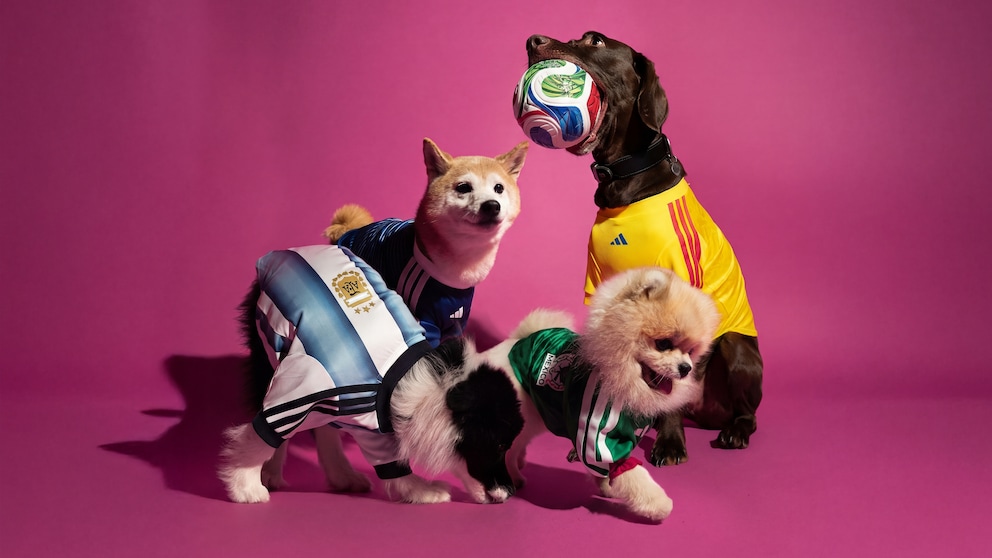
For the World Cup, Adidas is launching jerseys for dogs, sparking discussions. Many see the outfits as harmless, as they are not costumes but classic dog clothing. However, PETBOOK editor and biologist Saskia Schneider views the trend critically: Especially in summer and without functional use, jerseys for dogs can become problematic. Why she considers dogs in jerseys a no-go, what risks exist particularly for dogs with thick fur, and what the campaign fundamentally says about our relationship with pets is her clear opinion.
Why at All?
First, a brief disclaimer: No, a jersey is not a costume. I’m not talking about wings, hats, or other accessories that massively restrict a dog’s movement. Objectively, it’s classic dog clothing—comparable to coats or jackets that many animals wear daily. And: The promotional images do not show that the dogs are restricted in their movement.
Still, the central question for me remains: why at all?
Clothing Only if It Benefits the Dog
Dog clothing can be useful—no question. Short-haired or sick animals benefit from protection against cold, rain, or intense sun. In such cases, it is justified to gently accustom the dog to clothing, even if they may not like it at first.
A soccer jersey, however, serves no functional purpose. It is purely fashion. And this is where the problem begins: It tempts people to dress dogs for purely aesthetic reasons—regardless of whether they feel comfortable.
Even if a dog tolerates or is accustomed to clothing, the context remains crucial. The World Cup takes place in summer, a time when heat is already an issue. Additional clothing can quickly become a burden.
Especially Risky for Dogs With Long Fur
What many don’t know: Long-haired dogs are particularly sensitive to additional clothing. Many have a so-called double coat—consisting of guard hair and dense undercoat. This fur has an important function: It insulates not only against cold but also against heat.
For this natural “climate protection” to work, air circulation is needed. If the fur is compressed by tight clothing like a jersey, this effect can be disrupted. The result: heat builds up.
Especially critical: A double coat is not only found in obviously long-haired breeds. Even in dogs where it is not immediately apparent, this fur structure is common. The risk is often underestimated.
More Than Just a Heat Issue
Heat buildup is the most drastic scenario—but not the only problem. Many dogs simply feel uncomfortable in clothing. They move differently, communicate differently, or appear insecure because wearing it is unfamiliar.
Why take such a risk? For a mere fashion accessory?
Even Pomeranians Are Now Considered a Breed With Health Issues
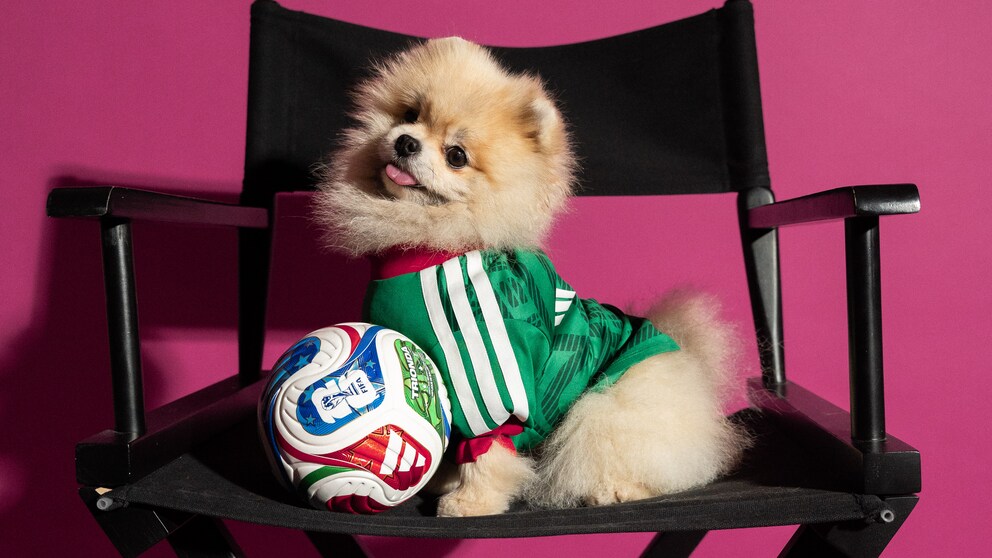
To be fair, the dogs in the Adidas campaign show no obvious signs of stress. This is not surprising—they are likely animals accustomed to photo shoots and have no problem with clothing.
It is also worth noting that Adidas has avoided using classic breeds with health issues like pugs or French bulldogs, which often appear in advertising.
However, among the dogs is a Pomeranian that appears very small. This breed is also increasingly viewed critically. The main reason is the so-called “Chiari-like malformation (CLM).” This is a congenital skull malformation where parts of the cerebellum are pushed toward the spinal cord. This can lead to pain and numbness. Studies show that over half of all Pomeranians are now affected.1
Dogs Are Not Fan Merchandise
What bothers me most about the campaign is the message behind it. Let’s not kid ourselves: These products are not made for dogs. They are made for people.
A dog gains no benefit from wearing a jersey. For us humans, however, it becomes part of a staging—a fan item.
I find this problematic. Dogs are living beings with their own needs, not accessories to be styled for a soccer evening. A large corporation should especially consider what image of pet ownership it wants to convey.

German Playmate of the Year also undresses for Peta

Editor: ‘My best tips for walking dogs in high temperatures’
Why Not Fan Merchandise That Also Benefits Dogs?
There are plenty of sensible alternatives. Why not develop fan merchandise that also benefits the dog? High-quality collars, well-designed toys, sturdy balls, or cozy blankets in team colors—all of this is possible.
This way, owners could show their enthusiasm without forcing the animal into an unnatural role.
Conclusion: Dogs Don’t Need Jerseys
World Cup jerseys for dogs may seem harmless at first glance. But they promote a development that should be viewed critically: the increasing anthropomorphism of pets and their portrayal as accessories.
Especially in summer, with high temperatures, additional clothing for dogs is simply unnecessary and potentially even dangerous.
In other words: If you really want to do something good for your dog, leave the jersey in the closet.