

April 23, 2026, 3:39 pm | Read time: 5 minutes
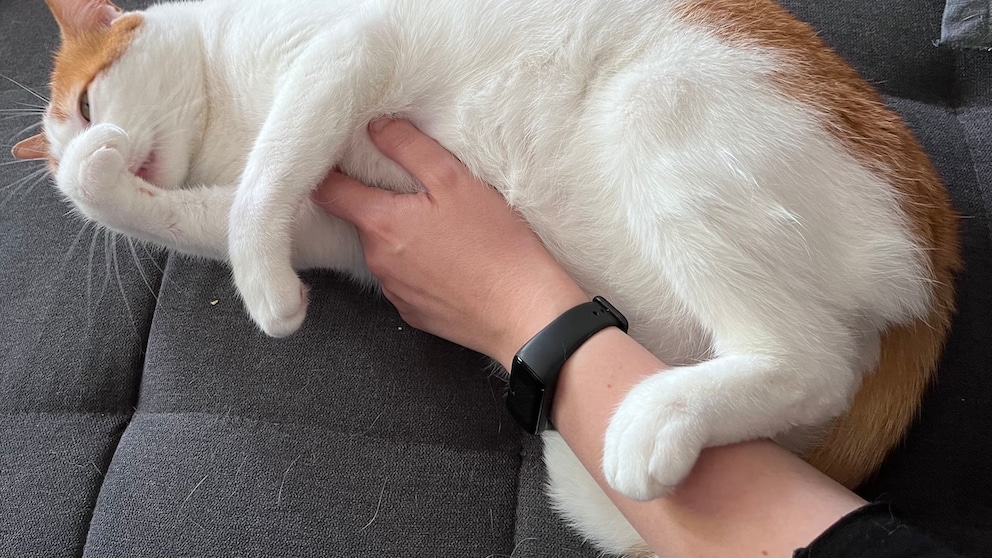
Anyone who watches their cat grooming knows the scene: Alongside extensive licking, the cat suddenly bites into its fur, nibbles briefly, and then seemingly continues relaxed. For many owners, this behavior is puzzling. In many cases, it’s completely normal—but it can also indicate that something is wrong. PETBOOK editor and cat expert Louisa Stoeffler explains the behavior.
When Grooming Gets a Bit “Bitey”
It’s 4 a.m., everything is quiet—until suddenly a soft but very distinct snip-snip-snip sounds next to your head. Cat Remo has decided that now is the perfect time for a particularly thorough grooming session. And it involves not just elegant licking but also devoted fur-biting—with the corresponding noise. Many cat owners are familiar with this habit and sooner or later wonder: Is this actually normal, or should I be concerned?
The short answer: Yes, cats are allowed to do this. When it comes to their fur, they are indeed little perfectionists. Their rough tongue works like a brush, but for finer work, they also use their teeth. Especially the small incisors at the front of the mouth come into play, acting a bit like built-in hair care tools. Or, if you will: real “comb teeth.”
With these tiny tools, cats pluck and nibble loose hairs from their fur, untangle small knots, and work on areas that the tongue alone can’t reach well. To us, it sometimes looks rough and sounds—especially at night next to the ear—surprisingly loud, but it’s completely normal grooming behavior. At least as long as they remain relaxed and leave their skin alone.
When the Behavior Becomes Noticeable
Especially with dense or longer fur, this nibbling is particularly common. It often appears rough to outsiders, but for the cat, it’s a normal part of grooming—as long as it proceeds calmly and controlled, and the skin remains uninjured.
It becomes noticeable only when the nature of the grooming changes. If occasional combing turns into almost frantic nibbling or the cat repeatedly works on the same spot, it’s worth taking a closer look. If the cat grooms significantly more than usual or repeatedly focuses on the same body areas, this suggests it’s not normal behavior.
Even small details are important: Does the cat seem restless? Does she hardly stop? Can you interrupt her behavior, or is she solely focused on it? Are there even bald spots in the fur? Then it’s no longer cosmetic fine-tuning but rather an indication that something is bothering her. In such cases, it’s often not just grooming behind it but a specific trigger the cat is trying to alleviate.
Itchiness as a Common Trigger
Itchiness is often behind fur-biting. Parasites like fleas or mites are classic causes. Even a minor infestation can be enough to severely irritate the skin. The cat then tries to reach the affected areas with her teeth because the tongue alone isn’t enough to relieve the uncomfortable feeling.
Typically, the back, flanks, or the area at the base of the tail are affected. For owners, the problem isn’t always immediately visible—fleas are easily overlooked, especially in cats with black, long, or heavily patterned fur.
Allergies and Skin Irritations
Besides parasites, allergies can also lead to cats biting their fur. The skin reacts hypersensitively to certain substances, such as those found in food or the environment. A flea saliva allergy is also widespread and causes severe itchiness, even if only a few parasites are present. The skin can be red, scaly, or sensitive in such cases. Some cats also show restlessness or seem generally more irritable.
Pain as an Underestimated Cause
Cats sometimes bite into their fur when they are in pain. This can occur with inflammations, small injuries, or even deeper issues like joint problems.
Especially older animals with arthritis often work on certain body regions more intensively. To outsiders, this initially looks like excessive grooming, but the cat is actually trying to “treat” a painful area.
Stress and Psychological Triggers
The psyche also plays an important role. Cats are sensitive to changes in their environment. A move, new roommates—whether human or animal—or even prolonged boredom can trigger stress.
Some cats then start grooming excessively. Biting into the fur becomes a kind of outlet to relieve inner tension. In pronounced cases, this can develop into a condition known as psychogenic alopecia (also known as FSA), where the animals groom themselves bald.
How Fleas Differ Among Humans, Dogs, and Cats and Whether They Are Transmissible

My Dog Has Fleas! What Can I Do?
When to Take Action
The key is not the behavior itself but its intensity and development. As long as the cat grooms calmly and no changes to the skin or fur are visible, there’s usually no reason for concern.
However, once bald spots appear, the skin looks irritated, or grooming significantly increases, the cause should be clarified by a veterinarian. Both parasites and allergies or pain can usually be treated well—provided they are recognized.
Conclusion
A cat biting into its fur while grooming is part of its normal repertoire. With its small incisors, it goes about it with remarkable precision—almost like using a mini-comb.
It’s different when something changes. If the “comb teeth” are suddenly constantly used, the cat seems stressed, or the fur shows bald spots, it’s time to take a closer look—and if in doubt, have a vet check it out.