

August 4, 2026, 4:06 am | Read time: 4 minutes
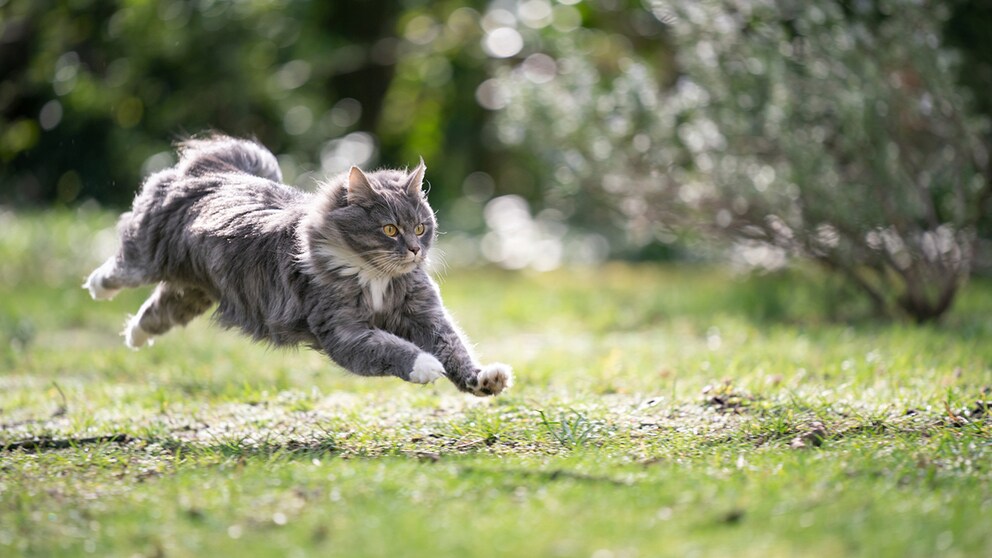
One moment the cat is dozing peacefully, the next it’s racing crazily through the living room. The so-called “zoomies” often leave owners puzzled. PETBOOK explains why cats have these spontaneous bursts of energy.
What Causes “Zoomies” in Cats?
“This curious behavior is often observed in cats during the early morning or at dusk,” says Annika Wechmann-Scherbe, who became a cat psychologist a few years ago. “Cats are nocturnal hunters and are at their peak during these times of day,” the expert explains.
Cat Needs to Burn Off Energy
Especially when a cat lives exclusively indoors, it literally releases excess energy. “The wild chase, where the cat seems to be pursuing imaginary prey, flying over the couch with ears back and meowing ecstatically,” says Annika Wechmann-Scherbe. She often observes this behavior when clients seek her out for an explanation of why their cat repeatedly runs wildly through the apartment.
Chasing “Prey”
Even in a multi-cat household, such outbursts can occasionally occur, even if the cats are allowed outside. However, this “going from zero to a hundred” doesn’t happen as often. “You can sometimes observe this behavior when the cat is lying in wait, then suddenly explodes when it leaps to catch its targeted prey,” the cat psychologist notes.
Cat owners may have also noticed their cat jumping up and running through the apartment after using the litter box. Does it dislike its own smell? “At first glance, a cat owner might indeed interpret it that way. However, I would rather suspect it’s a form of relief after using the toilet,” says Wechmann-Scherbe.
Could Illnesses Be Behind Cats’ “Zoomies”?
One should not always take cats’ “zoomies” lightly. The cat might be suffering from itchiness around its rear, possibly due to worms or other parasites. Could it be experiencing sharp pains? If the frenzy usually occurs after using the litter box, a visit to the vet is advisable to determine if the behavior is due to an illness.
Rarely, cats suffer from hyperesthesia syndrome, also known as rolling skin syndrome or running fits. This is a rare neurological disorder. The cat might even attack its own tail, with dilated pupils. Hyperesthesia means hypersensitivity and can be a form of epilepsy. Whether the cat is affected must be determined by a veterinarian.
Dangerous! Expert warns against new cat toy
Do Cats Get Bored When Home Alone?
Solution Through Engagement
If you feel the cat is not properly stimulated and runs wildly through the apartment daily, there are several things you can do to reduce the “zoomies.”
1. Food Games
Usually, more intensive engagement with the cat leads to a decrease in the “wild moments.” Wechmann-Scherbe has a whole range of methods: “Most cats actually suffer from boredom. If you can’t always find the time to play with the cat, it’s a good idea to hide dry food or treats in toys or puzzle boards.” The animal is then occupied for a while with sniffing, fiddling, and catching, which helps satisfy its hunting instinct.
2. Brushing, Massages, and Petting
Most cats enjoy being brushed extensively. A gentle neck massage and affectionate petting of the head also help reduce stress. But be careful: Some cats don’t like being touched on sensitive areas like their paws or belly and may react quite unfavorably.
3. Play, Fun, and Clicker Training
Fishing rods, feathers, balls–all these toys provide great variety for the lively animal. And contrary to the belief that cats can’t be taught tricks like supposedly smarter dogs, “some cats are eager to learn,” says the cat expert. “Clicker training is a great way to create success experiences for both pet and owner–and it also releases happy hormones.” Those interested in delving deeper into clicker training can find instructions online. There is also specialized literature on the subject.
Also interesting: 5 toys to combat cat boredom
Conclusion
Is your cat truly stimulated? Do you know your cat’s needs and adequately meet them? By considering these more in the future, you might find that your cat soon stops running wildly through the apartment as often or even at all.