


November 20, 2025, 6:06 am | Read time: 6 minutes
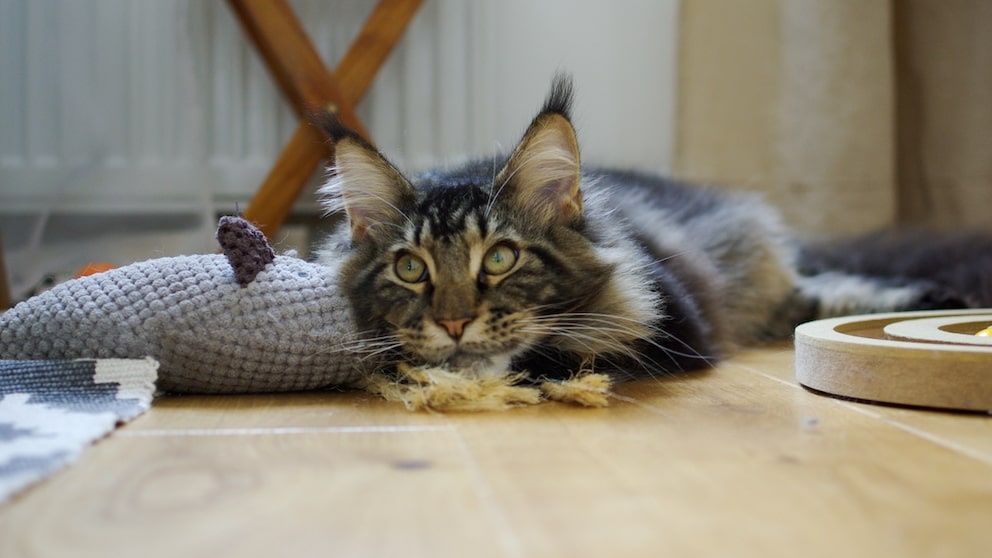
Cats are considered independent–but they also get bored when their humans are out of the house. A toy mouse or a ball often isn’t enough for cats to keep themselves meaningfully occupied. PETBOOK editor Saskia Schneider is an expert in cat behavior and explains why boredom can lead to problems for cats and what can help.
Why Cats Need Engagement
Our house cats no longer have to fend for their meals. On one hand, this is nice because it leaves more time for cuddling–but it also poses the risk of boredom and frustration. The hunting instinct is so deeply rooted in our cats that they engage in it even when they’re full.
In nature, cats would hunt several times a day. A typical daily routine looks like this: wake up, hunt, catch prey, eat, groom, sleep. This means that when we’re not home, our pets don’t sleep the entire time. They wake up occasionally and look for something to do.
When Boredom Becomes a Problem
If cats can’t adequately fulfill their natural needs or find enough outlets, they look elsewhere. Then objects might end up on the floor and break, sofas get scratched, or places are explored where the animals shouldn’t be or that might even put them in danger.
Of course, even cats that are mentally and physically engaged might knock over a flower pot now and then. But boredom leads to frustration and, in the worst case, aggressive behavior. The energy that builds up while the animals are alone can suddenly be released when it’s finally time to play. Then the animals can become very rough and are simply “over the top”–this also applies to interactions with other cats.
Toys–But Please Safe
The simplest way to keep cats occupied at home is with toys. But make sure they’re cat-friendly. Strings, hair ties, or anything the cat can swallow should not be freely accessible. Even fishing rod toys should be securely stored, as there’s a risk the animals could get tangled in them in your absence, panic, and seriously injure themselves or even choke.
Larger balls or toy mice that the cat can chase are well-suited. To keep it interesting, you can swap out or hide the toys daily. This also depends on the personality of the animals, as some cats have favorite toys that can even have a calming effect when their human is absent.
Food Puzzles and Intelligence Games
In my opinion, the best way to keep cats occupied alone is with food games. You don’t have to invest in expensive food puzzles for this. You can quickly create treat hiding spots from toilet paper rolls and a bit of crafting skill. There is now a range of intelligence toys for cats. These can be filled with either toys or treats. It’s important that the cat understands the puzzles or games beforehand. If it’s too difficult, it can be frustrating for the animals.
Hide Treats
Instead of a puzzle mat, you can hide treats in a specific room or throughout the house. Dry food is particularly suitable, but dried chicken strips are also a popular snack. Searching for treats aligns with the cat’s natural behavior, as they typically explore their territory with several excursions a day. Finding something tasty can boost the cat’s confidence and satisfaction and prevent frustration.
Food Dispenser
In nature, cats consume up to twelve small meals. Those who work typically feed their pets twice a day. Why this is problematic is explained in this article. It’s better to offer the animal several meals a day–this is best done with food dispensers and also prevents boredom.
It’s even better if the food isn’t just released or falls from the dispenser into the bowl, but amusingly flies across the floor. This is already possible. There are special pet cameras with treat dispensers that can be operated remotely via an app. This ensures the cat is in the mood for play.
Important: Before leaving the animal alone with the food dispenser, you should gradually acclimate your cat to it, otherwise, it might ignore the dispenser or even become frightened when food suddenly rolls across the floor.
Interactive Games
Technology hasn’t stopped at cat toys, and there are now some useful gadgets. For example, balls that roll around on their own, can be activated by touching with a paw, and even move away from the cat. Wiggling fish or fluttering birds with catnip scent stimulate many animals to play, but are only suitable if the cat isn’t afraid of them and isn’t too destructive. Then play with electronic items should only occur under supervision.
With interactive cat toys, you should also ensure they are varied. A butterfly on a stick that occasionally spins right or left in a circle might be fun for kittens. Adult cats quickly lose interest.
Cat Cinema
Watching birds can also be a meaningful activity for cats. Ideally, the real ones outside the window. But other things happening in the neighborhood are also often observed by the animals–such as the garbage truck or children playing in the yard. If you want to offer your cat extra excitement, you can set up a bird feeder right outside the window.
But beware: You should always keep the window closed in your absence so the animals don’t try to reach the tasty birds through the tilted window.
For some animals, cat TV is also suitable. It’s important to be present initially to observe whether the TV program leads to frustration, as the birds or mice can never be caught. If the animal jumps against the screen, it’s better to avoid this activity. For some animals, it can help if a TV is on–just for the soundscape.

Expert Warns Against These Games for Cats

9 Signs Your Cat Is Bored
Hands Off Laser Pointers and Co.
Many cats are very excited about playing with a laser pointer. There are now interactive toys that generate a laser beam and move it around the room. It’s often advertised that this prevents boredom, which is extremely reckless. Not only can the laser beam damage the cat’s eyes, but this “game” can lead to frustration and addictive behavior. You can learn more in this article: Expert Warns Against These Games for Cats.
Cats Get Bored Even in Pairs
Many believe their cat won’t get bored just because it has a companion or several. But that’s often not the case. While cats do play with each other, there’s no guarantee. And even if the animals engage in hunting games together, it doesn’t mean they don’t need engagement. This is just as important as playing together with humans.
About the Author
Dr. Saskia Schneider is a Ph.D. biologist. During her studies at the Free University of Berlin, she focused primarily on zoology and animal behavior. In addition to training as an editor, she completed training as a behavior consultant with a focus on cats.