


May 28, 2023, 1:48 pm | Read time: 8 minutes
Not only do young kittens love to play, but cats also enjoy hunting and playing well into old age–especially with their humans. Unfortunately, people often make common mistakes when playing with their cats. PETBOOK reveals what these mistakes are and how to make playtime fun for both pet and owner.
When you think of a playful cat, the image of a little kitten happily chasing a ball of yarn comes to mind. But this symbol already contains the first, sometimes serious, mistakes. Balls of yarn can be life-threatening for cats. Another common misconception is that only young cats play. That’s not true, as even older cats love to simulate hunting prey. It’s best to do this with their humans, so toy mice and feather bundles seem especially real during play. Unfortunately, misunderstandings between humans and animals often occur, leading many owners to claim their cat no longer enjoys playing. We present the eight mistakes almost everyone makes when playing with their cat and explain how to do it better.
Overview
Mistake 1: The Wrong Toy
Cats are not dogs, and while some enjoy fetching, most prefer toys that closely resemble their natural prey. Small items with or without fur and feathers (cats also like to hunt insects) that move unpredictably and ideally flee from the cat are best. Play is not only fun; it also helps cats practice hunting or fighting with other cats.
It’s less important for the toy mouse to look realistic. What’s crucial is that the cat can catch and “work on” the toy. Hunting involves several sequences like stalking, pouncing, catching, and biting. Laser pointer games make some cats dash wildly around the house but only engage the stalking and chasing sequences. The cat can never catch the light point, often leading to frustration and aggression, so these games should be avoided or combined with “real” toys.
Strings are an absolute no-go! Not only could the animals strangle themselves when wrapped around, but if a cat swallows the string, it can’t spit it out due to the backward-facing hooks on its rough tongue and must keep swallowing. If it’s a whole ball of yarn, meters of yarn end up in the cat, potentially causing intestinal blockage and, in the worst case, death.
Also interesting: 5 Toys to Combat Cat Boredom
Mistake 2: Playing Too Roughly
Cats are very sensitive animals, and even though kittens may seem rough with each other, they usually learn to regulate their strength during play. Some kittens lack this experience during their socialization phase and haven’t learned when biting too hard is inappropriate.
Unfortunately, humans are not good substitute teachers, as many tend to play too roughly. Often, this is because we are used to it with our dogs or think we need to match the cat’s roughness. This quickly leads to the game turning aggressive, with the cat biting or scratching and injuring the person. Therefore, if injuries occur repeatedly during play or the cat hisses or growls, the game should be stopped immediately.
Mistake 3: Playing with Hands
A common mistake in playing with cats is using hands. While it seems convenient–after all, they’re always “handy”–it should be absolutely off-limits! Even if the animals are very gentle or you don’t mind bloody fingers, the cat should learn: human hands are not toys. This is especially important if visitors or children interact with the animal.
Mistake 4: Not Recognizing When Play Becomes Serious
First-time cat owners often make this mistake during play. They don’t notice the animal’s body signals indicating the mood is shifting from play to seriousness. Signs include:
- The cat lashes its tail
- The cat hisses or growls
- The cat raises a paw defensively or strikes
- Ears are flattened against the head
If the cat shows any of these signs or starts scratching or biting, the game should be stopped immediately. Even if you’re unsure whether the cat is still enjoying the activity, it’s better to stop while the mood is still good. This way, the cat associates the time spent together positively.
Mistake 5: The Wrong Movement During Play
When playing with a cat, the goal is to simulate prey, and many mistakes occur here. Many owners throw the mouse or ball to their cat, expecting it to catch it. Some cats–especially young ones–initially enjoy this. They often chase anything that moves.
Older cats, however, prefer “realistic” games. They want to not only chase but also stalk. This doesn’t work if the toy constantly moves toward them. In nature, the mouse wouldn’t run directly to the cat. It moves away and tries to remain unnoticed. You can simulate this by moving the toy along the wall, behind corners, or under blankets.
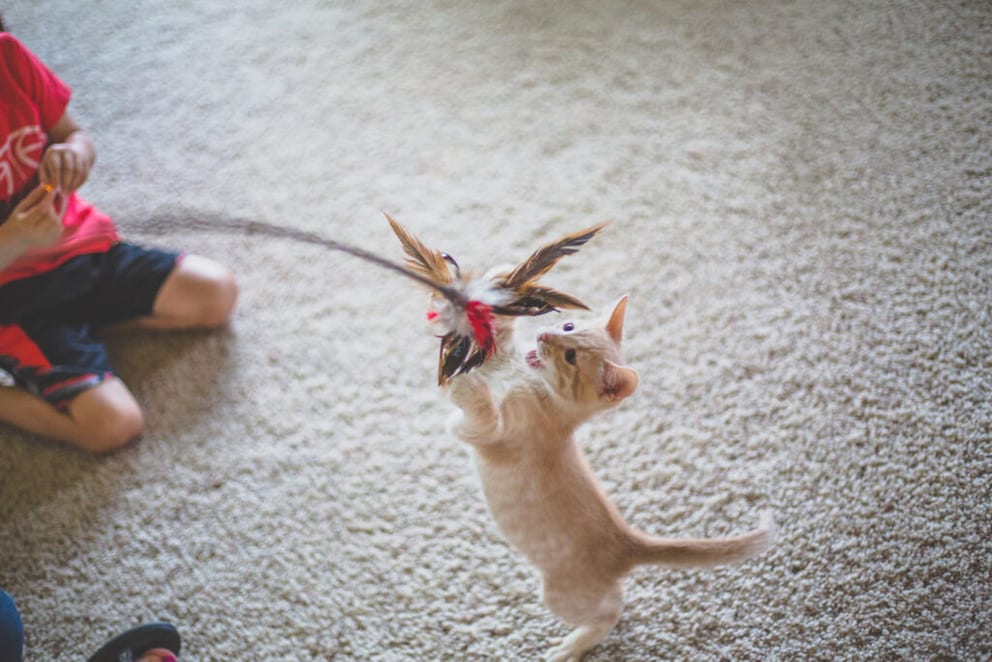
Most cats respond best to feather wands. They allow you to simulate prey on the ground and in the air. To do this, quickly flick the feather bundle or toy mouse at the end of the wand just before the cat reaches it. Most animals have great fun leaping acrobatically after the prey.
Also interesting: Why Does My Cat Keep Bringing Me Toys Even Though It Doesn’t Want to Play?
Mistake 6: Too Little Playtime
While dogs appreciate longer play sessions, it’s best to engage your cat with short but frequent playtimes throughout the day. If you’re working and away for long periods, play with your cat especially in the morning and evening–during twilight hours–when the little hunters are most active and would naturally hunt prey.
Overall, aim for 30 to 60 minutes of pure playtime per day. This depends on whether the cat has outdoor access and other activities or if it lives solely indoors. But beware: just because a cat is an outdoor cat doesn’t mean you shouldn’t play with it, as outdoor cats also experience boredom and greatly benefit from interaction with their humans.

Your Cat Isn’t Playing? Here’s What You’re Doing Wrong

Dangerous! Expert warns against new cat toy
Mistake 7: Not Recognizing When the Cat Enjoys the Game
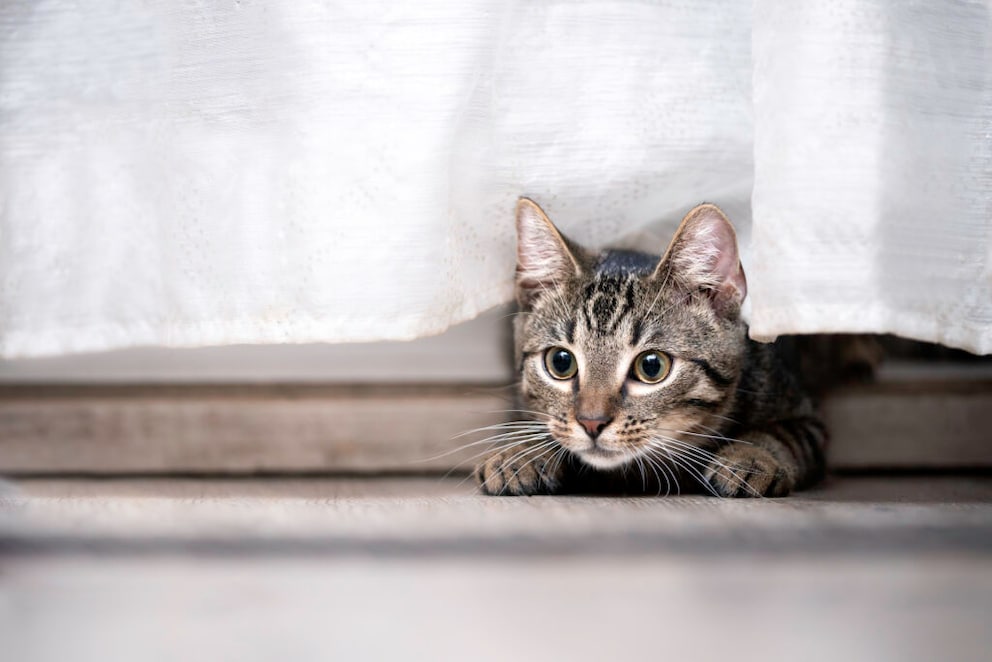
A common mistake we make when playing with our cats is thinking that if the cat doesn’t immediately pounce, it’s not interested. For cats, play begins with stalking–carefully observing the object. You can often tell by their crouched posture, wide-open eyes, and large pupils as they stare at their “prey” from behind a corner or hiding spot. But not all cats show this so clearly. Some just look interested and listen. This is already play and fun for the cat!
Unfortunately, many owners prematurely end the game or think the cat isn’t interested because it’s just watching. For the cat, especially older ones, this is the actual game. It often takes several minutes before the cat attempts an attack–but few owners have the patience for this, leading to frustration on both sides.
You can tell the cat is no longer interested in playing when it walks away or starts grooming itself. That’s when you can safely end the game.
Mistake 8: The Wrong Timing
In nature, cats go through the same cycle: wake up, hunt, eat, groom, sleep. However, the first thing many owners do when they wake up or come home is feed the cat. It’s better to play with the cat first and then feed it. The advantage: the cat follows its natural rhythm and settles down much better after playtime. This is especially beneficial in the evening to prevent the cat from restlessly wandering at night and constantly waking its humans.
But many cats insist on being fed as soon as their human is awake or home. In this case, it’s advisable to give a small portion first and initiate play a while later. Afterward, give the rest of the portion. The cat will likely groom itself thoroughly and then settle down. Therefore, it’s important to establish this ritual, especially before bedtime, to ensure the cat is as calm as possible at night.
Dr. Saskia Schneider holds a Ph.D. in biology. During her studies at the Free University of Berlin, she focused on zoology and animal behavior. In addition to training as an editor, she completed a course in behavioral consulting with a focus on cats at the Academy for Applied Animal Psychology and Animal Behavior Training in Switzerland.