


November 21, 2025, 10:32 am | Read time: 4 minutes
Many cat owners know this: As soon as a chip bag rustles, the pet is purring and ready. But what is behind some cats’ preference for salty snacks—and can it become dangerous? PETBOOK explains why cats like salt, how their bodies handle it, and when it really becomes too much.
Why Cats Like Salty Things
In the wild, cats eat small vertebrates—and none of them are heavily salted. So why are cats interested in salty snacks at all? The answer lies in their biology. Cats have only about 470 taste buds—significantly fewer than humans. They can’t taste sweet, but they can perceive salty and protein-rich flavors.
Salt and fat, the main components of many snacks, provide cats with an intense, “umami-like” taste reminiscent of meat. Additionally, cats need small amounts of salt for vital bodily functions—such as water balance, muscle work, and nerve conduction. It’s natural for them to like the taste, and it’s also the main reason why many cats enjoy licking their owners’ feet. 1
What Happens When Cats Eat Salt
Cats often suffer from kidney disease as they age—mainly because they often don’t drink enough fluids. Many believe salt would harm them. However, compared to humans, cats are even more tolerant of high salt levels and can even drink saltwater in a pinch. Their kidneys can excrete excess sodium.
Studies have even shown that salt in cats’ diets has positive effects. It leads to cats drinking more and urinating more. This is especially beneficial for animals prone to urinary tract diseases, as increased drinking and urination help flush out harmful substances. 2
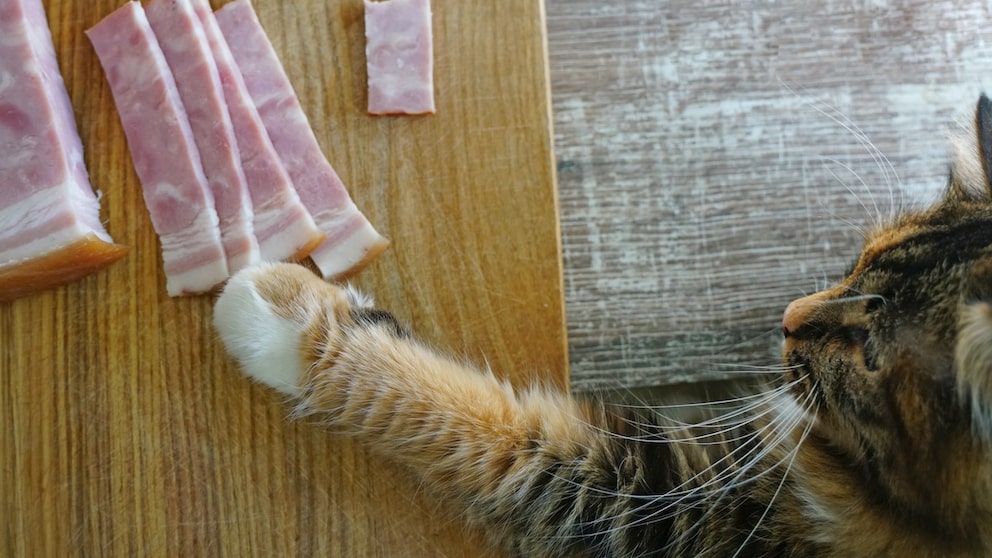
An occasional chip that might fall from the table is no big deal for healthy cats. Still, the human snack is far from suitable: potato chips are half carbohydrates, which—when consumed excessively—can lead to diseases like diabetes in cats. Ham or salami are also not alternatives for cats. Even though they contain no carbohydrates, they are highly processed foods that can have negative effects on the body.
Should You Add Salt to Cat Food?
Even though cats can tolerate salty food and have even been shown to drink saltwater in studies, this is not a free pass for a salty diet. Cat food is already formulated to contain the optimal electrolyte balance.
Offering salty broth or water to encourage the animal to drink is not a good idea. If you want to motivate your cat to drink more fluids, it’s better to use unsalted meat broth or special cat soups.
How Much Salt Can Cats Consume?
Healthy cats can tolerate higher salt amounts temporarily—even up to four times more than humans. This is due to the remarkable efficiency of their kidneys, which evolved from desert-dwelling ancestors. However, this adaptation has its limits.
If too much salt is consumed over time, it disrupts fluid balance. This can increase blood pressure, strain the heart, and damage sensitive kidneys. Cats should therefore not consume more than about 40 milligrams of salt daily. Just two to three chips can exceed a cat’s daily sodium chloride requirement. 3, 4

Why Cats Can Drink Saltwater

Can Dogs Eat Pretzel Sticks?
What Happens in Case of Salt Poisoning
If the dose is higher, it can lead to vomiting, diarrhea, tremors, or—in extreme cases—even sodium poisoning. Symptoms of acute salt poisoning range from intense thirst to apathy, muscle twitching, vomiting, and seizures. In such cases, a visit to the vet is immediately necessary. 5
Cats with heart or kidney diseases are particularly at risk, as their organs can no longer compensate well for the excess salt. For healthy cats, the lethal dose is about four grams of salt per kilogram of body weight.
Conclusion
Salt is essential—but in the right amount. The amounts found in chips or other snacks are far too high for cats and offer no nutritional value. Even though the salty taste is tempting for cats, it’s better not to let them partake.
If you want to involve your cat in snacking, you can offer homemade, unseasoned “cat chips” made from chicken or dried vegetables. This way, the couch evening remains enjoyable for both humans and pets—without any risk to the cat’s health.