

November 13, 2025, 4:31 pm | Read time: 5 minutes
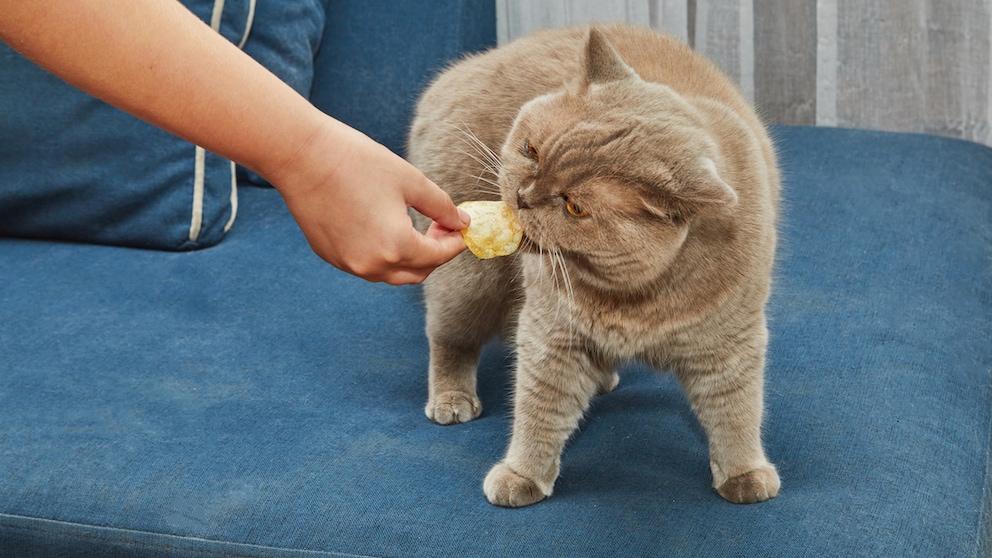
On a cozy evening on the couch, many people reach for a bag of chips—and often the cat is right there too. But can cats even eat chips? PETBOOK author and pet health advisor Philine Ebert looked into how dangerous the salty snack really is for cats.
Overview
What Should a Cat Eat?
Cats are predators and thus highly specialized carnivores. Due to their anatomy, they must consume easily digestible food, ideally rich in protein and fat, with few fibers.
Therefore, a cat’s natural diet consists of 95 percent animal content, including muscle meat, organs, bones, and blood. Only five percent of the diet is plant-based, such as the stomach contents of prey, grasses, herbs, fruits, or berries.
Fruits and vegetables like potatoes are theoretically also on the menu for our house cats—at least in small amounts. However, this only applies to cooked potatoes. Raw vegetables are unsuitable for feeding cats and can be toxic, as they contain the toxin solanine. This toxin escapes during heating, meaning cooked, unsalted potatoes in small amounts are healthy and ideal for preparing bland diets.
What Are Commercial Chips Made of?
Classic potato chips are mostly made up of carbohydrates in the form of potato starch. The other half consists mainly of fat (more than 30 to 40 percent!), sugar, spices, flavors, flavor enhancers (especially salt and glutamate), colorings, water, fibers, and proteins.
Due to frying (mostly with sunflower oil), this rich, high-calorie snack is difficult for the cat’s body to digest and does not provide essential fatty acids or nutrients that cats need in their diet.
An Underestimated Danger Lurks in the Additives!
Various spices found in potato chips can be harmful even in small amounts. The sulfur compounds found in onions and leeks are toxic to cats, even in dried and powdered form. This also applies to garlic, paprika, and tomato.
The high salt content in chips should not be underestimated either. On average, a cat should consume a maximum of 40 milligrams of salt daily. In comparison, 100 grams of potato chips contain an average of 1.3 grams of salt. This means that just two or three chips could be too much for the small cat’s body.
Care should also be taken with flavor enhancers. Many chip varieties contain yeast extract, which gives chips a pleasant umami taste for humans. Particularly tricky: yeast extract contains glutamate, which can increase the cat’s addiction potential. A consequence of this can be increased food consumption, which in turn can lead to obesity.
Even calorie-reduced, unsalted, or additive-reduced types and varieties of chips are not suitable for cats.
Salt Deficiency as a Reason for Interest in Chips
Sometimes curiosity isn’t the only reason behind interest in chips, pretzels, or similar snacks. If a cat generally shows a tendency toward salty foods, a veterinarian should check for a possible salt deficiency. Instinctively, the animals try to compensate for this. However, chips are naturally not suitable for this purpose.
What to Do if the Cat Has Eaten a Large Amount of Chips?
If the cat has eaten a few chips, it’s usually not a big problem. There should be enough water available, as increased thirst is always the result.
The animal may vomit due to an upset stomach. This can be well balanced with the feeding of bland diets in the following days.
As long as the animal shows no signs of fever, persistent diarrhea, vomiting, or severe pain, the body usually calms down on its own. Otherwise, a visit to the veterinarian is essential to rule out sodium poisoning and subsequent organ damage.

What Happens When Cats Eat Too Much Salt

Advent Calendars for Dogs Compared–These Are Truly Worth It
Recipe for Chip Alternatives for Cats
If the cat persistently begs while the human snacks on chips, healthier alternatives can easily be used.
There are great snack chips for cats available in pet stores, made from dried meat, vegetables, or fruits, and just as crunchy as real potato chips without additives.
Cat chips can also be easily made at home. For example, chicken fillet can be sliced and placed on a baking sheet lined with parchment paper, then baked at about 300 degrees Fahrenheit for 25 minutes. Afterward, the temperature is reduced to 210 degrees Fahrenheit, and the chips are dried for another 40 minutes with the oven door slightly open. Without spices or additives, these chips are a crunchy snack no cat can resist.
Those with a dehydrator can also try the recipe with thinly sliced vegetables or fruit slices like pumpkin, sweet potato, strawberry, or banana (air-dried). Unlike baking in the oven, this method makes them even crunchier.
Conclusion
While chips are not toxic when consumed occasionally, their composition and high concentration of individual ingredients are entirely unsuitable for a cat’s diet.
However, the dose makes the poison. Over time, the high sodium content is particularly harmful to health and disrupts the nutrient balance. For a healthy cat’s life, it’s better to avoid feeding chips altogether.