

March 11, 2026, 3:57 pm | Read time: 11 minutes
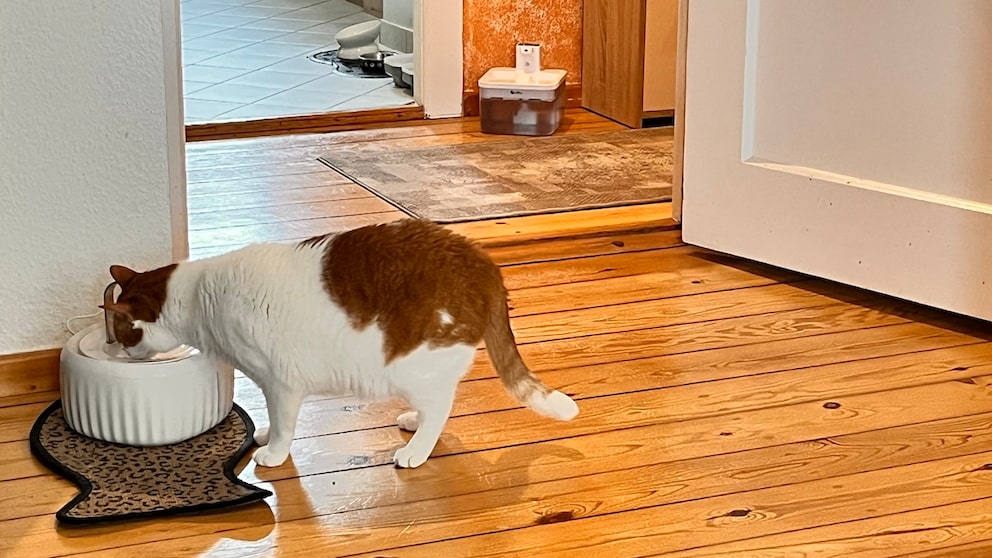
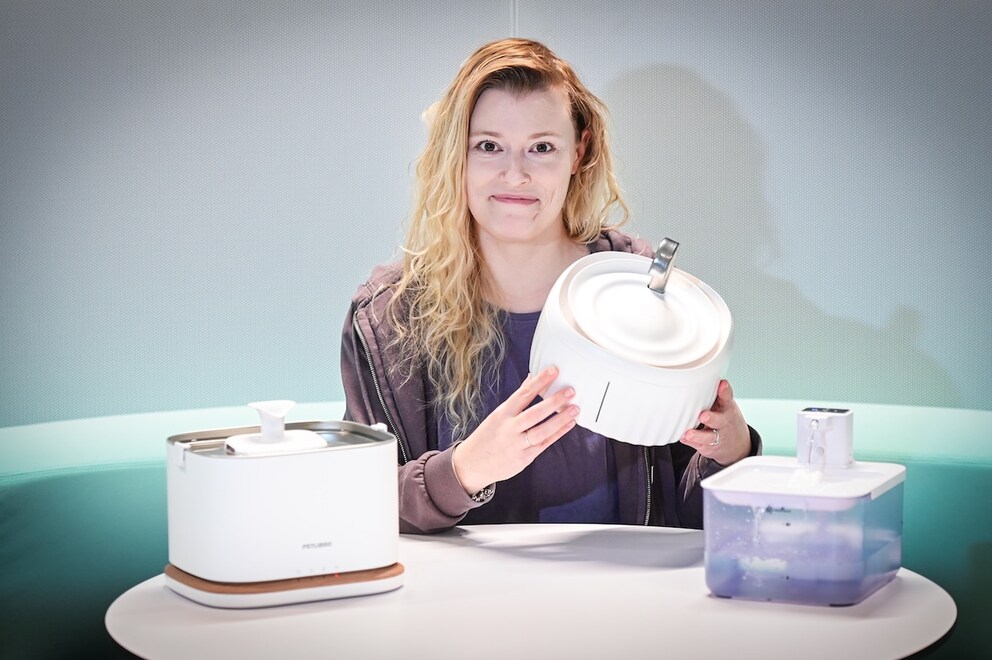
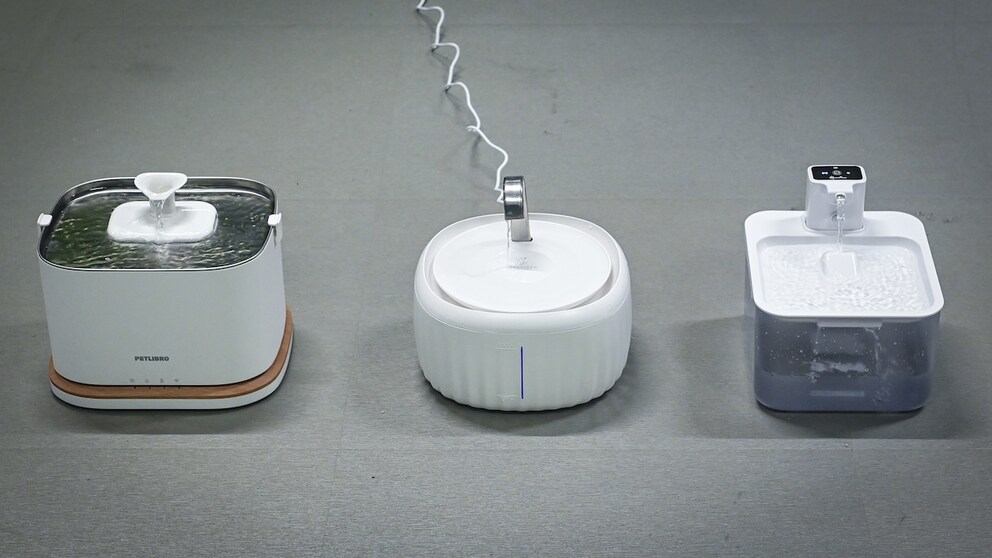
Many cats drink too little—it’s in their nature. As former desert animals, they typically get their fluids from their prey. If they mostly eat dry food or are generally reluctant to drink, a water fountain can help. Flowing water is more appealing to many cats than a still bowl. That’s why PETBOOK editor Louisa Stoeffler and cat Remo tested three popular models in everyday life. The focus wasn’t on the technology on paper, but on the question: Which fountain is actually accepted?
Overview
Why the Topic of Drinking is So Important to Me With Remo
I know how quickly “strange behavior” can turn into a real health problem—because I’ve experienced it with Remo. I rarely saw him at his water bowl. Sometimes he’d take a few sips after eating dry food. That was it. I knew it was only a little, but I didn’t realize it was already affecting his health.
Animals don’t always show pain clearly. Some cats become quieter, others more aggressive. Remo did something that immediately alarmed me: He suddenly started hissing at his own tail, chasing it, and biting it so hard that he injured himself. He also had a fever and showed clear pain reactions when touched on his back.
What’s so tricky about this: Such symptoms can have many causes—from skin irritations to neurological problems to severe pain somewhere in the body. The first vet visits didn’t provide a clear diagnosis, just painkillers and antibiotics—and I felt like I was in the dark. Only in a cat-experienced practice with more thorough diagnostics did it become clear that Remo had noticeable kidney values. It was a shock—but in hindsight, also a blessing, because we could intervene early.
Since then, it’s clear to me: For Remo, fluid intake isn’t a “nice to have,” but a central component to relieve the kidneys and keep him stable long-term. I’m all the more consistent with anything that can support his daily water intake, and I’ve tried many things—with varying success. Catnip teas and drinks? No luck. Salt-free tuna broth? Yes, but too labor-intensive to prepare. Kidney-friendly cat drinks? Good, but costly over time. A water fountain can be a useful tool if it suits the cat and is actually used daily.
Why Many Cats Drink Too Little
That cats drink little is biologically explainable. As mentioned earlier, our house cats descend from the African wildcat—a desert animal. In their original environment, they got most of their fluids from their prey. A mouse is about 70 to 80 percent water. Eating like this means they hardly need to drink additionally.
The problem: The reality for modern indoor cats is different. Many animals receive dry food or mixed feeding. Dry food contains only about five to ten percent moisture. The natural “thirst mechanism” doesn’t automatically kick in—the cat would have to actively go to the bowl. And many do so only very reluctantly.
Additionally, cats instinctively prefer to drink away from their feeding area—though not everyone is aware of this, and countless combo bowls for water and food are still sold side by side. In the wild, a water source next to prey would pose a contamination risk. Stale water or a bowl made of plastic or silicone that quickly absorbs odors can also be off-putting—cats have a much keener sense of smell than we do.
Why is this so important? Because chronically low fluid intake can increase the risk of urinary tract issues and kidney disease—two of the most common health problems in cats. Especially for animals with already noticeable kidney values, like Remo, adequate drinking becomes a crucial health factor.
How We Tested
Everyday Life With an Honest Cat–Not in the Lab
I didn’t want to write a technical comparison, but rather know from a practical test: Would Remo actually use these fountains? Because data sheets don’t help me much if the device ends up untouched in the corner. That’s why I integrated each fountain into our normal daily routine for several days—with home office, evening routine, and everything that goes with it.
Remo is exactly the type of cat these devices are designed for: rather reserved, sensitive to noises—and due to his kidney issues, reliant on reliable fluid intake.
Another factor is movement: Flowing water signals freshness. That’s why many cats prefer to drink from the faucet or even the watering can rather than a still bowl. This is where water fountains come in—they make water “livelier” and can thus more strongly trigger the natural drinking impulse.
The Test Criteria at a Glance
Acceptance–Not Just Curiosity
A cat’s curiosity is quickly piqued—but also quickly lost. I was interested in whether it would become routine. Remo was allowed to look at each fountain first while it was turned off—naturally, because the “curious nose” has to be involved when I bring something new and spend a long time with it.
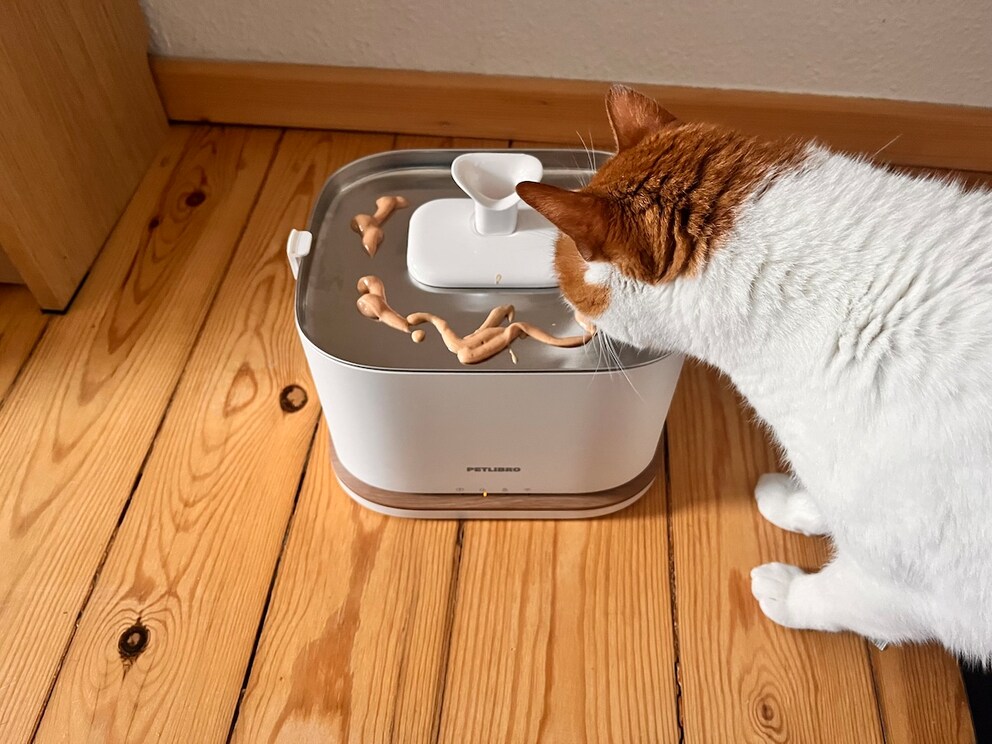
I observed how he reacted when I simply left the water fountains standing—without pressure. Especially with sensitive cats, it’s crucial that they feel they can decide for themselves. I also tested how well the devices can be positively associated: Can a bit of lick paste or drinking soup be offered in them, or does it immediately clog the pump because the device can’t be turned off?
Noise Development–Even With a Decreasing Water Level
I am sensitive to constant noises myself—as a migraine patient, it’s almost an unavoidable consequence—and cats often are even more so. That’s why I didn’t just let the fountains run freshly filled, but deliberately waited until the water level dropped.
Does the splashing change? Does it become brighter, louder, or more irregular?
Remo reacts to such differences immediately—sometimes with just a brief, skeptical look. But it’s precisely this look that ultimately decides whether he drinks or not.
Cleaning–Honestly Doable or Only Theoretically Easy?
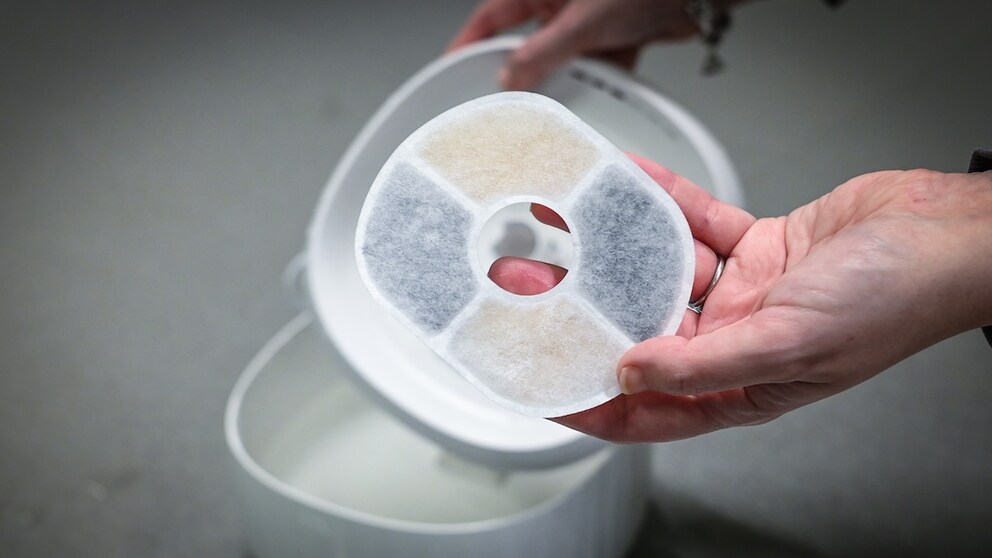
A point often overlooked in product descriptions: How does cleaning really feel? I completely disassembled each fountain, removed the filter, cleaned the pump, and reassembled it. I asked myself: Would I do this once a week without rolling my eyes internally? Because a cumbersome fountain is quickly neglected in a busy daily routine. And Remo accepts stagnant water even less than a loud motor.
Technology–Helpful or Overwhelming?
Especially with the app-controlled model, I checked:
- Does the tracking really help me?
- Or do I spend more time with the app than with the cat?
For owners with health-compromised animals, a drinking statistic can be very useful—I know this all too well. But technology shouldn’t make the relationship with the animal more complicated than it needs to be.
Test Winner: Pretty Paw Aqua Flow
Very Quick Acceptance and Quiet Operation
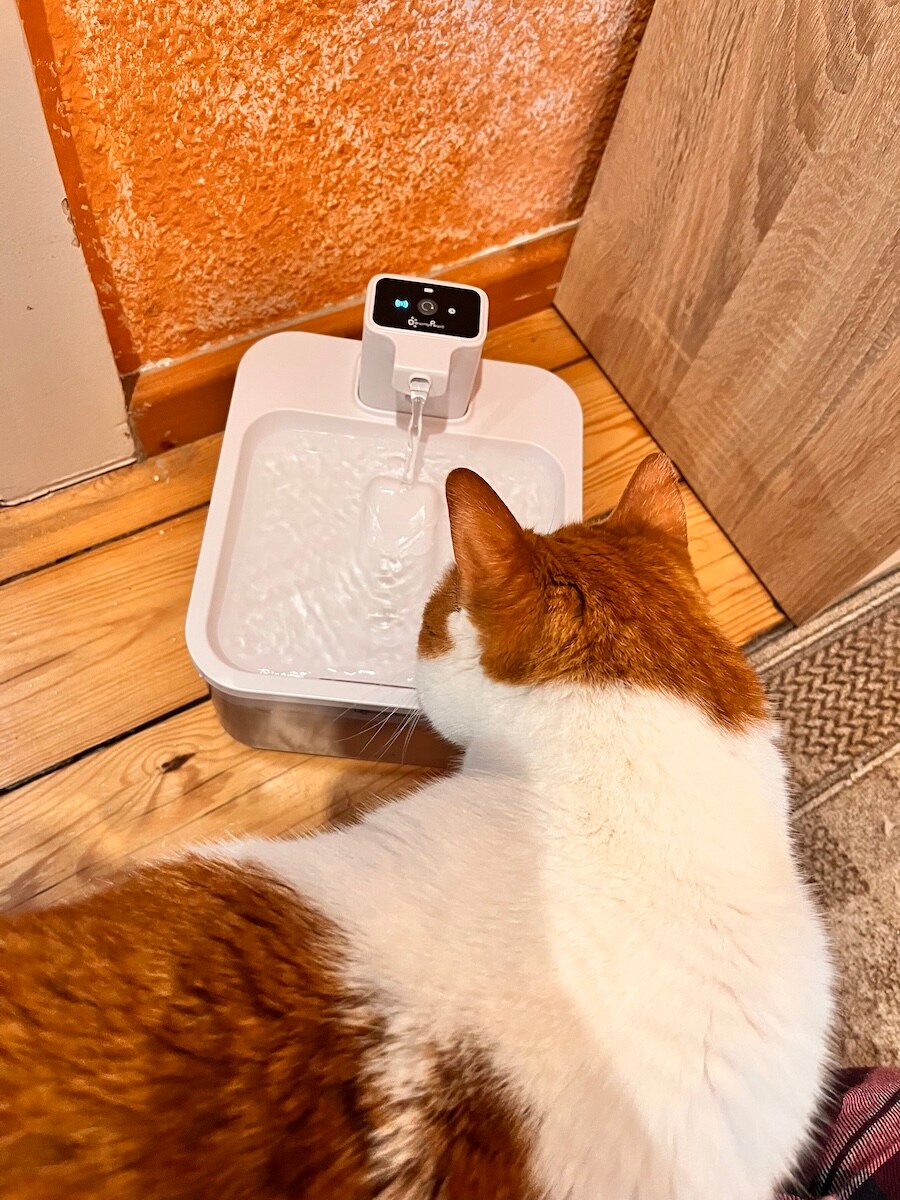
The Pretty Paw Aqua Flow impressed us in the test mainly for one reason: It is quickly accepted. And that’s the most important criterion for a cat fountain. However, it was also the last fountain we set up, so Remo was already accustomed to the concept of fountains here.
Nevertheless, it was noticeable that after a brief positive association with some lick paste, he began drinking from it independently. Particularly helpful: The fountain can initially be used like a regular water bowl with the plug pulled. This allows cautious animals to get used to the new object without noise.
The water flow is calm and constant, without disturbing splashing, which made the difference. Remo almost exclusively used this one, even though he had the choice between several devices.
Advantages
- Very quick acceptance
- Quiet, consistent water flow
- Good opportunity for gradual acclimation
- Large capacity
Disadvantages
- Cleaning is somewhat cumbersome
- Corded
Conclusion:
The Pretty Paw Aqua Flow is the most convincing fountain in the test because it excels where many models fail: in acceptance by the cat.
Petlibro Dockstream 2
Technically Strong–with a Few App Weaknesses
The Petlibro Dockstream 2 brings modern technology into the living room. Drinking times and amounts can be evaluated via an app, and the system also reminds you of filter changes and cleaning. I’ve also written a detailed individual test on this fountain.
In the test, the device also operated almost silently—a clear plus. The acclimation was super easy, as the water flow can be interrupted and turned back on via the app. However, the app itself sometimes seems overloaded. Some functions—such as detailed evaluations—are only available with a paid subscription. The cleaning also showed: The filter sits relatively tight and is somewhat difficult to remove.
Another point emerged during charging: The cable couldn’t be stored in the base without being pinched. I therefore removed the base from the body, which then charged separately to avoid damaging the cable. Accordingly, Remo couldn’t use the fountain in the meantime.
Advantages
- Whisper-quiet operation
- An app with drinking statistics
- Two drinking modes
- Large capacity
Disadvantages
- Important app functions only with a subscription
- Cleaning is somewhat cumbersome
- Charging requires disassembly
Conclusion:
A useful fountain for tech-savvy owners who want to closely monitor drinking behavior. Overall, almost as good as the Pretty Paw model. However, for those seeking a straightforward solution, it might be too complex.
DownyPaws FurSink
Flexibly Placeable–but Loud With a Decreasing Water Level
The DownyPaws is wireless and thus flexibly placeable. It also scores points in cleaning: It can be easily disassembled, and the filter and pump are easily accessible.
However, a crucial weakness emerged in everyday life: When the water level drops, the fountain begins to splash audibly. This noise noticeably affected acceptance in the test. Remo drank without issue with a full tank—but avoided the device as soon as the noise increased.
Advantages
- Wireless
- Easy to clean
- Sensor and timer mode
Disadvantages
- Noticeable splashing with a low water level
- Acceptance fluctuates
- Water level must remain consistently high for quiet operation
Conclusion:
Practical in handling, but not acoustically consistent enough. Less suitable for noise-sensitive cats.

Petlibro Dockstream 2 Water Fountain in Practical Test

Drinking Fountain or Water Bowl – Which Is Better for Cats?
Our Conclusion
The Pretty Paw Aqua Flow is the most convincing cat fountain in the PETBOOK test because it operates without technical hurdles and remains consistently quiet in everyday life. The quick and stress-free acceptance by test cat Remo was decisive.
A water fountain doesn’t replace veterinary care—but it can be a useful component to support daily water intake, especially for cats that naturally drink little.
What Do I Do if the Cat Doesn’t Accept the Fountain at All?
A new water fountain is a household device for us, for which we’ve spent money and thought about. But it’s frustrating if the cat simply doesn’t cooperate, and the device sits unused in the corner. However, there’s no ill intent behind it. For the cat, it’s an unfamiliar object in its own territory. So here are a few personal tips on how to make it easier for the cat to accept the fountain.
1. Choose the Right Location
Place the fountain in a quiet spot where your cat feels safe. Ideally, it’s a place with some distance from the food. Remember: Many cats instinctively don’t like to drink right next to their feeding area. Also, the location should be free from traffic, loud devices, or vibrating surfaces.
2. Initially, Use Like a Regular Bowl
Before turning on the pump, the fountain can stand turned off for a few hours or even one to two days. This gives the cat a chance to sniff it and ideally drink from it—without any noise. Only when the new object is accepted should the water be set to flow. This gradual acclimation removes skepticism for many animals.
3. Positive Association
Praise, calm speech, or a small treat can help associate the fountain with something pleasant. Some cats can initially be motivated with tuna water or a bit of cat soup—but only with the device turned off to prevent food residues from entering the pump. It’s important not to apply pressure, but to gently encourage interest.
4. Be Patient
While some cats immediately drink from a water fountain, others need several days or even weeks. Observe your cat, but don’t push it. The more relaxed the situation remains, the greater the chance it’ll voluntarily accept the new offering.
5. Don’t Remove the Old Bowl Immediately
The previous water bowl should initially remain. Only when the cat regularly and reliably uses the fountain can the old bowl be gradually removed. This avoids stress and ensures your cat continues to get enough fluids.