

November 20, 2025, 9:46 am | Read time: 11 minutes
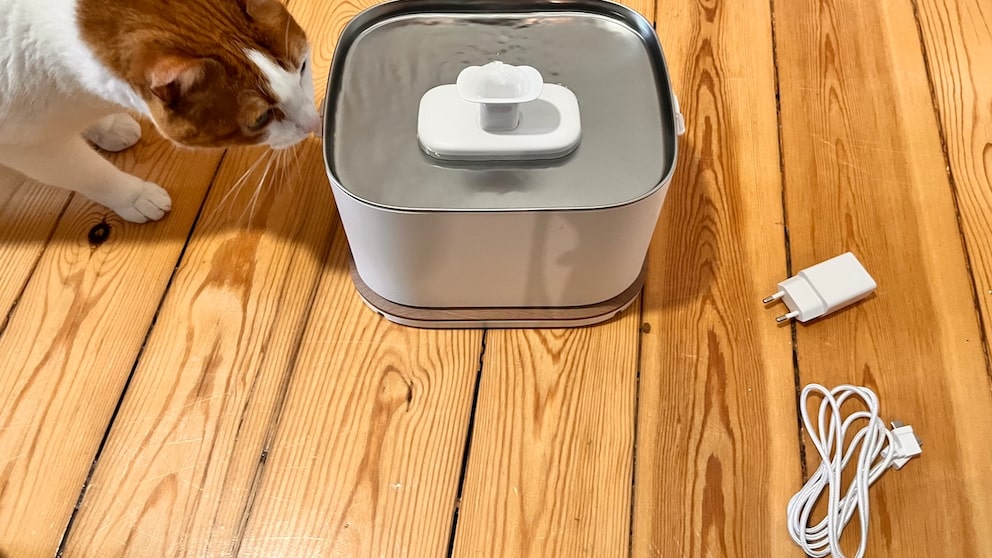
The Petlibro Dockstream 2 is much more than a traditional cat water fountain. With Wi-Fi connectivity, app monitoring, and automatic drinking statistics, it brings a touch of smart home technology to the daily life of cats. The fountain holds 3 liters of water, is made of durable ABS plastic with a stainless steel surface, and operates almost silently–ideal for sensitive pets or multi-cat households with heavy use. PETBOOK editor Louisa Stoeffler and her cat Remo put the device to the test.
Overview
- The Tester
- Key Points
- First Half Hour with the Petlibro Dockstream 2
- First Impression & Material Quality
- App Setup Brings Frustration
- Subscription Models & Device Connection
- Setup & Initial Hurdles
- Initial App Data & Criticism
- Interim Conclusion After Setup
- How to Get Your Cat Used to a Water Fountain
- Conclusion After Two Weeks of Testing
- Charging
- General Operation
- Pros & Cons for the Petlibro Dockstream 2
- Conclusion
The Tester
My cat Remo is a notorious non-drinker. At just five years old, he was found to have elevated creatinine levels in his blood, so he has been on kidney-friendly food and phosphate blockers for several years. His urinary values and kidney function are still good.
But since he is very reluctant to approach a water bowl and only drinks when given expensive, kidney-friendly cat soups, I have long wanted to try a cat water fountain but have always hesitated.
Every pet owner knows: Cats are creatures of habit. What they don’t know is often rejected at first, and the expensive device meant to help with fluid intake ends up unused in the corner. That’s why I wanted to take the opportunity to test a smart water fountain and see if my cat would even accept it.
Key Points
- Device: Petlibro Dockstream 2 – smart cat water fountain with app control and drinking statistics
- Capacity: 3 liters, made of durable ABS plastic with a stainless steel surface
- Feature: Wi-Fi enabled, app shows drinking times and amounts, and reminds of cleaning or filter changes
- Noise Level: Whisper-quiet operation–ideal for skittish cats
- Maintenance: Easy to clean, filter replacement recommended every two weeks
- App Function: Practical for multi-cat households and pets with health monitoring–but with room for improvement in user interface, key features only available in subscription model
- Conclusion: Modern smart home gadget for tech-savvy cat owners–minor weaknesses in app details and charging design
First Half Hour with the Petlibro Dockstream 2
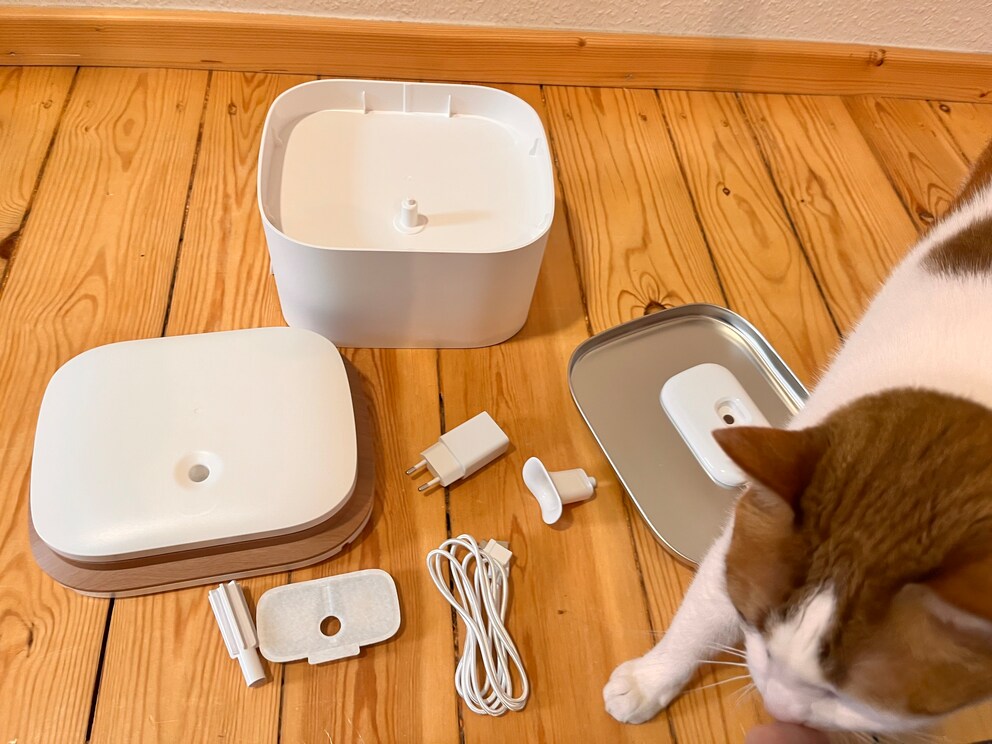
The Petlibro Dockstream 2 package includes the base, the water container, the drinking bowl, the bubbler, a filter, the charger with cable–and a small, hexagonal scoop wheel, which I initially have no idea what it’s for. According to the included quick-start guide, the fountain is supposed to be easy to set up: place the base, turn it on, scan the QR code–and you’re in the PETLIBRO app. I installed it for iOS.
First Impression & Material Quality
Everything seems very high-quality right out of the box. The outer box and the smaller inner packaging, which holds the accessories, feel smooth and sturdy–almost like coated recycled cardboard. The plastic material is also noticeably soft, more reminiscent of recycled bags than hard, shiny plastic. Overall, the device gives a sustainable impression.
The base is heavy enough that Remo shouldn’t be able to tip it over, while the cylinder is light and simple. There is no classic min-max indicator–instead, one and three drops are printed as markers.
App Setup Brings Frustration
The app is quickly installed. First, notifications, privacy policies, and location requests pop up–the latter I don’t quite understand, but okay. I log in with my PETBOOK address; theoretically, a Google or Apple login would also work.
Then follows the usual registration process: pet name, gender, birthdate.
Remo–male, neutered, presumably born on January 1, 2018, so almost eight years old–gets his profile.
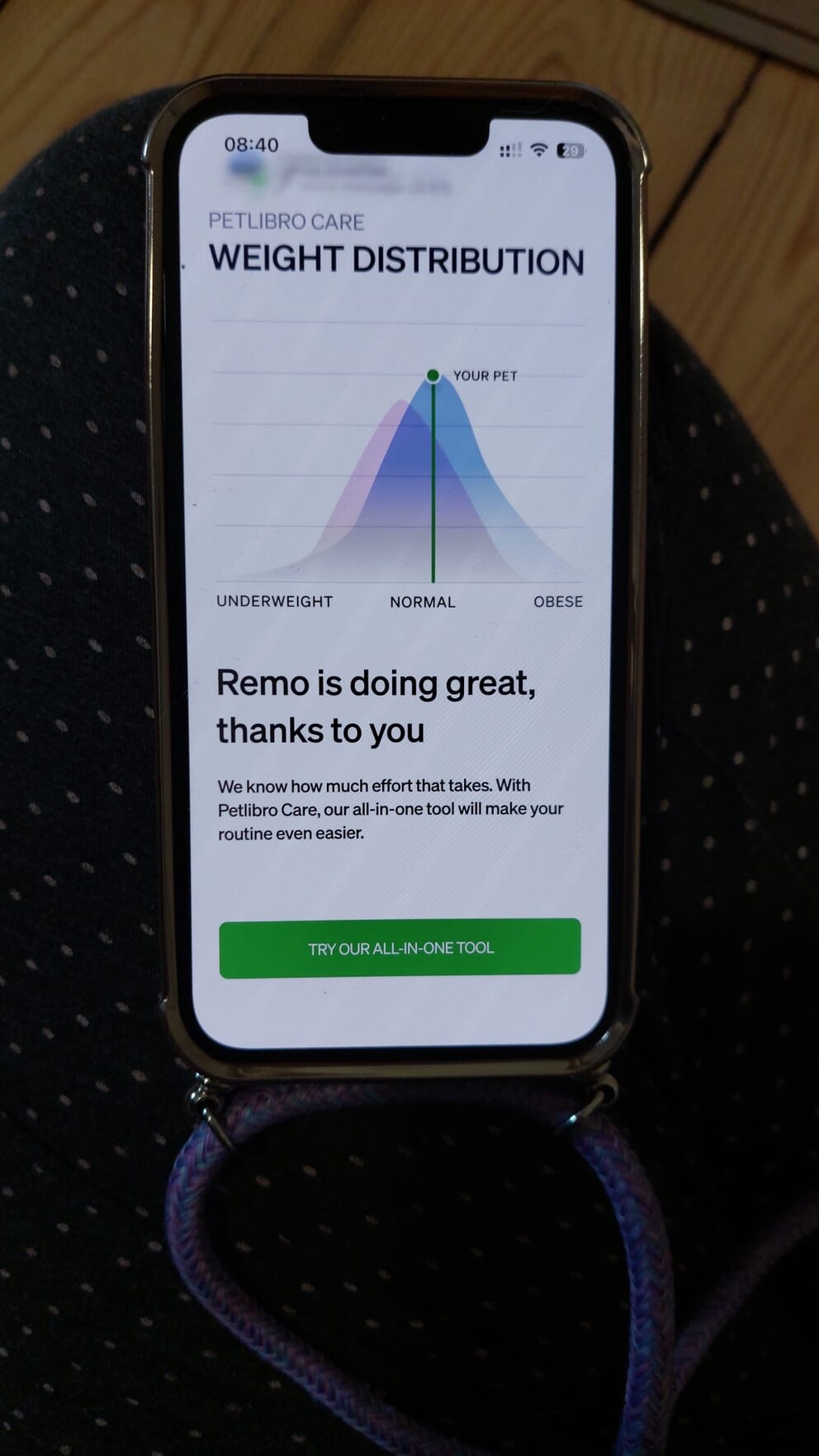
The app asks for breed, weight, activity level, and drinking behavior. Notably, many breed options are for breeds with health issues (Scottish Fold, Exotic Shorthair, etc.), while you can’t select a regular European Shorthair–which I honestly don’t find optimal.
I enter Remo’s weight (5.5 kg) and activity level (moderate). It’s unfortunately clear that he drinks too little. The app could be made more cat-friendly here: for example, with selection fields like “indoor/outdoor cat” or “wet/dry food,” which are crucial for assessing drinking amounts.
Subscription Models & Device Connection
After entering the basic data, I’m presented with a subscription offer: “CarePlus” for $4.99 to $14.99 per month, with extra features like nutrition tips and multi-cat support. I skip it–let’s see if the fountain works without a subscription first.
Via Bluetooth, the app immediately finds the Dockstream 2. Then Petlibro wants access to my location, apparently to track the fountain’s placement. I allow it only while using the app. The Wi-Fi connects without issue, and a firmware update follows automatically (from version 0.3.27 to 0.334).
Setup & Initial Hurdles
The app shows “no water”–logically, I haven’t assembled the device yet. According to the instructions, the filter should be soaked in water for five minutes before being inserted. The scoop wheel, which initially puzzled me, belongs in the body.
Important: The base must not get wet. So I fill the container to the three-drop mark–about 3 liters–and realize: My sink is too shallow, half the filling spills out again. So the bathtub had to be used for the next attempt.
Assembly is tricky: I can’t remove the fixture to insert the filter. A short YouTube video from the Petlibro account helps–you really have to pull hard, which I initially hesitated to do for fear of breaking something.
After that, it works. However, it’s not explained how to insert the filter–I intuitively decide to place the chambers downwards so everything fits snugly.
Initial App Data & Criticism
After about half an hour, everything is installed, calibrated, and running. However, the app shows me shortly after that Remo was at the fountain for a minute and a half–even though he hasn’t noticed it yet. Apparently, the app counts setup time as activity. This should be improved.
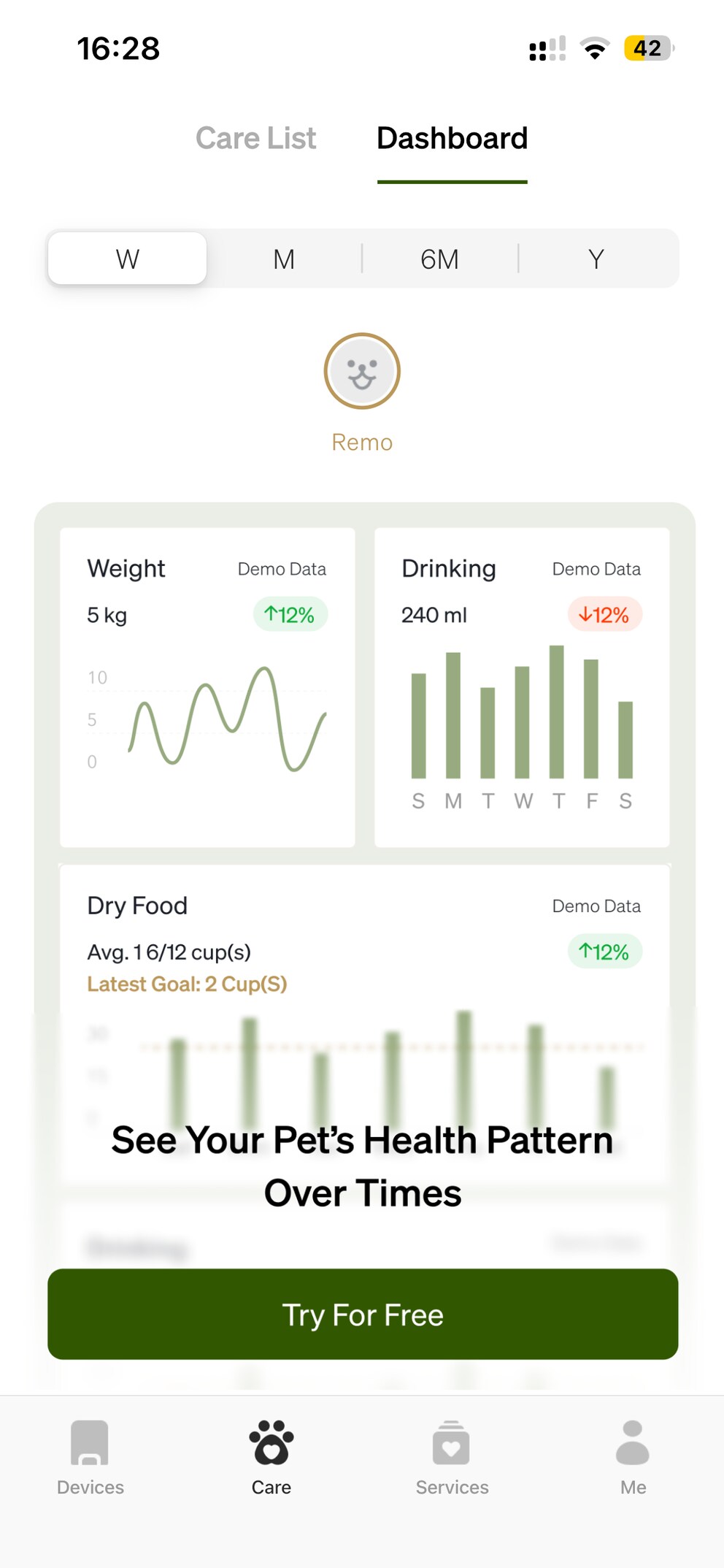
Under “Hydration History” and “Drinking Habits,” I can see trends and averages, which is generally very helpful. But something crucial is missing here: I can’t enter health information–for example, that Remo has early-stage kidney insufficiency. His blood values (elevated creatinine) require precise monitoring of his drinking. He must reach a specific milliliter amount per day, not too little, not too much. Too much fluid intake would be a warning sign of worsening kidney health.
Also, the feeding type (wet or dry food) cannot be specified without a subscription–yet it is crucial for calculating fluid needs. For a device of this price range and target audience, this would be a valuable addition. In the subscription, however, you can enter more data. For example, when the cat gets which food.
Interim Conclusion After Setup
After half an hour, the Petlibro Dockstream 2 is running flawlessly. The setup is straightforward but involves many app hurdles, subscription offers, and menus that need to be configured first.
The material is convincing, the construction is solid–the app, however, still seems not fully thought out for cat owners who want more than just drinking statistics. Now it remains to be seen how Remo takes to it–and whether the measurements become more realistic in the coming days.
How to Get Your Cat Used to a Water Fountain
Editorial cat Remo is skeptical when it comes to new things in his territory–especially if they hum or splash. It was all the more exciting to get him used to the Petlibro Dockstream 2 water fountain. Cats are picky when it comes to drinking, and fresh, flowing water can often only convince them if approached correctly. Here are a few tips from me to help cats accept a water fountain more easily:
1. The Right Place
Cats prefer to drink where they feel safe. So I placed the fountain not directly next to Remo’s food bowl but in another room–in a quiet place without disturbing noises. This allowed him to approach and sniff undisturbed.
2. Start Without Splashing
Before the Petlibro Dockstream 2 was turned on, it stood for a few hours without the pump running. This made it less “suspicious” to Remo–he drank from it as if it were a normal bowl. Only then did I start the device.
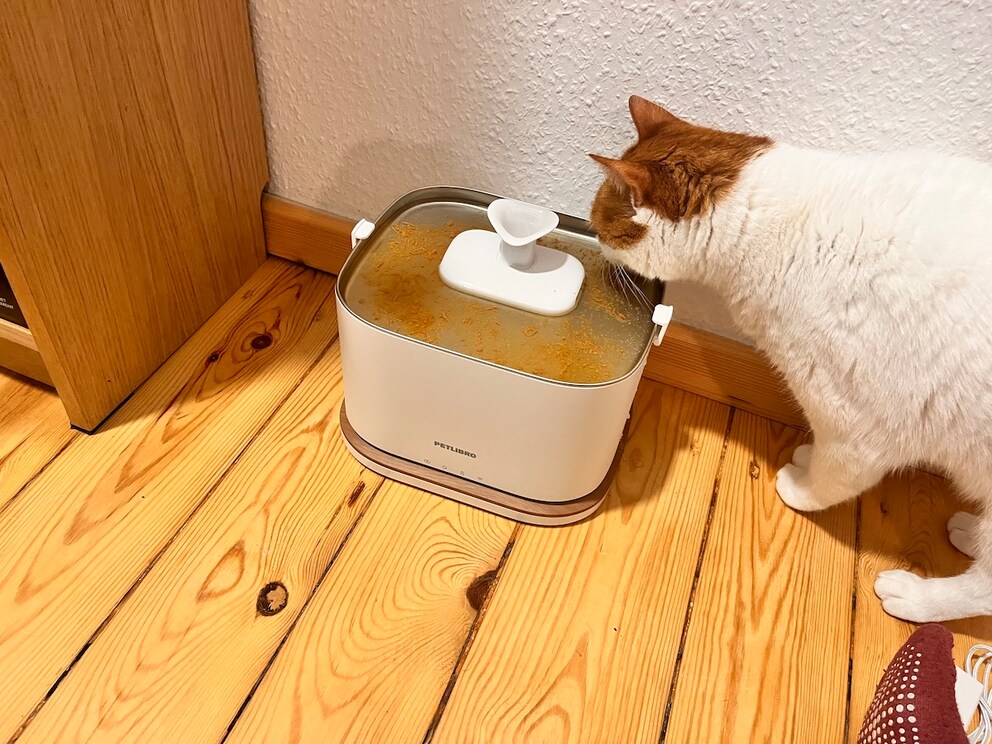
The quiet hum and gentle water sound initially irritated him briefly, then curiosity won: He sat in front of it, watched the flowing water–and continued drinking.
3. Positive Reinforcement Helps
Whenever Remo showed interest or sniffed, he received praise and a treat. This associates the new drinking source with something positive. At the very beginning, there was even a lickable paste, directly from the drinking bowl. For a more reserved cat, you can also add a few drops of cat soup or tuna water to the water to make it more attractive. I did this with Remo. He got his soup in the turned-off fountain at his usual time, before bedtime, and then happily lapped it up.
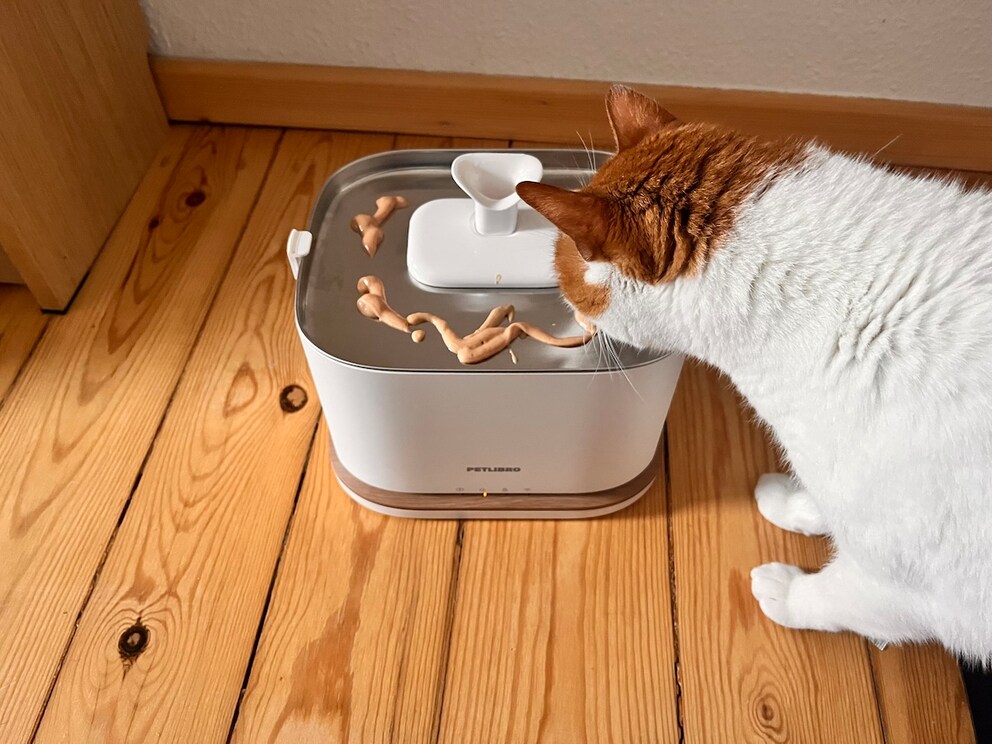
4. Cleanliness & Water Quality
Cats can smell what we can’t: The fountain should be cleaned at least twice a week, and the filter should be changed regularly. The Dockstream 2 scores here with its easy-to-disassemble design and an app warning when it’s time to clean or replace the filter–even the pump can be cleaned effortlessly.
Only fill with fresh, filtered water–stale water is often ignored.
5. Patience Pays Off
Some cats accept the fountain immediately, others need a few days or even weeks. It’s important not to rush them. You can leave the old bowl in place until the cat voluntarily prefers the fountain. It took Remo about four days to drink from it regularly.
Conclusion After Two Weeks of Testing
In the app, I can always track how much Remo has drunk, even when I’m in the office. I receive a notification from the integrated PawSense health monitoring system whenever he’s been at it, and also how long and how much he drank. An individual drinking goal can be set via the Petlibro app.
You can also generate easy-to-understand daily and weekly reports. This allows you to detect changes in drinking behavior early–a plus, especially for cats prone to kidney problems or urinary tract diseases. (Note: Supports only 2.4 GHz Wi-Fi, not 5 GHz.)
Depending on preference, you can choose between continuous flow or intermittent splashing mode. The multi-layer filter system reliably removes dirt, hair, heavy metals, and lime, keeping the water clean. Petlibro recommends changing the filter every two weeks and regularly cleaning the fountain and pump. You can always reorder these.
Charging
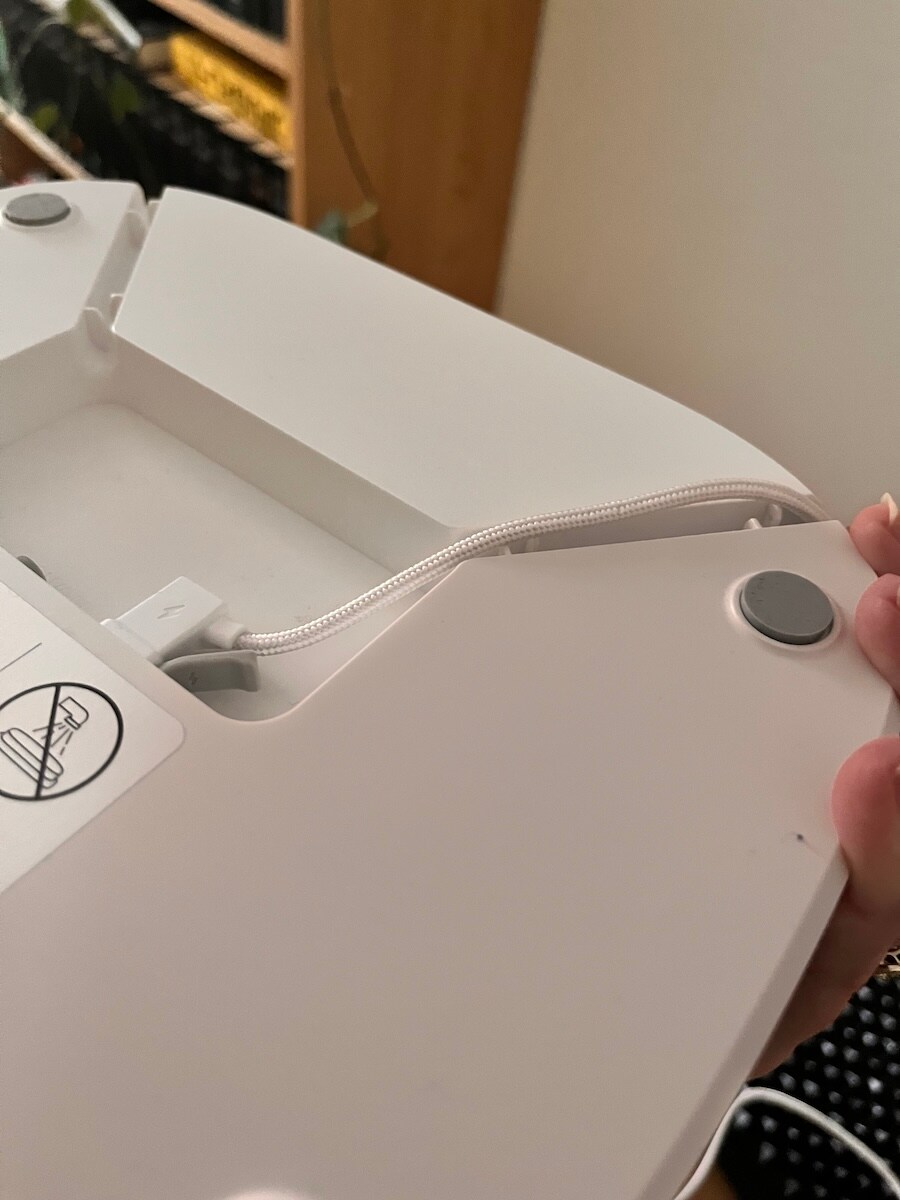
I tested the Dockstream 2 in the wireless version. After about two weeks of use, it was time to charge the fountain for the first time. The opening for the cable is actually somewhat inconveniently located under the base. This means: remove the fountain body, turn the base over, and then find an outlet. Unfortunately, the cable cannot be placed under the base without pressing and squeezing, so I actually took it out of service for the charging hours because I didn’t want to squeeze the cable. The design could use a little improvement here.
General Operation
I’m really surprised that the fountain actually operates whisper-quiet and almost noiselessly. I don’t know about you, but the sound of splashing water always makes me need to go to the bathroom more often. No humming can be heard during operation–especially important for cautious characters like Remo.

Drinking Fountains for Cats: 3 Popular Models Tested in Everyday Use

Cyber Monday 2025 – The Best Deals for Your Cat
Pros & Cons for the Petlibro Dockstream 2
Advantages
- High-quality workmanship, stable base, and quiet operating noise
- Easy cleaning and practical filter system
- App provides transparent drinking statistics and reminders
- Supports cats with kidney or urinary tract issues in fluid monitoring
- Two adjustable drinking modes (continuous or intermittent)
Disadvantages
- App not yet optimally tailored to cat owners’ needs (missing fields for feeding type or illnesses)
- Some important features only unlocked in paid subscription
- Inconvenient charging position under the base–requires disassembly for charging
- Setup through app and location requests somewhat cumbersome
Conclusion
I definitely give the Petlibro Dockstream 2 a 2 for “good” in the practical test. With a little patience, a good location, and positive reinforcement, most cats can easily get used to the water fountain. Its quiet operation, hygienic design, and easy cleaning make it particularly convenient for busy cat owners and their pets.
The device combines modern technology and user-friendliness. Particularly exciting: the combination of app-based drinking tracking and automatic reminders. However, there is still room for improvement, especially in the basic version without a subscription.