

September 8, 2025, 3:07 pm | Read time: 5 minutes
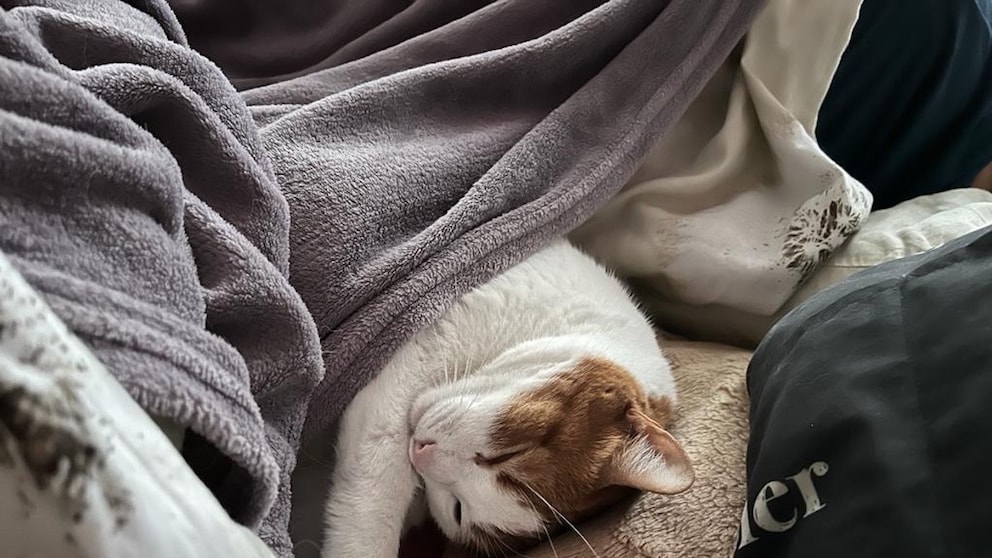
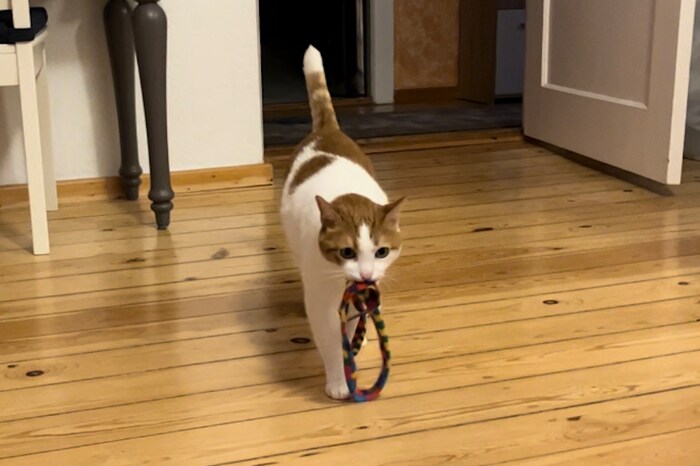
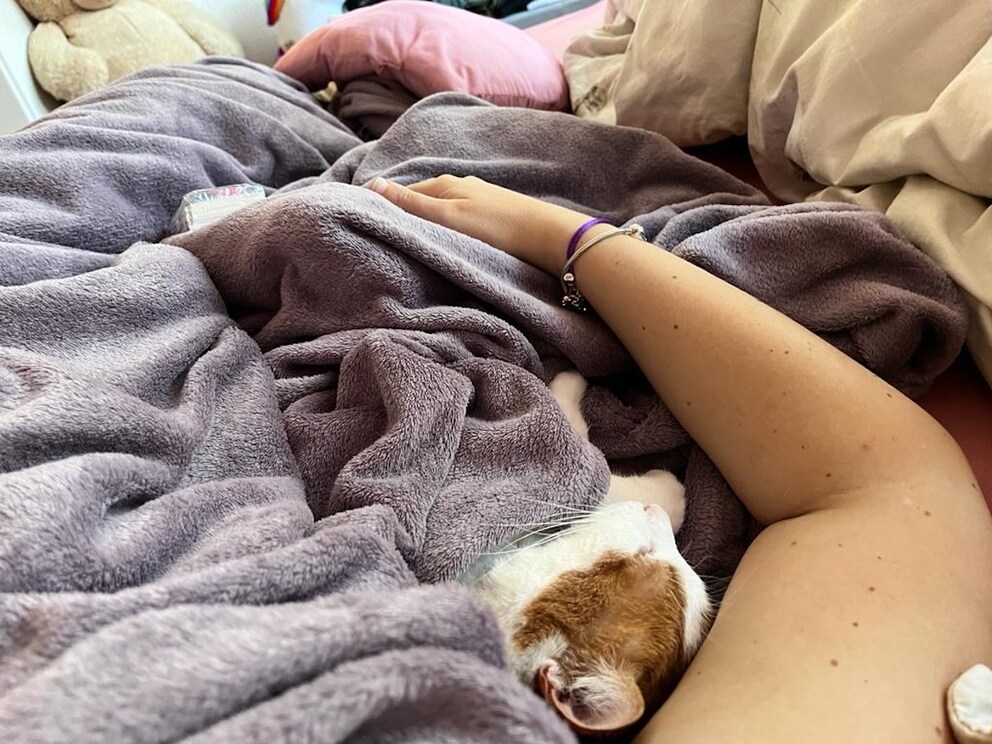
By 10 p.m. at the latest, it happens: My cat Remo becomes restless. He meows loudly, roams the apartment, and makes it unmistakably clear: It’s bedtime. As soon as I get up, he sticks by my side. He watches me brush my teeth, clean his litter box one last time, and waits for me to refill his water. Only when all tasks are completed does he bring his toys to the bed one by one—with plenty of meowing and insistence. He only settles down when they are lying next to me. Then he contentedly goes to sleep—of course, on his own fluffy pillow, right next to my head. This behavior seems cute at first, but sometimes it’s a bit annoying. But when cats tuck their humans into bed, there’s more to it than meets the eye.
Creatures of Habit with a Need for Control
Every evening, Remo shows me how important routines are for cats. Many animals develop fixed rituals and “insist” that they are followed. This gives them security and structure—and sometimes they take on the role of night watchman if their humans aren’t punctual.
When Remo watches me brush my teeth, it’s not about mistrust but his instinct to control. Cats want to know exactly what’s happening in “their territory”—and that includes ensuring their human completes the evening routine correctly and goes to bed at the same time. Some behaviorists even describe this as a form of care: The cat ensures everything goes as usual.
When Routine Becomes Duty
Remo’s behavior becomes particularly evident when we have guests and don’t stick to his routine. While I’m still chatting, he becomes restless. He circles, thumps his tail on the floor, and repeatedly taps me with his paw. But he won’t go to sleep—he only does that when I join him. For guests, this is often amusing, but for me, it can be a bit annoying at times.
Yet this behavior is also typical of cats: Once a ritual is established, they tolerate no deviation. They are strongly attached to fixed routines—so if I deviate from our program, Remo immediately reacts with stress. He wants to ensure the night begins as it always does—and that he is not left alone. Remo’s strong display of this behavior may also be rooted in his past, as he comes from an animal shelter. He was “grateful” when he was allowed to move in with us, and our relationship has become all the closer. Unfortunately, this also means his fear of loss and his desire for control and stability are greater.
Signs of Bonding
For cats like Remo, a change in routine often means insecurity. They don’t know what’s coming next and try to restore order. For him, this means he doesn’t want to sleep alone, even if he’s already completely groggy, but insists that everything goes as usual. For me, this can be exhausting at times—for him, it’s the only way to end the day relaxed. From his perspective, it’s only logical to push me. For me, it means: Sometimes the cat decides when the party is over.
Remo bringing his toys to bed also has a clear message: You are my most important social partner. Cats don’t give away their toys randomly. They only bring them to people they have a close bond with. For me, it’s as if Remo is saying: “Here are my treasures—now we can relax together.”
Also interesting: 9 Reasons Cats Scratch Around Their Food Bowl
Sleeping in a “Pack”
Even though some still assume that cats are solitary hunters, they are surprisingly social. In the wild, this means coming to rest together in a safe place and looking out for each other. Remo would know this behavior from the cat colonies in Granada, where he grew up. By insisting that I lie in bed before he does, he translates this instinct from his kitten days into our daily life. He wants to ensure the group—in this case, the two of us—is complete before the night’s rest can begin.
It’s fascinating to observe that Remo’s evening routine revolves mainly around me. My husband usually goes to bed a bit later and never at the same time. At first, Remo waited on the runner in front of the bed for him, but he has now gotten used to the fact that no routine sets in with the “second human” and focuses even more on ensuring my evening program fits.

Why Cats Sleep on Their Owners’ Heads–and What It Means

Doing Yoga With Your Cat? Editor Offers Tips on Strengthening Your Bond
Not Being Alone
Even though a lot of instinct is involved, quite simple reasons can also play a role. A cat I took care of for several years wanted his “pillow” in his owner’s bed every night. Afterward, it was important for him to have his evening routine, even if I left afterward, as long as the “I get my evening routine” was fulfilled for the cat.
Although a lot of instinct is involved, quite simple reasons can also play a role. Some simply don’t like being alone. Other cats tuck their humans into bed because they want to make sure they get less disturbed at night, or they feel insecure about the dark. In Remo’s case, it’s a mix of everything: routine, control, bonding—and probably also a bit of a desire not to be left alone.
Conclusion
When cats tuck their humans into bed, it’s not an odd quirk but a sign of something deeper. It shows closeness, routine, and a need for security. For me, Remo’s ritual means one thing above all: Everything is fine now, we can sleep.