


October 23, 2025, 10:36 am | Read time: 6 minutes
For PETBOOK editor Louisa Stoeffler, one thing is clear: Cat Remo is allowed and should sleep in the bed. Sometimes he perches, curled up like a mini-lion, right in the middle of her pillow, other times he lies on his own teddy fur pillow right next to her. Many cat owners are familiar with the cat sleeping in close proximity or even on their head. And it’s no coincidence–it’s a sign of deep trust.
Nightly Visits with Purring and Paws
As soon as I lie down in the evening and turn off the light, it takes less than two minutes before I hear the familiar patter of little paws on the wooden floor. Remo is on his way. I feel him leap elegantly onto the bed, hesitate briefly, then purposefully trot to the head of the bed. Sometimes he curls up right next to me and wants to cuddle. Then he lies so close to my face that I can feel his breath and the purring vibrates through the mattress.
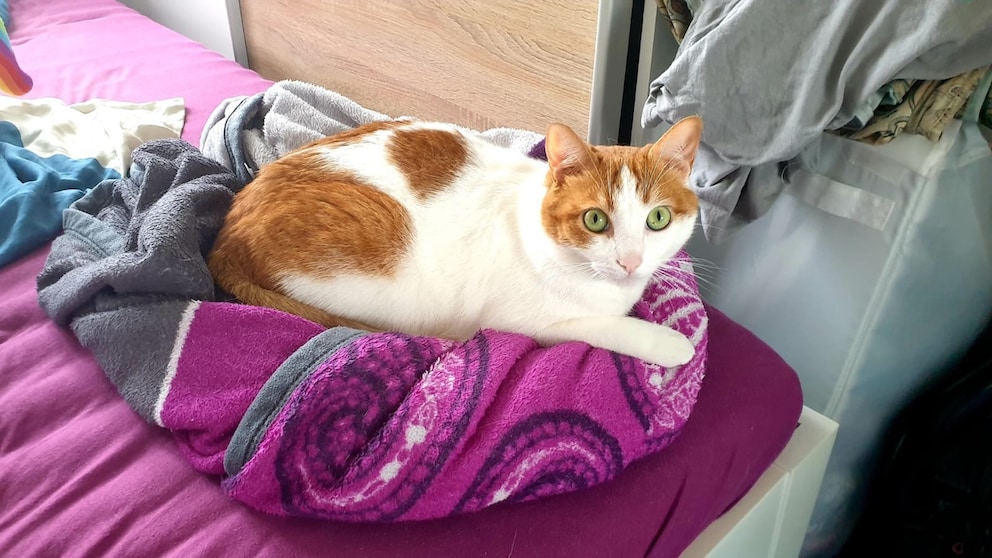
When I got him from the animal shelter, he already wanted to sleep in the bed, but at the foot end, in “his” cozy blanket, which I had rolled into a nest. We called this spot his “donut” for a long time. After a while, however, Remo began to move further up. Initially for morning cuddles, later also before going to bed. But always in the middle of the bed.
Today he has a special teddy fur pillow that he usually uses like we humans do, by laying his head on it. Unless he perches completely on it so he can look down on us, which also happens occasionally. Or he simply lays directly on my pillow. Until I wake up at night because I feel a thick cat butt on my neck, which by now feels more than a little numb. And yet, I wouldn’t want to do without it. Not even the nightly purring, grooming at 4 a.m., or paws sneaking under my blanket and pressing into my arm. Because the nightly closeness of a cat is no coincidence–it’s a sign of deep trust.
A Silent Declaration of Love on Four Paws
In most cases, it’s not an act of dominance when the cat sleeps on the head–even if some suspect it is–but a sign of deep connection. There are both emotional and instinctive reasons that make the head area so attractive to cats.
Warmth
Cats have a higher body temperature than humans and love warmth accordingly. Especially during sleep, we emit a lot of warmth, most of it from our heads. No wonder cats like Remo regularly lie right next to their owner’s head or claim the pillow entirely for themselves. They prefer it when they can lie between their humans. At night, this is–except for the heater–the warmest place in the house.
Security
Even though they are domesticated (more or less, as science debates), cats still carry instincts from their time as wild animals. Proximity to their human offers them protection and security. The slow rhythm of our breathing, heartbeat, and familiar scent are particularly calming to cats. This signals that everything is okay. Additionally, the head moves very little during sleep–ideal for cats who love undisturbed rest.
Scent Messages
Cats are masters of olfactory communication. Through special scent glands on their head and cheeks, they mark both territory and social partners. Sometimes Remo also rubs against my head before lying down. This marks me as “his” human. This expression of affection in feline communication means: “You belong to me, you are my social partner.” Cats smell our head, but also particularly intensely our own scent–especially near hair or skin. 1
Vantage Point
Cats prefer elevated resting places–they give a sense of control. The pillow serves this purpose perfectly–as does the human head itself. Additionally, even if you’re lucky enough to have them lie quietly next to you all night, cats don’t sleep as deeply as humans.
When I turn, Remo usually lifts his head immediately to see what I’m doing. I then briefly stroke his head to reassure him, and he curls up again, sometimes even sighing contentedly.
Routine
The factor of habit should not be underestimated. Cats are creatures of routine–once they find a place particularly pleasant, they usually stick to it. Especially when the human lies in the same spot every night, it offers a constant, reliable environment. For cats, this equates to emotional stability, as they only sleep where they feel absolutely safe. In feline behavior, physical closeness, especially during sleep, is an expression of deep social bonding. Those who let their cat lie on their head are considered part of the “own group” by the cat. 2

Why Cats Steal Our Seats

Did You Know? Some Cats Tuck Their Humans Into Bed
What if Sleep Suffers?
I’m fortunate that Remo actually stays put until he notices I’m waking up in the morning. But not every owner is this lucky or finds the nightly purring or grooming pleasant. Since I always sleep with earplugs due to human snoring noises, I usually don’t notice when Remo grooms himself extensively.
However, if the cat on the head causes poor sleep, you don’t have to banish it from the bedroom entirely. Instead, it’s advisable to create a cozy alternative near the head. Like I did, with a separate pillow, a basket with a cozy blanket next to the bed, or a bed that can be clamped into the bed frame. To get the animals used to this alternative, it’s recommended to drape a sleep T-shirt that you’ve worn for one or two nights there, or spray it with catnip or valerian sprays.
This way, the cat still finds closeness and warmth–and the human gets restful sleep again. No matter how often I wake up, whether he wakes me with purring, grooming, or a gentle paw on the cheek–I can never be mad at him. Because in these moments, there’s so much peace, trust, and affection that I smile every time before falling back asleep.
When the Behavior Suddenly Occurs
As much as many enjoy the nightly closeness–if this behavior suddenly begins or significantly increases, one should be cautious. Because it can also indicate health problems, stress, or general discomfort. This is especially true if the animal itself is not sleeping but is grooming itself (and its humans) to calm down.
Some cats that sleep on the head also start grooming humans in their sleep and develop an obsession. It could also be a stereotypical behavior that should be clarified cat-psychologically.
If the animal ingests many and especially long hairs, it can result in unpleasant “sausage chains” the next time it goes to the litter box. Additionally, depending on which body care product is used, it may not be particularly healthy for the animals.