

September 4, 2025, 2:44 pm | Read time: 6 minutes
Why does a cat’s mouth smell strong, yet its fur is always clean and pleasantly scented? Cats often smell surprisingly good–despite self-cleaning with the tongue located in the “stinky mouth.” PETBOOK editor and cat expert Louisa Stoeffler knows the reasons for the phenomenon “cat fur smells good, mouth stinks” from personal experience.
Editorial Cat Remo Had Fragrant Fur Despite Bad Breath
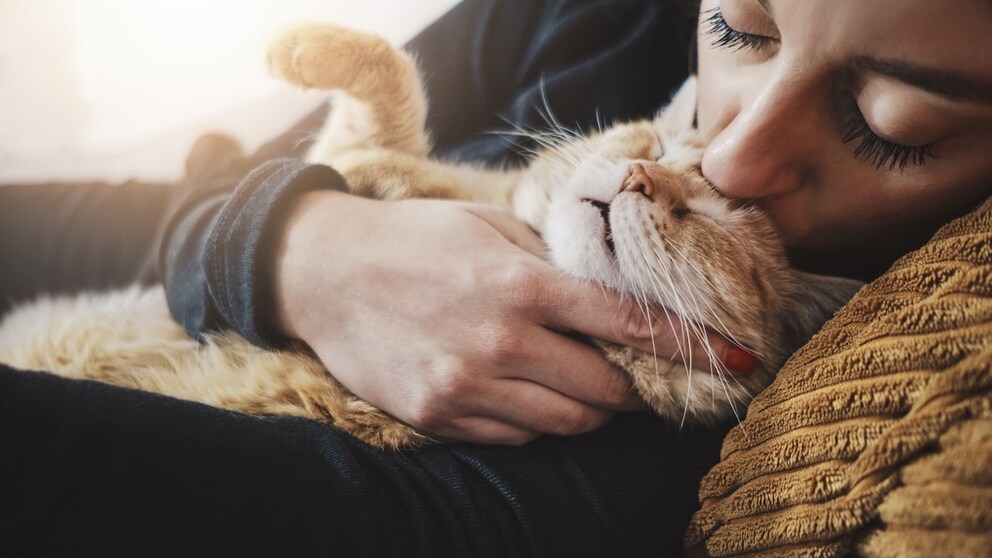
Are you familiar with the phenomenon where your cat has really “animal” bad breath, but–if you get close enough–the fur itself smells very pleasant? I notice this with my cat Remo all the time. Especially the areas above his nose or on his ears always emit a cozy, thoroughly feline scent when cuddling. I admit, sometimes I actually sniff him because I love the smell of his fur so much.
At times, however, he also had relatively strong bad breath. His breath downright stank, and when he yawned next to me, I felt a bit nauseous. Yet his fur always smelled very pleasant. Even when he had eaten tuna or another strong-smelling treat, you could never smell it on him after he had groomed himself.
On social media, this paradox regularly leads to amused comments, memes, and videos. If you search common queries, in the German-speaking world, questions like “Why does my cat smell like detergent?” are asked. In the English-speaking world, however, entries report a scent of vanilla, cookies, chocolate, or even perfume. The apparent mystery–”cat fur smells good, mouth stinks”–causes worldwide bewilderment. Yet, there are quite understandable reasons for this.
Why Cat Fur Smells Good to Us
Cats are true cleaning experts–and their tongue is an evolutionary masterpiece. The so-called filiform papillae on the tongue’s surface act like tiny hooks. When grooming, they slightly stand up and perform multiple functions simultaneously: They remove loose hairs, comb the fur, and clean it thoroughly.
This cleaning effect is supported by saliva, which contains special enzymes that serve as a kind of “shower gel” for cats. The saliva also has antibacterial and antiseptic properties that even promote wound healing. This effect is enhanced by additional fragrances that cats secrete through their sebaceous glands.
This paradox regularly amuses social media users, leading to comments, memes, and videos. In the German-speaking world, people often ask, “Why does my cat smell like detergent?” In English-speaking regions, people report scents of vanilla, cookies, chocolate, or even perfume. The apparent mystery–”cat fur smells good, mouth stinks”–causes worldwide bewilderment. Yet, there are quite understandable reasons for this.

Causes and Treatment of Bad Breath in Cats
Did You Know? Why Cats Always Use a Freshly Cleaned Litter Box
Why We Find Cat Fur Pleasantly Scented
Cats are true cleaning experts–and their tongue is an evolutionary masterpiece. The so-called filiform papillae on the tongue’s surface act like tiny hooks. When grooming, they stand up slightly and perform several functions simultaneously: removing loose hairs, combing the fur, and cleaning it thoroughly.
This cleaning effect is supported by saliva, which contains special enzymes that serve as a kind of “shower gel” for cats. The saliva also has antibacterial and antiseptic properties that even promote wound healing. This effect is enhanced by additional fragrances that cats secrete through their sebaceous glands.
You’re cuddling with your sweet-smelling cat, but nearly fall over when she opens her mouth. Many people then wonder: “Why does her mouth smell so bad?”
The answer lies in two different processes. While the saliva itself has little odor, the mouth can smell strongly due to volatile substances produced during eating or from diseases. The key is that the saliva itself has little odor–but the mouth can smell strong.
Although the saliva itself has little odor, the mouth can smell strongly due to volatile substances produced during eating or by diseases. The key is that the saliva itself has little odor–but the mouth can smell strong.
Cat Fur Smells Good Despite FORL
When bad breath persists, a visit to the vet is in order. One of the most common reasons for strong bad breath in cats is an underlying health issue. Infections in the mouth release odors that even the antiseptic effect of saliva cannot counteract. While the saliva itself has little odor, the mouth can smell strong.
Common Causes of Bad Breath in Cats
- Tartar: Deposits on the teeth that trap bacteria and cause bad breath
- Periodontal disease: Inflammation in the mouth that releases odors that even the antiseptic effect of saliva cannot mask
- FORL (Feline Odontoclastic Resorptive Lesion): Painful dissolution of tooth substance, often with extreme bad breath
- Gingivitis (gum inflammation): Can cause bad breath and is often a sign of systemic health issues
- Stomatitis: Inflammation of the mouth lining, often associated with severe bad breath
- Tooth root abscesses: Pus-filled infections under the gums, leading to a strong foul odor
- Food particles: Leftover food particles that bind bacteria and cause bad breath
- Mouth tumors: Can become infected and emit foul-smelling secretions
- Chronic kidney disease: Can lead to ammonia-like breath odor
- Diabetes mellitus: Typically causes a sweet or fruity breath odor
- Liver disease: Rarely, but can cause a musty or sweet odor
- Oral tumors: Can become infected and emit foul-smelling secretions
- Gastrointestinal diseases: Can cause bad breath due to digestive issues
- Foreign objects: Small objects stuck in the mouth can cause infection and odor
- Stress: Can lead to changes in grooming behavior, resulting in odor
- Oral tumors: Can become infected and produce foul-smelling secretions
- Gastrointestinal diseases: Can cause bad breath due to digestive issues
Remo’s Fur Smelled Good Despite FORL
When bad breath persists, a visit to the vet is necessary. One of the most common reasons for strong bad breath in cats is an underlying health issue. In Remo’s case, the diagnosis was a particularly aggressive form of FORL, which required the removal of ten teeth at once.
After the dental surgery, my vet explained that one in three cats develops this condition at a young age, and in older age, even one in two. Despite the bad breath, Remo’s fur continued to smell floral and pleasant. I can only advise taking bad breath in cats seriously and addressing the causes promptly.
When the Fur Smells Unpleasant
It’s worth taking a closer look at the causes, as bad breath is not harmless. In addition to food residues, serious illnesses can be behind it. Inflammations in the mouth release odors that even the antiseptic effect of saliva cannot cover. While the saliva itself has little odor, the mouth can smell strong.
In the case of a slow development, a decrease in grooming behavior may simply be behind it. If the cat’s fur suddenly appears dull, greasy, or smells unpleasant, this can also indicate health problems or a need for grooming.
In addition to physical causes, stress can also lead to changed grooming behavior. Some cats largely stop grooming when under psychological stress or, on the contrary, overdo it–which can also lead to problems. If an unpleasant odor occurs or the fur feels different, it is often a sign that something in the cat’s body is out of balance and should not be taken lightly.