

May 29, 2023, 2:03 pm | Read time: 4 minutes
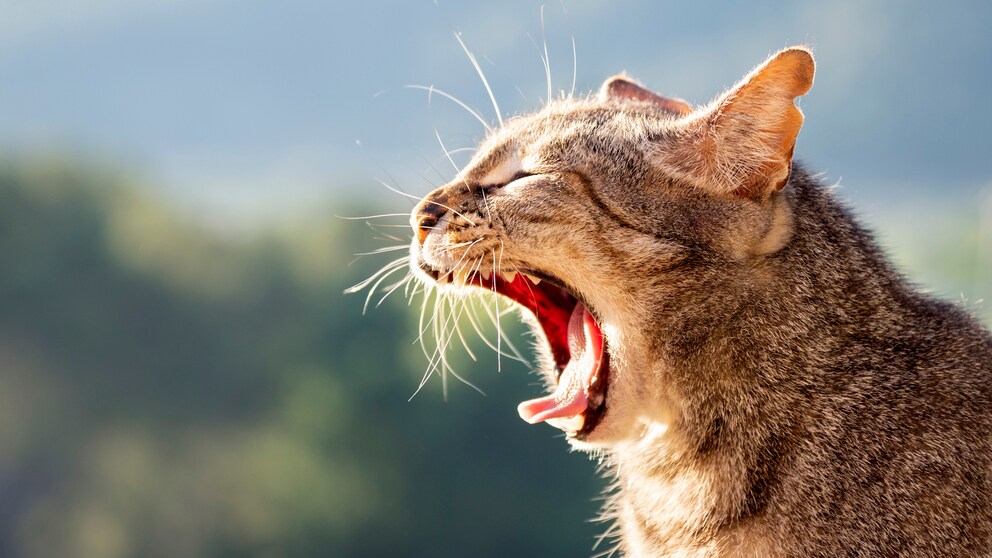
You might be familiar with this situation: You’re cuddling with your cat, it yawns heartily–and you’re hit with a gust of the worst kind of air. Where does bad breath in cats come from? And how is it treated? PETBOOK has compiled causes, symptoms, and treatment options for you.
In humans, there are many reasons for bad breath. Sometimes it’s simply the consumption of strong-smelling foods such as garlic or onions, other times it’s poor oral hygiene or smoking cigarettes. Certain illnesses, such as tonsillitis or pneumonia, can also cause bad breath. What about our four-legged friends: Why do cats get bad breath? And what can their owners do about it?
The Cat Has Bad Breath–What Helps Against It?
To some extent, it’s normal for cats to have a smell from their mouths. The oral flora of carnivores like cats naturally develops a stronger “scent” than that of pure herbivores. However, if you notice that your cat’s bad breath becomes really pungent, an illness might be behind it.
The “aroma” of the bad breath can already provide initial clues about the cause. If the cat’s breath smells purulent, it may have dental problems, such as gingivitis or tartar. However, serious metabolic diseases can also cause bad breath. If you detect a sweet smell reminiscent of nail polish remover, your cat may have diabetes mellitus. A strong urine or ammonia smell indicates kidney disease, as there is too much urea in the blood.
A fishy smell from the mouth suggests food residues between the teeth. And a metallic scent indicates bleeding. But no matter what your cat’s mouth smells like, a changed or unpleasant bad breath is always a reason to visit a veterinarian.
Also interesting: Why cats chatter and chirp when sitting by the window
Examination and Diagnosis by the Veterinarian
Depending on the cause, bad breath is accompanied by other symptoms, such as loss of appetite, drooling, head shaking, and/or apathy. Your veterinarian will look into the cat’s mouth: If inflammations, injuries, or ulcers are causing the bad breath, they will be immediately discovered during this visual examination.
If the look into the mouth yields no specific findings, further examinations may follow. If the veterinarian suspects FORL (short for “feline odontoclastic resorptive lesions,” formerly known as cat cavities) as the cause, they will likely take an X-ray of the teeth. Kidney insufficiency or certain viral infections are detected through blood tests.

The 7 Most Common Cat Diseases

Cat Fur Smells Nice, but Mouth Stinks–Why?
Treatment of Bad Breath in Cats
The therapy depends on the underlying cause of the bad breath. Sometimes a simple change in diet is enough to mitigate the unpleasant stench from the mouth. For example, cat food with fish causes stronger bad breath than other types.
Additionally, there is special diet food for dental cleaning that can reduce bad breath. Providing cat grass can also help fight bacteria in the mouth and solve the problem. Whether giving special chew items can eliminate bad breath is debated. Before changing your cat’s diet, you should definitely consult your veterinarian.
If an illness is behind the “mouth odor,” it must be treated. This may involve dental restoration if diseased teeth are causing the foul smell. Infections are treated with antibiotics and painkillers. Metabolic disorders such as diabetes require long-term therapy, such as daily insulin injections. But complex surgeries may also be necessary, for example, if a tumor in the mouth needs to be removed.
Sources
- Drsam.de, “Bad Breath in Cats–What You Can Do About It”, (accessed on 05/24/2023)
- Tierarzt-dumhart.at, “Bad Breath in Cats”, (accessed on 05/24/2023)
- Petdoctors.at, “16 Causes of Bad Breath in Your Feline Friend”, (accessed on 05/24/2023)