

November 13, 2025, 5:48 am | Read time: 5 minutes
Algae in an aquarium are not a sign of neglect–quite the opposite: In a healthy tank, they are part of the ecosystem. However, if they spread uncontrollably, it affects not only the appearance but also the biological balance. Knowing the right balance and key adjustments can effectively protect your aquarium from cloudy water and excessive algae growth. PETBOOK explains how to do this and which algae in the aquarium can really become a problem.
Why Algae in the Aquarium Are Completely Natural
An aquarium completely free of algae does not exist–and that’s a good thing. Especially at the beginning, they are even important. “During the initial phase, algae phases are normal and important even in freshwater aquariums. The system develops and stabilizes,” explains Matthias Wiesensee, vice president of the Association of German Aquarists and Terrarium Enthusiasts (VDA) e.V., in a press release from the Pet Supplies Industry Association e.V.
To limit algae growth during this sensitive start-up phase, it is advisable to change the water every two days for the first three weeks. Other methods include the so-called “Dark Start,” where light is initially avoided and planting is delayed, or the “Dry Start,” where the tank is initially set up with only substrate and plants, but without water.
Even in an established aquarium, algae may occasionally appear on old or dead leaves, as these provide an ideal settlement area, much like deadwood in a forest, Wiesensee notes.
Algae and Plants Compete for Resources
Basically, algae–just like aquarium plants–need light and nutrients to grow. This results in direct competition. “An imbalance between light, nutrients, and plants that are not growing healthily almost always leads to excessive algae growth,” Wiesensee explains.
Since there is usually a nutrient deficiency in the aquarium, these must be specifically added from the outside–similar to fertilizing in a garden. “When the complete nutrient package is available that a plant needs to grow–such as nitrate, phosphate, iron–then it grows.”
However, due to too many fish or too few water changes, there can be an excess of individual nutrients. Algae, unlike more specialized aquatic plants, can use this for their growth until they eventually infest or displace the plants, Wiesensee knows. “It’s similar with light: You should especially pay attention to a high PAR value and limit the lighting duration. For CO₂, you should aim for a value of about 20 to 25 milligrams per liter through active addition.”
The 12 Best Plants for a Healthy Freshwater Aquarium
Freshwater or Saltwater Aquarium? An Overview of the Differences
Which Algae Occur in the Aquarium
Not every type of algae is equally problematic. Depending on the type, the causes of their emergence and control options differ:
Green algae often occur with a phosphate surplus and grow quickly. They can rapidly deplete the oxygen content in the water and significantly affect it. However, many aquarium inhabitants like shrimp, snails, or catfish enjoy eating them.
Diatoms, often mistakenly referred to as brown algae, often appear as a brownish coating in newly set up tanks. They usually disappear on their own once a stable biological balance is established. An increased silicate level in the water can promote their growth.
Red algae become noticeable mainly with CO₂ deficiency and poor plant growth. They indicate that something is wrong with plant care. Red algae often appear as beard or brush algae and cling stubbornly to plants, decorations, or equipment. Visually, they initially appear gray to black–their reddish color only shows when placed in alcohol for testing. Since they are rarely eaten, they must be removed mechanically.
Blue-green algae are actually not algae but cyanobacteria and form blue-green coatings that can smell unpleasantly musty. They spread quickly and can be potentially harmful to fish and plants. They should be completely siphoned off, and the water should be generously renewed. Specialists or aquarium clubs can help with long-term control.
How to Keep the Balance in the Aquarium Stable
To prevent excessive algae infestation, a stable biological balance in the tank is crucial. According to Matthias Wiesensee, this includes several measures:
- Regular water changes of about 30 percent
- Adjusted fish stock, as increased food amounts and fish excretions introduce more nutrients into the water
- Targeted feeding, so that the animals consume the food within a few minutes
- Adequate plants to utilize the nutrients in the aquarium–especially fast-growing species compete with algae
- Optimized lighting duration of eight to ten hours daily
- Maintenance helpers in the tank like shrimp, snails, or certain catfish
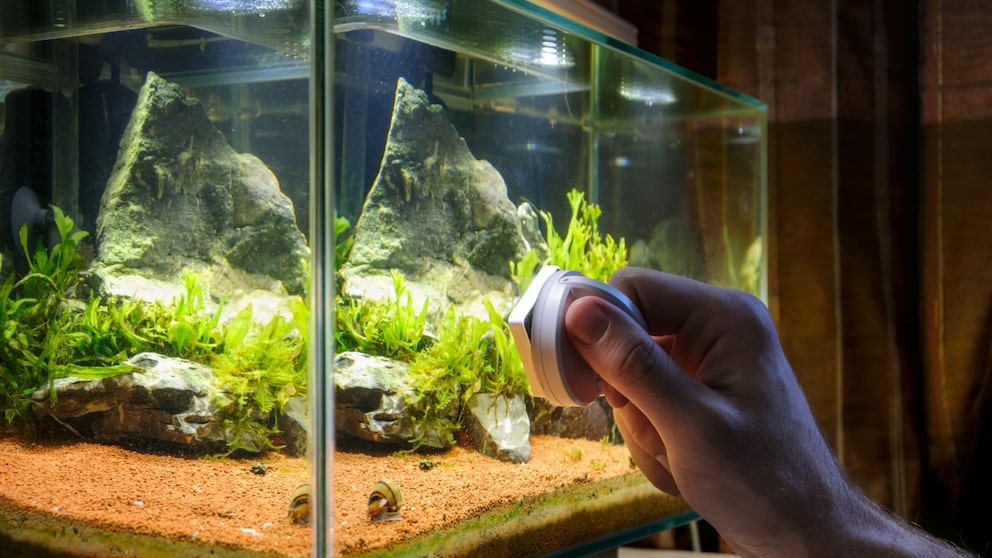
- Removal of algae, for example, with a magnetic cleaner or cleaning glove–if possible, stones or decorations can be removed and scrubbed under clear water or soaked in special products
Algae problems mainly arise in newly cycled tanks that still need to stabilize. Later, stability in the tank can be supported through consistent maintenance and avoiding abrupt changes.
Especially in the early stages of an aquarium, algae can become more prevalent–this is part of the natural development. However, those who maintain regularly and avoid major changes support the long-term stability of the tank.