

August 31, 2025, 1:28 pm | Read time: 4 minutes
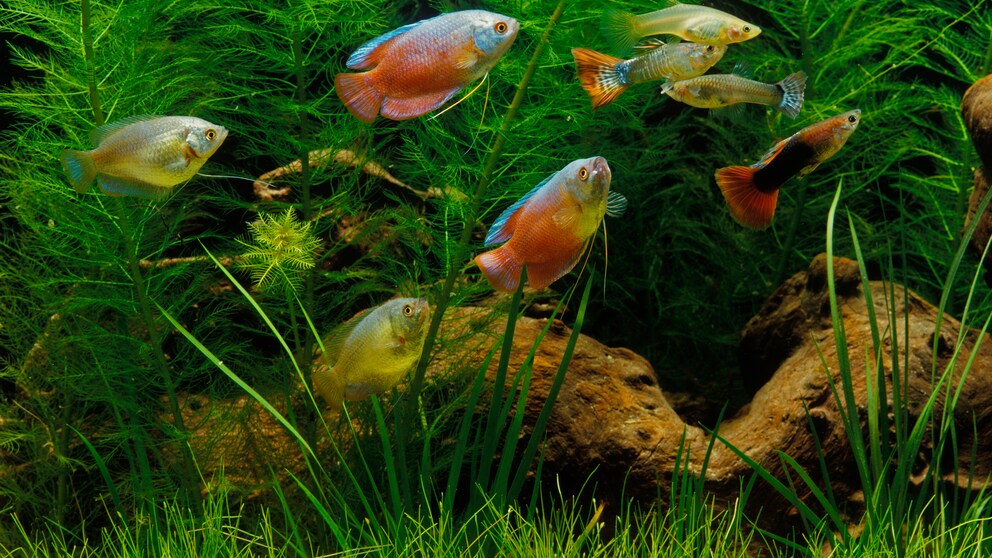
Aquarium plants are much more than just pretty decorations. They provide shelter for fish and invertebrates, serve as spawning grounds, and supply microorganisms that are used as a food source. Additionally, they positively affect water quality by absorbing pollutants and releasing oxygen. But which plants are particularly easy to care for and best suited for a freshwater aquarium? PETBOOK reveals it.
How Do I Best Plant My Aquarium?
Planting the aquarium has a significant impact on water quality. Live aquarium plants can filter pollutants from the water and produce oxygen. They thus have a major influence on the health of ornamental fish, shrimp, and other aquarium inhabitants.
When designing the tank, it’s not just about the types of plants but also their positioning. Aquarists generally distinguish between foreground, midground, and background planting.
- Foreground: Low, slow-growing species are recommended here, which, as so-called carpet plants, form a green carpet on the substrate through lateral growth.
- Midground: Plants of medium height give the aquarium visual depth and create accents.
- Background: Tall species are ideal for concealing equipment like filters or heaters.
The right combination creates a harmonious underwater landscape that is both decorative and functional. It gives the planting visual depth and makes the tank a real eye-catcher where the inhabitants also feel comfortable. 1, 2
Which Plants Are Best Suited for a Freshwater Aquarium?
A wide selection of plants is available at specialty stores, some of which can be planted in groups, while others, known as solitary plants, stand alone. To thrive, live aquatic plants need light and nutrient-rich substrate. The following plants have proven to be particularly effective in freshwater aquariums.
1. Java Moss
With its dense mats of bright green, finely branched, bushy stems, Java moss (Taxiphyllum barbieri) is a real eye-catcher in a freshwater aquarium. This easy-to-care-for, hardy plant forms dense mats and is a great addition to any tank.
2. Java Fern
This plant, which grows up to 10 inches tall, can create an attractive fern forest in the aquarium. Another name for the Java fern (Microsorum pteropus) is black root fern. Depending on the size of the aquarium, the fern is suitable for planting in the midground or background.
Also interesting: How Does a Self-Sustaining Aquarium Work?
3. Cryptocoryne
Larger species from the Cryptocoryne genus are well-suited as background plants for freshwater aquariums. The dwarf form, Cryptocoryne lutea Hobbit, remains low. These aquarium plants are characterized by their branched rootstock and rosette-arranged leaves.
4. Anubias
Anubias are considered robust aquarium plants. Fish and other aquarium inhabitants are unlikely to nibble on them. They have dark green, heart-shaped leaves and are particularly attractive in the midground of the tank. Some species are native to Africa and are known for their resilience.
Also interesting: Essential Equipment for Aquarium Beginners
5. Amazon Sword Plant
Sword plants (Echinodorus) are considered robust aquarium plants. Fish and other aquarium inhabitants rarely nibble on them. They have dark green, heart-shaped leaves and are particularly attractive in the midground of the tank. Some species are native to Africa and are known for their resilience.
6. Water Wisteria
Water wisteria (Hygrophila difformis), also known as cherry leaf, is one of the easiest aquarium plants to care for. It grows very quickly and can shimmer from green to reddish, making it ideal for midground and background planting. However, it should be pruned regularly to prevent it from overtaking other plants in the tank.
7. Vallisneria
Vallisneria is a classic among aquatic plants, especially in larger aquariums. They are characterized by their long, ribbon-like leaves that reach the water’s surface, creating decorative “curtains.” They reproduce through runners, forming dense clusters quickly. In small tanks, they can become dominant, so they are best suited for larger aquariums.
8. Hornwort
Hornwort (Ceratophyllum demersum) is a popular stem plant for the background of the aquarium. Under strong lighting, the tips of the shoots turn slightly reddish, adding visual variety. It grows quickly, is easy to care for, and provides a striking contrast to other plants.
9. Creeping Ludwigia
With its delicate, feathery leaves, creeping Ludwigia (Ludwigia repens) is one of the most straightforward aquarium plants to care for. It grows rapidly, producing dense clusters with numerous side shoots that serve as retreats for many fish. It is especially popular in the midground, where its red to reddish-green leaves add color and vibrancy to the planting.
10. Various Floating Plants
Floating plants drift freely on the water’s surface and provide shade, which offers security to shy fish. They also absorb nutrients from the water and help inhibit algae growth. Because they can multiply quickly, they should be thinned regularly to ensure other plants receive enough light.
Also interesting: How Does a Self-Sustaining Aquarium Work?