


December 3, 2025, 11:25 am | Read time: 4 minutes
A decision that has marine conservationists worldwide cheering: At the 20th CITES conference, member states agreed on stricter protection measures for more than 70 species of sharks and rays. What might seem like a bureaucratic act at first glance could prove to be a turning point in the fight against the dramatic extinction of species in the oceans. Many of these species are on the brink of collapse—with serious consequences for entire marine ecosystems.
What is CITES anyway?
CITES stands for the “Convention on International Trade in Endangered Species of Wild Fauna and Flora.” It is an international agreement that regulates trade in endangered animal and plant species. More than 180 countries commit to protecting species threatened by international trade. Depending on the level of threat, they are classified into three appendices. Appendix I offers the highest level of protection: International trade is virtually prohibited.
Particularly threatened species of sharks and rays have now been added to this appendix.
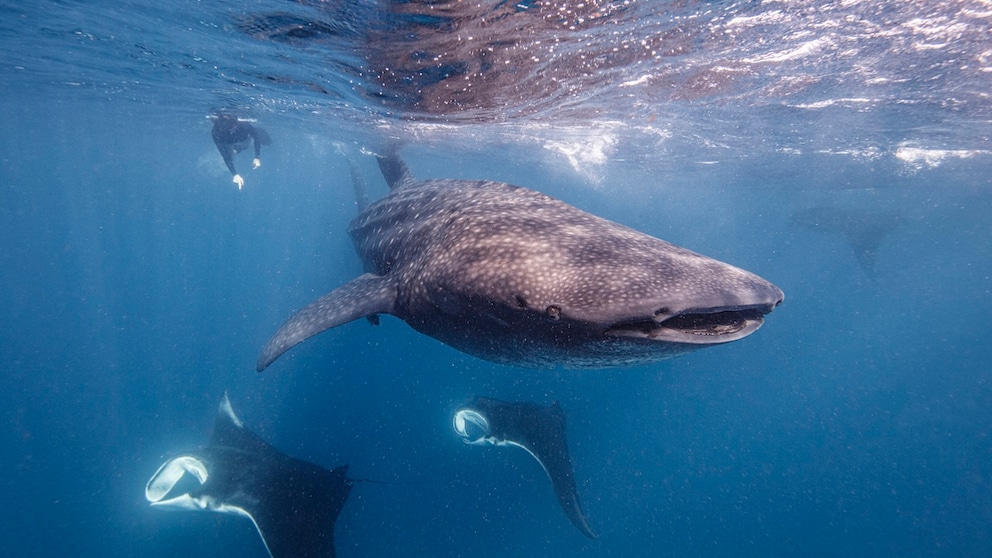
Whale Sharks, Manta Rays, and Other Species Receive Highest Protection
Last year, at the 19th World Species Conference, around 100 species of sharks and rays were placed under international protection. Now, whale sharks and all species of manta and devil rays have received the highest level of protection. This means that international trade in them and their products is completely banned.
The timing could hardly be more critical. Sharks are considered the “health police” of the seas: As apex predators, they stabilize food webs, regulate other populations, and thus protect coral reefs and fish stocks. If their numbers collapse, the entire ecosystem can be affected.
“An Unprecedented and Historic Victory”
Marine conservationists are overwhelmed. Shawn Heinrichs, Emmy-winning cinematographer and founder of the organization OnlyOne, calls it a “historic victory”: “What began in 2013 with the first listing of manta rays has now ended in a complete trade ban for manta rays, devil rays, whale sharks, and oceanic whitetip sharks—the strongest protection ever,” he told the magazine “World Animal News.”
The numbers he cites highlight the urgency. Manta and devil rays have declined by up to 99 percent worldwide, whale sharks by over 50 percent, and oceanic whitetip sharks by 80 to 90 percent. “The timing couldn’t have been more critical,” Heinrichs said.
Trade Ban and New Export Rules for Other Species
Other endangered species of sharks also benefit from the CITES decision:
- Guitar and wedgefish receive a zero-export quota—effectively a trade ban.
- Dogfish and smoothhounds, popular as low-cost “flake” fish fillets (such as for fish and chips), may only be traded if sustainable use is proven.
- Deep-sea gulper sharks, whose liver oil is sought after in the cosmetics industry, have been added to Appendix II. Three-quarters of these species are now considered endangered.
For gulper sharks, the step comes late but not too late: In some regions, their populations have already declined by 80 percent.
Deep-Sea Mining Threatens Endangered Sharks – 30 Species in the Crosshairs of the Resource Boom

Why Sperm Whale Vomit Is Worth 80,000 Euros per Kilo
Every Year, Over 100 Million Sharks Are Killed
“People fear sharks—but we are a much greater threat to them,” quotes “World Animal News” Barbara Slee, Senior Program Manager at the International Fund for Animal Welfare (IFAW). Every year, over 100 million sharks are killed. Many species are disappearing faster than they can recover. Slee emphasizes how much the loss of these animals destabilizes the seas: “When sharks disappear, the ecosystem that keeps our oceans healthy collapses.”
The Decisions Will Take Effect in 2026
The CITES member states met from November 24 to December 5 in Samarkand. The conference’s decisions will be implemented 90 days after their final confirmation—expected in spring 2026.
This sends an important global signal: The time when sharks and rays were seen merely as fishery commodities is over. Their protection is crucial—not only for the species themselves but for all marine life.