

October 30, 2025, 4:24 pm | Read time: 6 minutes
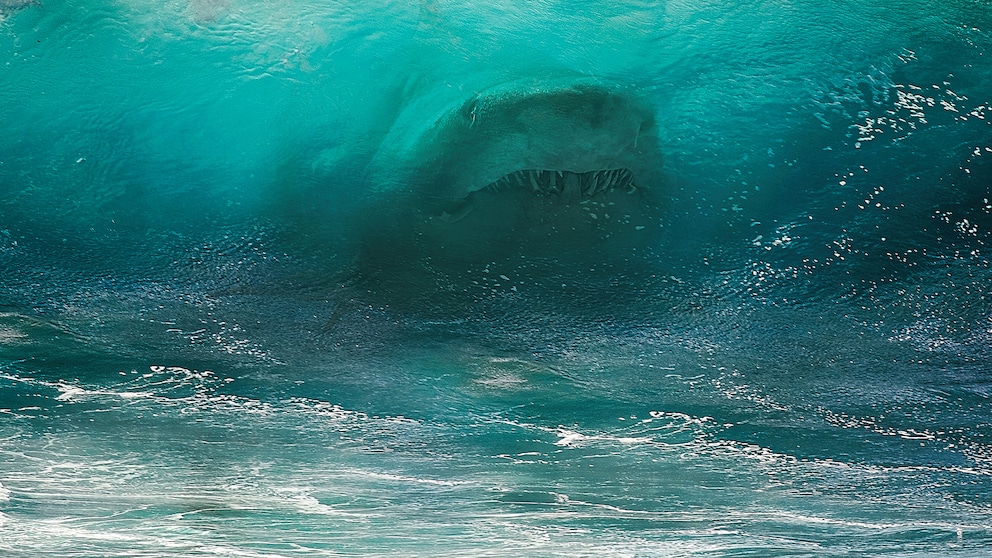
Amid the dramatic coverage of Hurricane Melissa, disturbing images are currently circulating on social media—including sharks in flooded streets or planes circling just above the storm’s eye. Viewed millions of times, many of these videos look deceptively real. But they have one thing in common: They are completely artificially created. The spread of such AI-generated content raises serious questions—not only about credibility but also about public safety. They also fuel fears of so-called “Sharknados.” An expert explains in this PETBOOK article how likely such an event is.
Millions of Clicks for Manipulated AI Clips
Since the Category 5 hurricane hit Jamaica on Tuesday, October 28, 2025, increasingly realistic AI videos have been spreading on platforms such as TikTok and Facebook. Many reach millions of views, even though they depict fictional scenarios, such as sharks swimming through flooded streets or swimming pools full of predatory fish.
Some of the videos can be easily identified as AI content—they bear visible watermarks from tools like OpenAI’s video AI “Sora” or Google’s model “VEO.” But many others have been deliberately manipulated: The telltale markings have been cropped, blurred, or completely removed—apparently with the intent to deceive viewers.
TikTok Deletes Content—But Many Videos Remain Online
The platform TikTok is trying to combat the flood of AI fakes—so far with limited success. As reported by the news agency AFP, the company deleted more than two dozen such videos on Monday. Nevertheless, many continue to spread unchecked and still find a wide audience. This is particularly concerning to authorities in Jamaica.
In a press conference on October 27, Jamaica’s Information Minister Dana Morris Dixon emphasized, according to AFP: “I’m in so many WhatsApp groups, and I see all these [AI-generated] videos. Many of them are fake.” She appealed: “And that’s why we urge you to please listen to the official channels.”
The spread of such content can cause more than just confusion—it can endanger lives in serious situations. While authorities struggle for clear communication, fake sensational videos distract from important warnings.
“Sharknado” Fuels Primal Fears
Many people already have an irrationally large fear of sharks. This fear is further fueled by movies like “Jaws” or the “Sharknado” trash films. In 2013, the first part of “Sharknado” aired on TV screens.
A trash film that quickly achieved cult status and gained such a loyal fan base that five more parts about the dramatic shark storm—which must be fought with chainsaws—were made. But how likely is such an event in real life? PETBOOK asked a shark expert.
Sharks Are Washed Ashore During Severe Storms
Shark expert Dr. Iris Ziegler from “Sharkproject International” assesses the situation for PETBOOK. “There are, unfortunately, more horror films like Sharknado than one might think. In fact, during severe storms or tsunamis, it can happen that animals from coastal waters are washed ashore—how far depends on many factors, but likely closer to the shore. Certainly not as depicted in ‘Sharknado.'”
It has happened more frequently that bull sharks, which also live in freshwater, have been relocated by storms. In 2017, several media outlets reported that bull sharks were washed ashore in Australia after a tropical storm. The animals were found in brackish water and flood basins. 1, 2
Additionally, the “New York Times” reported in September 2023 that bull sharks had lived for many years in a lake on a golf course. The animals were washed in by storm surges in 1996. They lived there for 17 years, feeding on the fish stocks or treats provided by the golf course staff. 3

Bull Shark in Freshwater: “Normal Phenomenon”
Dr. Iris Ziegler explains to PETBOOK that this is actually a very “normal” phenomenon, as this shark species can live for a long time in brackish water or even temporarily in freshwater. “Only a few shark species can do this, and bull sharks are ‘masters of adaptation’ in this regard because they can adjust their body’s salt balance according to the osmotic pressure of the environment.”
This is a brilliant feature of nature that allows the animals to occupy additional food sources/habitats, the expert tells PETBOOK.
“Please Do Not Confuse With the Invasion Scenarios of Horror Films”
Dr. Ziegler warns against panic-mongering regarding the likelihood of shark storms à la “Sharknado.” “But please do not confuse this with the invasion scenarios from horror films,” she says. “In fact, it’s the other way around, and in reality, we humans are the ‘monsters.'”
The expert further reports to PETBOOK that each year between 63 and 273 million sharks die due to humans, mainly through fishing. “In contrast, there are about 10 shark accidents per year! So what should we really be afraid of?”
The expert describes the consequences of shark extinction as far more dramatic. “Because without sharks, marine ecosystems collapse, and without the sea, this planet and all of us die.” Already today, 37 percent of all known shark and ray species are threatened with extinction, and among open-ocean sharks, it’s even two-thirds of all known species. “Moreover, we have lost over 70 percent of shark populations in the last 50 years!” Dr. Ziegler emphasizes.
Deep-Sea Creature Washes Ashore

Do Sharks Really Need to Keep Swimming Constantly to Avoid Suffocating?
Loss of Sharks Is the Real Horror
Dr. Ziegler emphatically warns that these are the real “horror facts.” In addition to hunting, sharks are killed millions of times as bycatch in fishing for other species, such as tuna, swordfish, and other deep-sea fish. “But also for the good old plaice, sole, or cod.”
Perhaps in a few years, the question will no longer be whether a shark storm like in “Sharknado” could occur, but rather whether there will be any sharks at all. “But that is unfortunately reality, and if we don’t act immediately and stop deliberately hunting sharks, it will be too late in just a few decades,” warns the expert. “Because you can’t breed these sharks.”
How to Spot Fake AI Videos
Especially in times of crisis, it is crucial to carefully check content before sharing it. Experts recommend the following measures:
- Look for visible or manipulated watermarks—such as blurry corners or edited image areas where a logo was originally placed.
- Check the source of the video: Who published it, and is the person or page trustworthy?
- Read captions critically: Phrases like “incredible” or “must-see” are typical clickbait elements.
- Compare the content with current reports from reputable news sources.
With a watchful eye, many AI fakes of “Sharknados” can be exposed—and the spread of misinformation in already challenging times can at least be curbed.