

December 26, 2025, 3:19 pm | Read time: 4 minutes
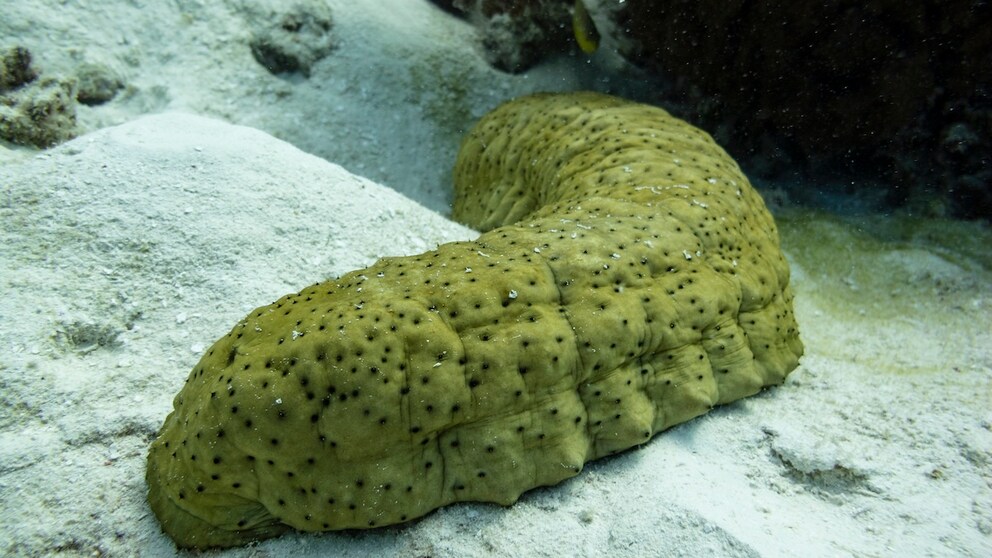
The cosmetics industry is constantly searching for new active ingredients—and this time, a sea creature that is anything but glamorous is in the spotlight: the sea cucumber. But can an animal that looks like a living sausage actually contribute to skincare? PETBOOK takes a look at studies and expert opinions.
What Exactly Are Sea Cucumbers?
Despite their name, sea cucumbers have nothing to do with vegetables. They are invertebrate marine animals from the class Holothuroidea. They can be found in almost all of the world’s oceans—particularly in the Indian Ocean and the Pacific—and play an important ecological role: They clean the ocean floor by feeding on detritus, sediments, and carrion. Some species also filter food particles from the water.
Culinary Delicacy—Especially in Asia
In addition to their role in the ecosystem, sea cucumbers are considered a delicacy in parts of Asia. They are especially popular in China, Japan, and Korea, where they are served in dried form, as an ingredient in soups, or in sauces. In traditional Chinese medicine, they have long been attributed with healing properties.
Complex and Expensive Cultivation
A quick look at sales platforms like Amazon reveals that sea cucumber extract is no bargain. The high price is partly due to the complex cultivation process. This usually takes place in specialized aquaculture facilities where temperature, salinity, oxygen supply, and light must be precisely regulated.
The reproduction of these animals is also demanding: Depending on the species, targeted breeding stimulation, such as temperature changes or hormone treatments, may be required to trigger reproduction. After fertilization in special tanks, the larvae are carefully monitored. It’s no wonder that the effort is reflected in the prices of the finished products.
From the Ocean Floor to the Skin: Sea Cucumber as a Beauty Ingredient
The Queen Mary University of London has extensively studied the potential of the sea cucumber. The unique connective tissue of the sea cucumber can serve as a model for bio-inspired materials that can mimic its remarkable properties. These could be used as flexible scaffolds in cosmetic treatments against skin aging, according to Dr. Himadri Gupta from the Institute of Bioengineering.1
For the cosmetics industry, the anti-aging potential is particularly exciting—and dermatologists also see benefits. Sea cucumber extract can offer a variety of benefits for the skin. They themselves are primarily composed of collagen. This marine collagen replenishes your own collagen stores while simultaneously improving skin elasticity for greater resilience. This also strengthens your skin barrier and can even improve blemishes and acne.2
Other Potential Effects on the Skin
In addition to its collagen content, sea cucumber extract offers a range of other potential skincare benefits:
- Moisture: The high water content can help hydrate dry skin.
- Soothing: The ingredients can alleviate skin irritations and redness.
- Anti-Aging: Antioxidants protect against free radicals and can counteract wrinkles.
- Brightening: Some components of the sea cucumber are said to help reduce pigmentation disorders and dark spots.
However, experts emphasize that the effects can vary depending on skin type. Further scientific studies are needed to confirm the exact efficacy.
Caution for Seafood Allergies
As promising as the effects may be, not everyone should use sea cucumber extract without caution. It can occasionally cause skin irritations, and this ingredient should generally not be used if there is an allergy to seafood.

Expert Explains What Cosmetics with Beeswax Are Suitable For

Did You Know That Lanolin is Derived From Sheep?
How Sea Cucumber Extract Is Obtained
The extraction of the extract can be done in various ways, depending on which active ingredients are the focus:
- Drying and Pulverization: The sea cucumber is dried (often in the sun) and then ground into a fine powder.
- Hot Water Extraction: Dried sea cucumbers are boiled in hot water to extract water-soluble substances.
- Solvent Extraction: To isolate fat-soluble components, the powder is treated with solvents such as ethanol. The solvent is then evaporated to obtain the pure extract.
Conclusion
Sea cucumber extract is considered a promising ingredient in skincare–not only because of its marine collagen but also due to its moisturizing and antioxidant properties. However, it is expensive to produce and not suitable for every skin type. Those seeking animal-free alternatives can find proven ingredients such as retinol and niacinamide.
With expert advice from Dr. Timm Golüke, a dermatologist from Munich.