

September 28, 2025, 2:09 pm | Read time: 4 minutes
Paw prints on the floor, hair on the sofa, and food scraps under the bowl–anyone living with pets knows these small household challenges. But what many don’t know is that some cleaning products can be dangerous for pets. The Central Association of Zoological Enterprises (ZZF) offers helpful tips on how to clean in a pet-friendly, hygienic, and safe manner–and what to watch out for.
Cleaning Products: These Ingredients Can Harm Pets
Many conventional household cleaners contain substances that are problematic for animals. According to the ZZF, products with bleach or strong fragrances are particularly concerning. If a dog, cat, or small animal sniffs or licks them, it can lead to symptoms of poisoning.
Certain ingredients like ammonia solution are also risky–especially in homes with aquariums or terrariums. If ammonia from the air gets into the water, it can be dangerous for fish or amphibians. Room sprays or scented oils often irritate the sensitive respiratory tracts of pets, particularly ornamental birds.
Pet-Friendly Cleaning Starts with Storing Cleaning Products
“Cleaning products should always be kept out of reach of pets,” says ZZF specialist Selina Schlierenkamp. She advises opting for natural alternatives such as vinegar, baking soda, or lemon juice. Special pet-friendly cleaners from pet stores are also a safe choice.
If chemical cleaners must be used, pets should be removed from the room during cleaning. After cleaning, it’s important to thoroughly rinse treated surfaces with water. Otherwise, dogs or cats could pick up residues on their paws and ingest them when licking.
Drinking Fountains for Cats: 3 Popular Models Tested in Everyday Use
Petlibro Dockstream 2 Water Fountain in Practical Test
Bowls, Blankets, Toys: How to Properly Clean Pet Accessories
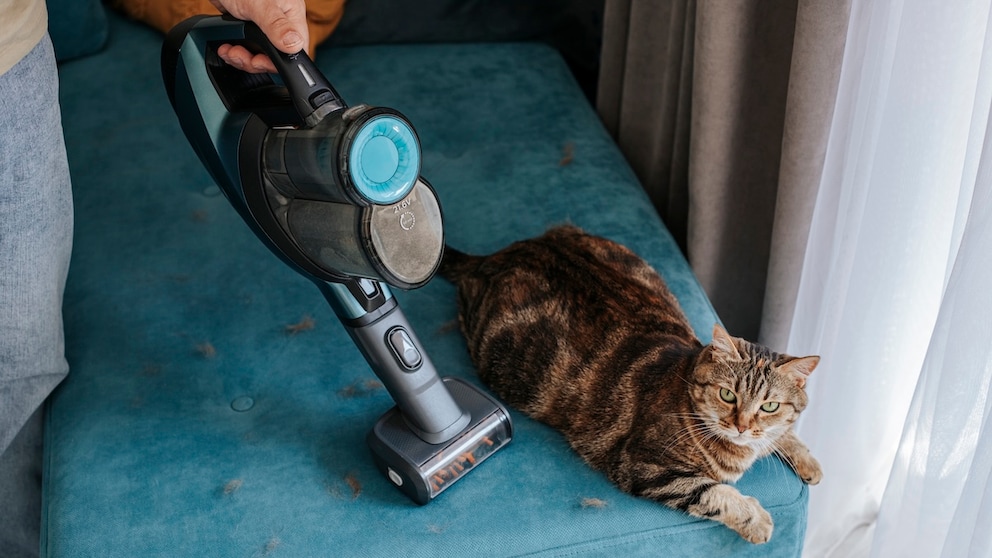
Pet hair is best removed with a lint brush or vacuum cleaner. For tougher stains like urine or feces, the ZZF recommends special cleaners from pet stores that also neutralize unpleasant odors. These include hygiene or enzyme cleaners that break down and neutralize aromatic molecules.
Food bowls should be cleaned daily with hot water. Toys and other everyday items can be cleaned with a mild soap solution–but be sure to rinse thoroughly afterward. Textiles like pillows, blankets, or baskets can usually be washed in the washing machine. The rule is to use mild, fragrance-free detergents, “because many pets have a keen sense of smell,” says Schlierenkamp.
How often you should clean these items is explained in this article: How Often You Should Clean Your Pet’s Water and Food Bowls.
Retreat for Pets During Cleaning
Noises like the hum of a vacuum cleaner or the clatter of buckets and furniture can be stressful for animals. Especially noise-sensitive animals can easily become stressed. The ZZF therefore recommends providing pets with a quiet retreat in another room during cleaning.

My Cat Hates the Vacuum Cleaner–Especially When I Use It
“My cat Remo has some very unique habits. Most of the time, they’re rather cute, but one particular ‘quirk’ makes everyday life difficult for me: He hates it when I have the vacuum cleaner in hand.
When my husband vacuums, the cat attacks the vacuum brush a few times with loud hissing and then sits demonstratively between me and the vacuum–with a raised paw whenever the vacuum comes too close to me.
However, when he sees me with the device in hand, Remo loses all control. He hisses, he hits the brush–he even gets so upset that he vomits. I don’t know if he thinks the loud noises and movements of the device could hurt me and that’s why he gets so stressed.
So when I have to vacuum, I lure him into the living room, close it off, and vacuum the rest of the apartment. Then Remo goes into the bedroom while I vacuum the living room and put the device back in the closet right away. That’s fine with him, and he just looks at me as if to say, ‘Was something going on?'”
With material from dpa