

December 30, 2025, 11:50 am | Read time: 4 minutes
You can’t buy happiness—but you can buy animal good luck charms. Whether it’s a pig, horseshoe, or ladybug, animal symbols have been associated with the belief in a prosperous new year for centuries. But why are they considered harbingers of good fortune? A look into history and folklore reveals how livestock, insects, and everyday objects became established symbols of luck.
The Pig: From Insult to Symbol of Luck
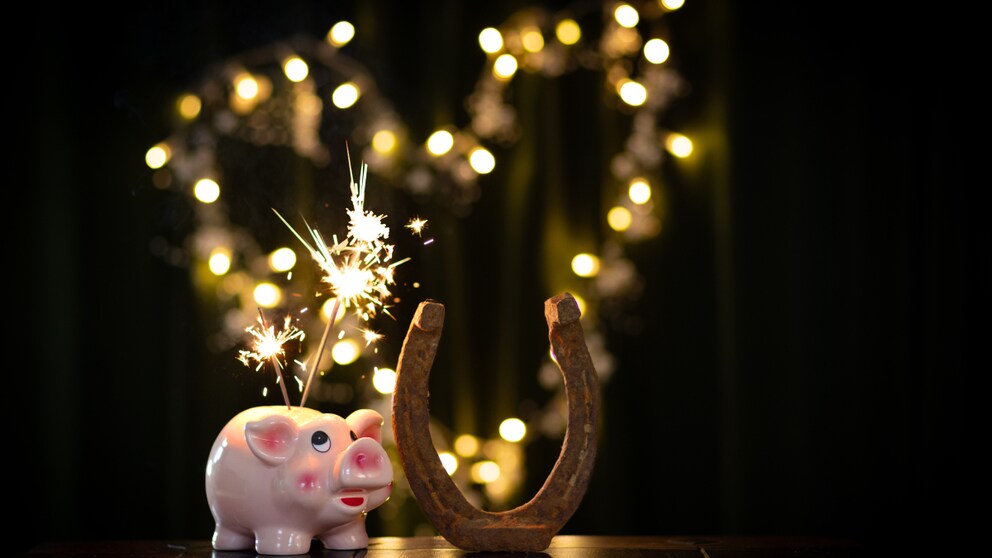
At the turn of the year, the pig transforms from a rather unflattering insult into one of the most popular good luck charms. In shop windows, on greeting cards, or as marzipan figures, it symbolizes a prosperous new year. This special role is no accident but the result of a long cultural history. In early civilizations, the pig was a sign of strength, fertility, and prosperity: It played a role in ancient religious rituals, was a sacred animal in Germanic mythology, and still represents contentment and strength in parts of Asia today.
In Central Europe, the pig likely gained its specific meaning as a symbol of luck in the Middle Ages. Back then, in folk competitions, the worst participants were given a piglet as a consolation prize—accompanied by mockery, but economically speaking, a real gain. Easy to keep, quickly ready for slaughter, and highly fertile, a single animal could lay the foundation for food security. From this experience, the saying “to have a pig” emerged as a metaphor for unexpected luck.
This notion continues in New Year’s customs today. In Germany, marzipan pigs are given as gifts, often accompanied by other symbols of luck such as clovers or coins. In other regions, merely touching a piglet is said to bring good fortune, while in several European countries, it is traditionally served as a festive meal at the turn of the year. Thus, despite its ambivalent reputation, the pig remains one of the most enduring and versatile animal symbols of luck.1, 2

These Animals Are Much Smarter Than Most People Think
The Smallest Cows in the World Even Sleep in Bed With Their Owners
Horseshoes as Animal Good Luck Charms
On New Year’s Eve, not only are fireworks sold in abundance, but also a variety of decorations or small gifts meant to bring good luck. After all, the new year should start pleasantly and not reveal unpleasant surprises over the next twelve months. For this reason, small horseshoes are often given as gifts, or pigs with a shiny silver horseshoe in tow. But why? What is the significance of the horseshoe?
The answer lies in the past. In earlier times, when horses played a significant role in agriculture or served as carriage horses for the nobility, they were not only an essential part of daily life but also a status symbol. Owning a healthy horse indicated wealth. And naturally, horse owners took care to ensure their animals were in the best of health. A significant health risk for horses is a broken or injured leg. To provide the animals with more stability in their work, horseshoes were used—and these were not exactly cheap. Even today, many owners know that horses can easily lose one of their shoes. In earlier centuries, this was also annoying. However, the person who found the shoe by the roadside was said to have had good luck.
But horseshoes don’t just adorn New Year’s Eve decorations; they sometimes hang as real iron over garages or front doors. They bring two lucky functions. On one hand, a horseshoe on a house is said to keep the devil away. If he were to knock on the door, the shoe would simply fall on his head. And if the shoe is hung with the opening facing up, it holds the luck in. So always make sure the opening doesn’t face down.3
Ladybug—Heavenly Helper with a Luck Factor
The ladybug stands for luck like no other insect—and for good reason. For centuries, it has been an important helper in agriculture, consuming large quantities of aphids and thus protecting plants and crops. Even before chemical pest control existed, its appearance was considered a good sign. From this experience, the folk belief developed that the beetle was a helper sent by the Virgin Mary, which is still reflected in its name and terms like “Herrgottskäfer” or “ladybug.” Even today, the ladybug is considered an animal symbol of luck, protection, and a healthy environment.4