

December 19, 2025, 12:42 pm | Read time: 3 minutes
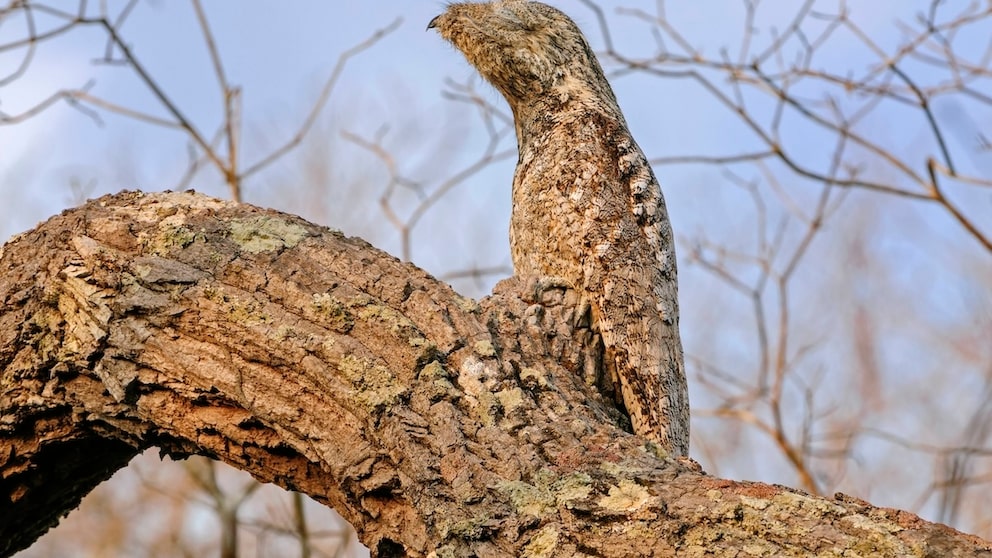
Its size is impressive, its behavior fascinating, and its camouflage nearly perfect: The great potoo looks like a broken branch during the day–and is a skilled hunter at night. In the tropical forests of South America, this extraordinary bird species leads a hidden life.
The Master of Invisibility
The great potoo (Nyctibius grandis) is among the best camouflage artists in the animal kingdom. With its gray-brown plumage that perfectly matches the bark of tropical trees, it remains nearly invisible during the day. It sits motionless and silent on branches, as if rooted in place. This perfect adaptation protects it from predators and makes it almost untraceable during the day.
After sunset, the great potoo becomes active. It hunts from the air—large insects, small birds, and even bats are on its menu. It is aided not only by its wide, flattened beak but also by an extraordinary ability: The potoo can see with its eyes closed. Slits in its eyelids allow it to perceive movement and light without having to open its eyes—an effective defense mechanism against surprise attacks.
When its eyes are open, they appear strikingly large and protrude from the sides of its head. This gives the potoo excellent vision in low light—ideal for nocturnal hunting trips. The nocturnal bird can grow up to 24 inches tall, with a wingspan exceeding 28 inches. 1

Why Ocelots Sometimes Travel With Opossums

Eyes Bigger Than the Brain–The Tarsier Is Full of Surprises
A Call That Feeds Legends
A distinctive feature makes the potoo acoustically unmistakable. At night, a loud, plaintive moan echoes from the treetops. This eerie sound has given the bird a mystical status in local folklore: Some people in South America believe it is the cries of children searching for their lost parents. Others are reminded of frog calls or human choking sounds. Some rarer calls are said to resemble owl hoots. This haunting call serves not only for communication but also for territorial defense.
A breeding pair of potoos lays only a single egg and lives monogamously. Their camouflage, vision, and eerie calls protect both themselves and their offspring. They do not lay their egg in a nest but simply in a depression on a branch. The incubation period is about 30 days, with both parents likely taking turns caring for the egg. The young bird stays in the nest for at least 55 days before leaving. After about two weeks, it begins to imitate the parents’ camouflage behavior.
Little is known about the general lifespan of these fascinating birds. However, experts suspect that, like similar species, they can live about 12 to 14 years. 2
Not Endangered–But Still Under Pressure
In parts of Brazil, the bird’s feathers are attributed symbolic significance: They are believed to promote chastity, which is why the birds are hunted for ritual purposes. Additionally, they are used to a lesser extent by rural populations for food. The International Union for Conservation of Nature (IUCN) classifies the great potoo as “least concern,” but notes a declining population.