


July 25, 2025, 12:45 pm | Read time: 4 minutes
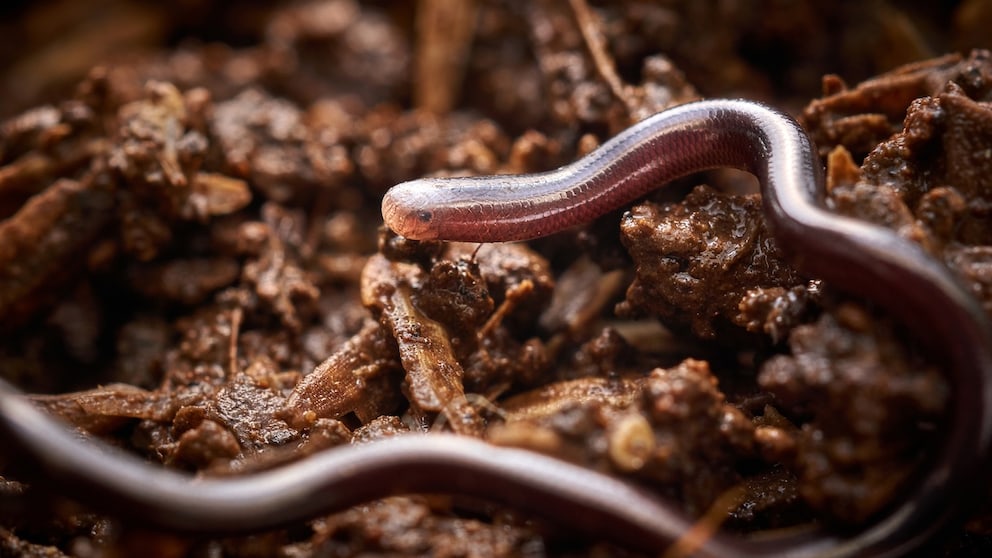
For nearly two decades, it was considered lost, but now it’s back: On the Caribbean island of Barbados, the world’s smallest known snake, Tetracheilostoma carlae, has been rediscovered. The discovery was made during ecological monitoring—and has excited not only experts.
Why the World’s Smallest Snake Was Thought to Be Extinct
Tetracheilostoma carlae is a true mystery of nature. Since its first documented sighting in 1889, only a few confirmed observations have been made—the last nearly 20 years ago. Due to its tiny size and hidden lifestyle, it was considered “lost to science.” On the global list of over 4,800 species of plants, animals, and fungi considered lost, it ranked among the most prominent candidates.
Its disappearance is not surprising: 98 percent of the original forests on Barbados have been cleared for agriculture since colonization over 500 years ago. This habitat is essential for the tiny snake’s survival. 1
How the Snake Was Rediscovered
The rediscovery occurred on March 20, 2025, as part of the “Conserving Barbados’ Endemic Reptiles (CBER)” program. This was conducted by the Barbados Ministry of Environment and the conservation organization “Re:Wild.” Project leader Connor Blades and Justin Springer, coordinator of the international conservation organization “Re:Wild,” had searched for native reptiles for more than a year, specifically targeting Tetracheilostoma carlae, the world’s smallest snake.
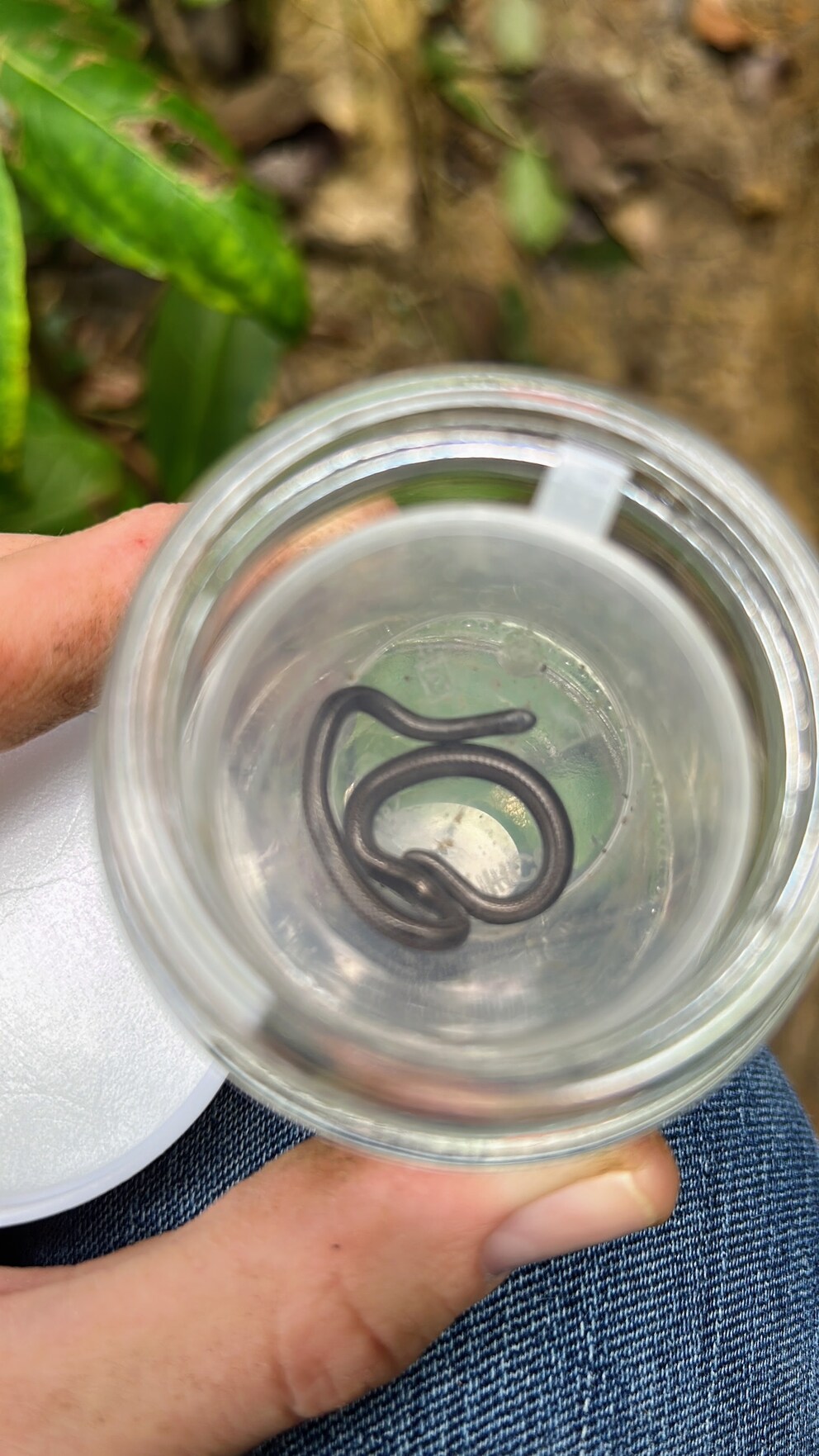
The discovery itself was almost incidental, as “Re:Wild” publicly announced in a press release on July 23. While turning over a stone under a tree root, Springer joked, “I smell a threadsnake (a group of snakes to which Tetracheilostoma carlae belongs, editor’s note)”—and indeed, there lay a tiny, spaghetti-thin snake next to an earthworm. “When you search for so long and never find anything, you’re completely surprised when it actually happens,” Springer recalls. Blades took the animal to the University of the West Indies. Under the microscope, the suspicion was confirmed: It was T. carlae. The species is clearly identifiable by its pale orange dorsal lines, side-set eyes, and distinctive nasal scale.
Why the Discovery Is So Significant
The confirmation of the world’s smallest snake is far more than a zoological curiosity. “It means that this species still exists—that it continues to contribute to our island’s ecosystem,” Blades emphasized in the press release. Springer also sees the rediscovery as an important signal: “It reminds us that the forests on Barbados are special and worth protecting—not just for the threadsnakes, but for our entire nature and cultural heritage.”
The discovery gives hope that other species thought to be lost may still exist—and motivates increased protection of the remaining natural areas on Barbados.
What Is Known About the World’s Smallest Snake
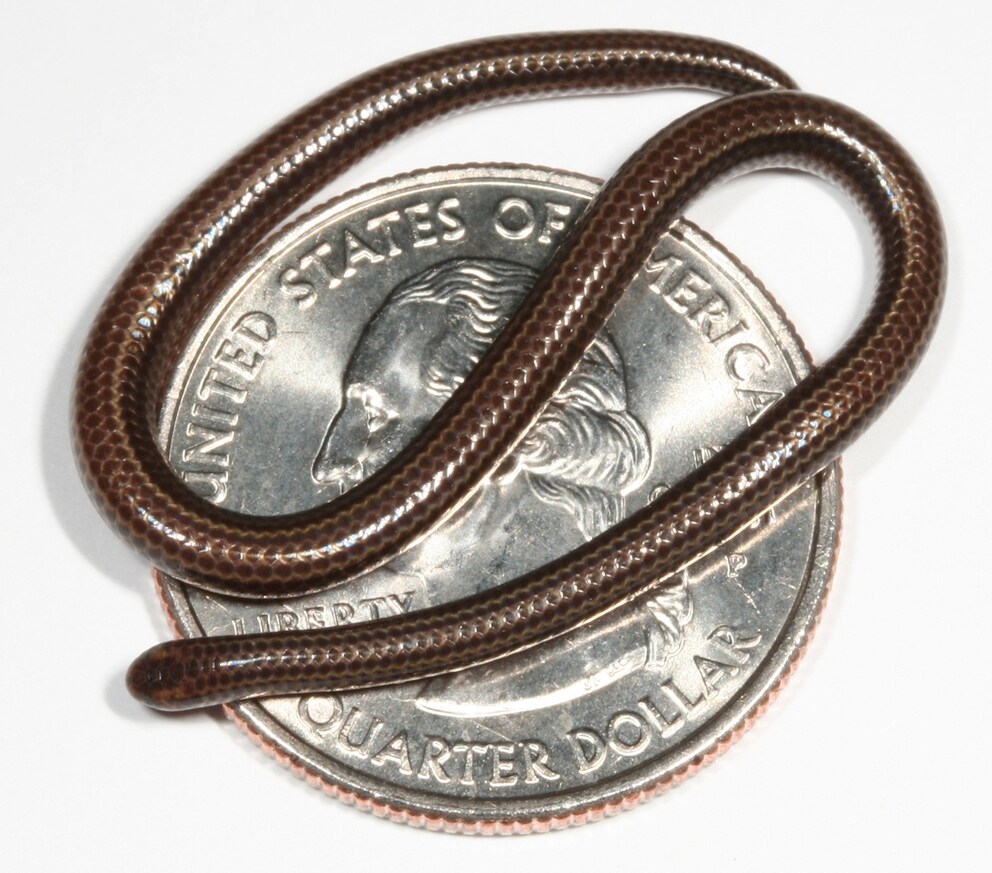
Tetracheilostoma carlae was scientifically described in 2008 by biologist Blair Hedges. Adult animals measure an average of just under ten centimeters, with a diameter of about 2.5 millimeters—barely wider than a spaghetti. They weigh only 0.6 grams. In color, they appear dark brown to black with fine, orange-yellow lines along the back. 2
It belongs to the family of threadsnakes (Leptotyphlopidae) and lives hidden in the soil. It likely feeds on termites and ant larvae there. Due to its size and resemblance to earthworms, it is easily overlooked or mistaken for other, more common species like the invasive Brahminy blind snake. This external similarity initially made the recent discovery unclear—until microscopic confirmation.

‘Who Wants to Be a Millionaire?’ Question About Tiny Animal–Would You Have Won €32,000?
“Horned ‘Lucifer’ Bee Discovered”
Is the Snake Venomous?
No–Tetracheilostoma carlae is completely non-venomous. Like other members of the threadsnake family, it lives reclusively underground and poses no threat to humans. Its small size and burrowing lifestyle make it more of an invisible part of the ecosystem than an active predator.
How Many of These Snakes Are Left?
Almost nothing is known about the exact population size. The IUCN Red List lists T. carlae as “Critically Endangered,” but there are no concrete numbers. All previous sightings—five in over 135 years—indicate an extremely small and isolated population. Additionally, the species lays only one egg per clutch, which severely limits reproduction.
Blades is therefore concerned: “If the population density is very low, I worry about their ability to find mates—especially if their habitat continues to be destroyed.”
Further investigations are now needed to determine the size of the remaining distribution area and what measures are urgently required to protect the species.