

March 12, 2026, 5:06 am | Read time: 5 minutes
Turquoise waters, secluded bays, and more than 8,000 miles of coastline—Greece is synonymous with carefree summer days by the sea. Yet, precisely where vacationers seek relaxation, a silent crisis is intensifying. One of the world’s rarest seal species is increasingly losing its habitat, often unnoticed by those who share it.
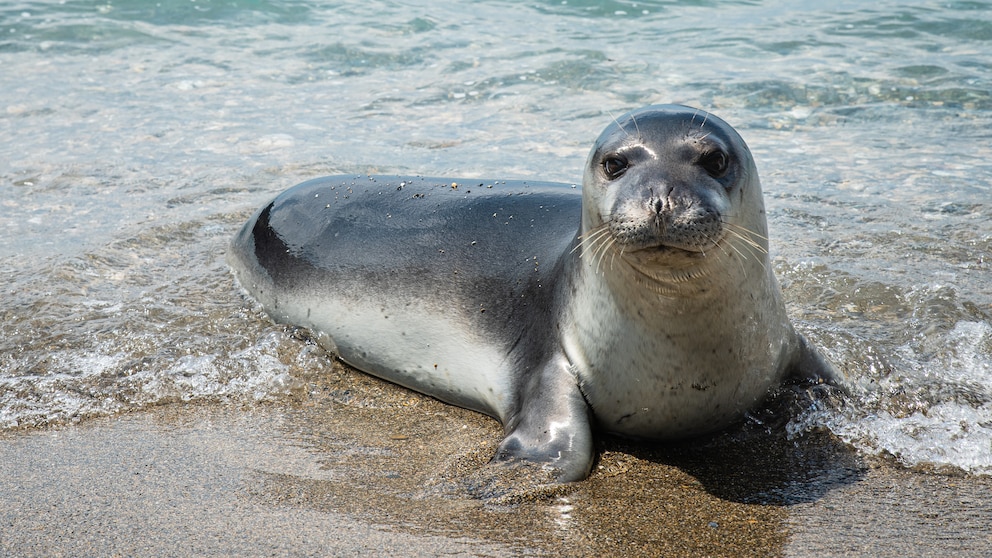
What Are Monk Seals?
Monk seals belong to the group of true seals, which also includes the harbor seals and gray seals native to Germany. They are similar in size and weight to gray seals. Their fur is short, shaded, and can be dark, brown, or gray.
Like all seals, fish are a favorite food of this species. They also eat crabs and squid. Unfortunately, little is known about the behavior of monk seals. They tend to be reclusive, hiding during the day in protected caves or on remote beaches.
In Europe, there are two subpopulations: one in the Atlantic Ocean and one in the Mediterranean. The latter, scientifically known as Monachus monachus, are among the most endangered marine mammals in Europe and one of the most threatened seal species.1
Sensitive Habitat in the Shadow of Mass Tourism
A significant portion of the global population lives in Greek waters. The area around the uninhabited Cycladic island of Gyaros is particularly important: According to WWF Hellas, more than one in ten animals worldwide live there. The northern Sporades are also considered important refuges.
In the adjacent National Marine Park—reportedly the largest marine protected area in Europe—access is heavily regulated to secure breeding and resting sites. Additional populations are found off the small island of Formicula in the Ionian Sea. Nevertheless, the animals are increasingly under pressure.
With the boom in snorkeling excursions, sailing trips, motorboat rides, and island hopping, the number of human activities along the coasts is steadily increasing. For the seals, this means fewer undisturbed retreats.
Births in Dangerous Caves
To avoid disturbances, monk seals are increasingly retreating to remote sea caves. There, between May and September—right in the middle of the tourist high season—they give birth to their young. In the first days, the young are barely able to swim and are entirely dependent on their mothers.
While the caves offer protection from humans, they pose significant risks. As reported by the British newspaper “The Guardian,” young seals can be thrown against rocks, drowned, or washed out to the open sea.
There is also the danger of direct disturbances. “About a week after birth, monk seal mothers go fishing and leave their young alone for hours,” explains Panos Dendrinos, president of the Greek seal protection organization MOm, to the British newspaper. “If someone enters the cave, the young seal is likely to panic and leave; the mother will hardly find it then.”
Dramatic Decline in Sightings
Researchers have also observed significant changes off Formicula. Marine biologist Joan Gonzalvo from the Tethys Research Institute in Milan reports that increasing tourism has greatly reduced encounters with the animals. “What was initially exciting quickly turned into a nightmare,” he tells “The Guardian,” adding, “Nowadays, we’re lucky if we see even one or two seals.” Previously, sightings of five or six playing animals in the water were not uncommon.
Worldwide, only a few hundred Monachus monachus exist. In addition to tourism and shipping traffic, coastal development and the loss of suitable habitats are major threats. Accidental entanglement in fishing nets also contributes to their endangerment. Although the population has recently slightly recovered, experts warn against premature optimism.
New Protection Measures Around Formicula
In late 2024, Greek authorities responded with a 200-meter protection zone around Formicula. Boats are not allowed to dock there, the maximum speed is four knots, and a minimum distance of 30 meters from the animals must be maintained. Feeding is prohibited, and visitors must leave the area by sunset. Violations can lead to arrests.
Furthermore, Greece has committed to increasing the share of protected marine and coastal areas to 30 percent by the next decade. Last summer, additional marine protected areas were designated in the Aegean and Ionian Seas.
Difference Between Seals, Sea Lions, and Other Pinnipeds
Live for Free on a Greek Island and Help Cats–Here’s How!
Human Activities Still a Serious Problem
In parallel, the Monk Seal Alliance and the Greek conservation authority NECCA launched the “Seal Greece” initiative last week. The national information campaign is supported by the Prince Albert II of Monaco Foundation and is aimed particularly at tourists. A digital tool, the Seal Greece AR-Experience, is designed to help identify sensitive habitats more easily.
Maria Papadopoulou, president of the conservation authority NECCA, emphasized in the Greek newspaper “To Vima”: “Challenges remain: Monitoring is difficult due to the species’ remote habitat, law enforcement needs to be strengthened, and disturbances from human activities continue to be a serious problem. Long-term collaboration with all stakeholders and continuous public education are essential to overcome these challenges.”
What Travelers Should Keep in Mind
Vacationers are urged to consistently respect protected areas and natural retreats. If you encounter a monk seal, keep your distance, remain calm, and do not touch or feed the animal. Although the species is not considered aggressive, the marine mammal, which can be up to 10 feet long, can react dangerously if threatened.
In sea caves, it is advisable to slowly retreat and always leave the animals a clear escape route. Adhering to these rules is a concrete prerequisite for the few remaining populations of the Mediterranean monk seal in Greece to survive in the long term.