

September 4, 2026, 3:14 pm | Read time: 6 minutes
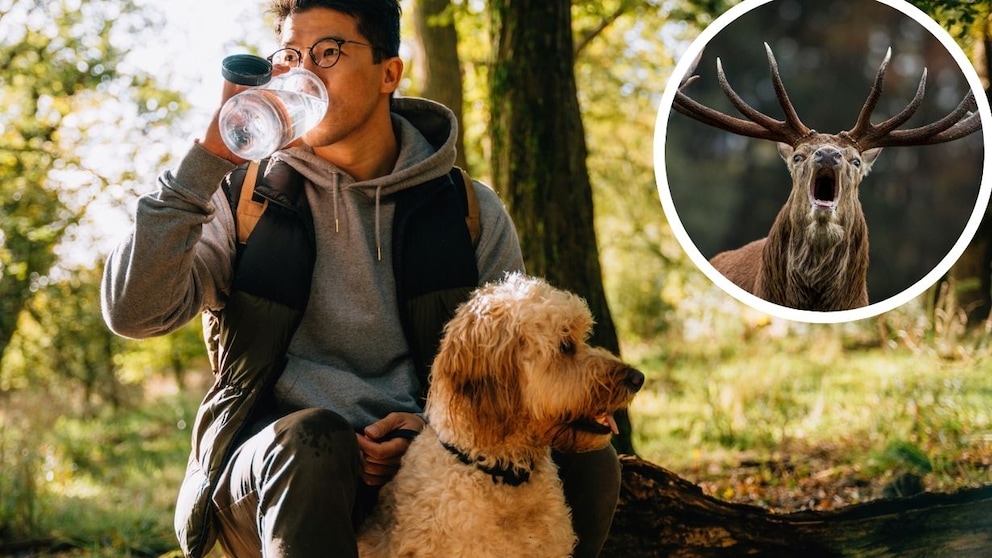
In mid-September, German forests become noisy. A deep, eerie bellow echoes between the trees, often audible for miles. The rutting season for red deer has begun. Many underestimate how dangerous an encounter between a dog and a rutting stag can actually be. PETBOOK author and dog trainer Katharina Marioth explains what to particularly watch out for.
What Happens in the Forest During This Time
From September into October, the bachelor herds of male red deer disband. Each stag now seeks out a “herd” of hinds to defend against rivals–with loud bellowing, threatening gestures, and, if necessary, hard physical confrontations. A rutting stag can lose up to 25 percent of its body weight during this time because it hardly eats. It is constantly on edge, defending its territory and focused on any disturbance.
This makes it so unpredictable. An animal already operating at the limit of its strength and nerves loses almost all its natural fear of humans during the rut. What would have triggered flight in the spring is often perceived as a threat in September–and threats are not avoided by a dominant stag but confronted.
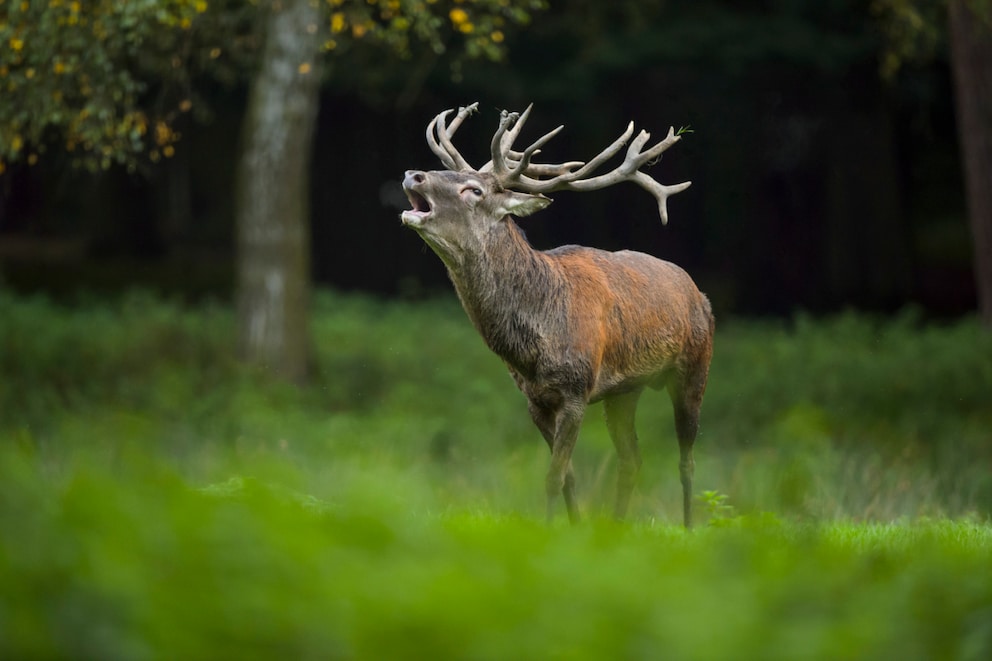
Why Dogs Are Particularly at Risk – Beware of the Stag
To a red deer, a dog does not look like a pet. Instinctively, it categorizes the silhouette more as a “wolf”–a “natural enemy.” This applies regardless of whether the dog is actually interested in the deer or is calmly trotting by on a leash. The deer’s reaction is not based on the dog’s behavior but on how it looks and how close it gets.
Antlers, designed for fights among peers, can cause devastating injuries in an attack on a dog. People who try to intervene because their dog is being attacked also put themselves in danger–adult red deer weigh up to 200 kilograms and can cause significant harm even without using their antlers, just by kicking.
The Reality of Leash Laws
In many states, there is a year-round or seasonal leash requirement in forests, regulated differently depending on the state forest law. Regardless of the exact legal situation locally, foresters and hunters have a clear recommendation for the rutting season: Dogs should always be on a leash when in forest or wildlife areas with wildlife presence. This not only protects the wildlife but primarily the dog itself–because an animal that cannot be immediately recalled in a critical moment has no chance against a determined stag.
Recognizing Warning Signs
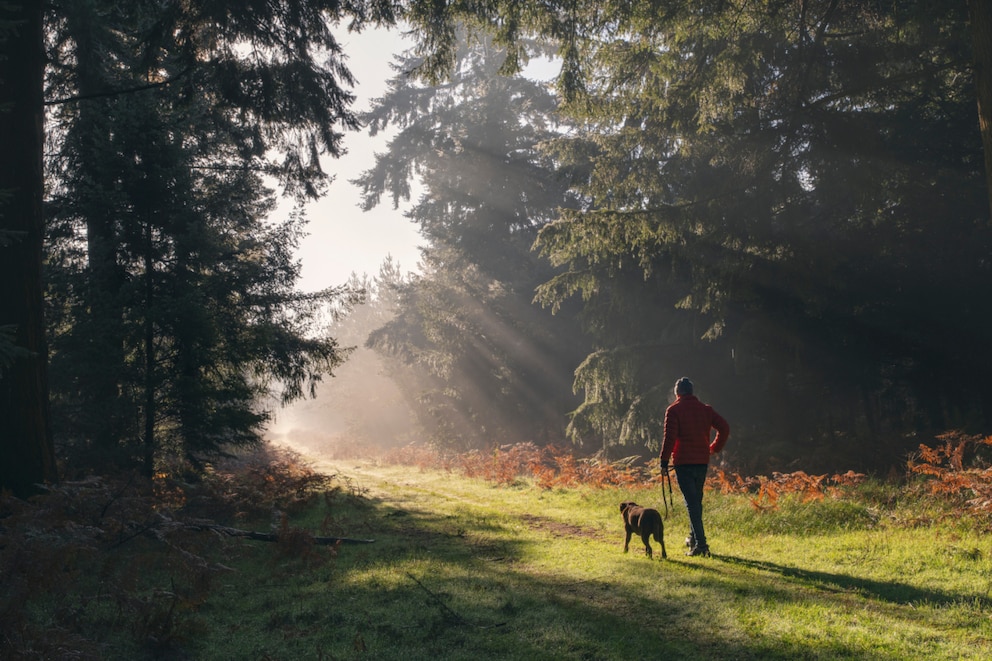
Anyone moving through the forest during the rutting season should know what to watch for. Several signs indicate increased danger:
Loud, Nearby Bellowing
A rutting stag can emit up to 500 calls per hour. If the bellowing gets louder and closer, you are near a rutting site–exercise extreme caution here.
Groups of Hinds
A gathering of several female animals almost always indicates that a dominant stag is nearby guarding his herd.
Scraping and Antler Striking
If a stag is pawing the ground with its front legs or striking its antlers against trees and shrubs, it’s a clear threat signal.
Direct Eye Contact Without Flight Reaction
A wild animal that does not flee upon approach but stands its ground or even approaches has lost its natural fear–a clear alarm signal.
“He Won’t Do Anything”–Why This Phrase Is Dangerously Wrong Here
Few phrases lead to dangerous situations in the forest as reliably as: “He won’t do anything, he just wants to look.” The problem is: It doesn’t matter to the stag what the dog actually intends. Even an old, calm family dog or a small terrier that takes no notice of the wildlife can be attacked–solely because of its appearance and presence in the territory.
Relying on recall control is equally unhelpful. A red deer that feels threatened reacts in split seconds and at speeds of up to 70 kilometers per hour. Even a dog with otherwise reliable recall can be overwhelmed in this situation–instinct trumps training when the danger is real and immediate.
Proper Behavior During an Encounter
If a sighting occurs, the rule is: Stay calm, leash the dog immediately (if not already leashed), and slowly and quietly retreat–preferably diagonally, without abruptly turning your back on the animal or running. A minimum distance of 100 meters should be maintained if at all possible. Leaving the paths to get closer or take a photo unnecessarily increases the risk–for yourself, the dog, and the animal.
Plan Walks in Advance
A simple but effective step is conscious route planning for the rutting weeks. Many forestry offices and hunting areas post signs warning of active rutting areas at this time of year, and some communities even publish current warnings on their websites. A quick look beforehand is worthwhile, especially if the usual walking path goes through a known red deer area. Where possible, choose wide main paths over narrow trails in the underbrush–visibility is better there, and wildlife tends to avoid paths with regular human traffic.
The time of day also plays a role: Red deer are most active at dawn and in the early morning hours. Scheduling your forest walk for later in the morning or early afternoon reduces the likelihood of an encounter significantly, though it cannot be completely ruled out.

Red Deer Named Germany’s Animal of the Year 2026
Leash Requirement for Dogs in Bremen: Rules for 2026
Special Caution with Children
Those who let their dog accompany children on forest walks should be doubly attentive during the rutting season. Children often react to the loud bellowing with curiosity rather than caution and want to get closer to see the animal. Combined with an excited, perhaps even barking dog, a situation can quickly arise that no one can control. A brief, age-appropriate explanation before the walk–why it’s important to be quiet, keep a distance, and not chase the stag–doesn’t replace supervision but helps to keep the situation calmer from the start.
Regular visitors to the same forest area should also inform themselves about the start of the local hunting season. Rutting and hunting seasons often overlap, and in hunted areas, the general unrest among the wildlife increases. Some areas post temporary signs on such days to specifically warn of increased caution–a glance at notices at forest parking lots or trail intersections takes little time and provides additional safety.
Conclusion
The rutting season is one of the most impressive natural spectacles the local forest has to offer–but it turns familiar walking paths into areas with real danger potential for a few weeks. Those who venture into the forest with a dog in September and October should always have the leash ready, take warning signs seriously, and, if in doubt, opt for a detour rather than risk an encounter.