


November 19, 2025, 12:01 pm | Read time: 4 minutes
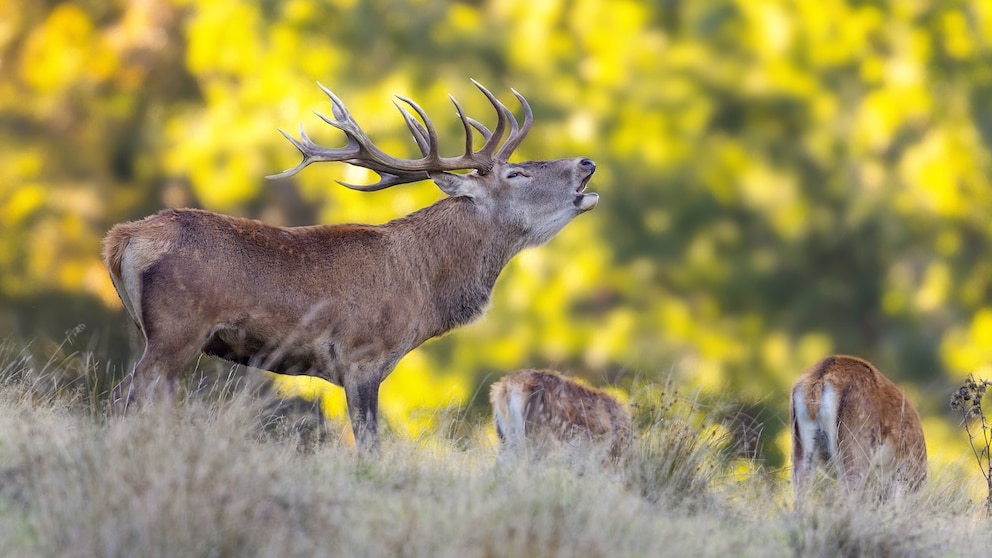
Every year, the German Wildlife Foundation selects an Animal of the Year to highlight the beauty and need for protection of native wildlife. For 2026, three species from Germany’s open landscapes were up for selection: the red deer, the stoat, and the golden jackal. In the end, the “king of the forest” clearly emerged as the Animal of the Year 2026. PETBOOK introduces the majestic deer and its special role in the ecosystem.
A King in Retreat
The red deer is the Animal of the Year 2026. The German Wildlife Foundation announced this in a press release on November 19. With around 220,000 animals, the red deer (Cervus elaphus) is quite common in Germany, yet its habitat has been shrinking for decades. Originally, red deer inhabited open and semi-open landscapes with meadows, river valleys, and groups of trees. Today, due to hunting, agriculture, and road construction, they have been largely pushed back into the forests.
There, the largest native deer often conflicts with forestry: It eats young shoots, buds, and bark, which can cause damage. But the animals have little choice. In many states, their presence is restricted to so-called red deer districts—outside these areas, they face being shot.
“Isolated populations lose genetic diversity,” warns Andreas Kinser, head of nature and species conservation at the German Wildlife Foundation. “Only if we give the red deer more space again can we succeed in preserving this fascinating species in Germany in the long term.”
Why the Red Deer Is So Important
As the largest regularly occurring deer species in Germany, the red deer plays important ecological roles. Through its migratory behavior, it contributes to the genetic mixing of different populations. Grazing creates clearings where new plants can sprout—habitats for insects and birds.
Its impressive antlers, which the males shed and regrow each year, are more than just ornaments. Shed antlers are gnawed by rodents such as squirrels or mice, which use them as a valuable mineral source. Thus, a small nutrient cycle in the forest is completed.
Impressive Rut and Social Life
The red deer is particularly impressive in the fall when the rutting season begins. Then the distinctive roaring of the stags echoes through the forests, accompanied by loud antler clashes as two rivals fight over a group of hinds. During this time, the males lose up to 30 percent of their body weight—a strenuous but evolutionarily successful spectacle.
The rest of the year, the animals live in separate groups: females with their calves in so-called hind herds, male deer mostly among themselves. An experienced lead hind sets the tone in the female groups—she decides when and where the group moves.

Why the Mating Season in September Can Be Dangerous for Your Dog
Moose Return to Germany–Here’s Where They Live
When Paths Are Blocked
Roads, railways, and settlements increasingly fragment the habitats of red deer. As a result, the animals can hardly follow their natural migratory instincts. The situation is particularly drastic in Baden-Württemberg, where red deer are allowed to inhabit only four percent of the state’s area.
The German Wildlife Foundation, therefore, calls for more green bridges over highways and the lifting of rigid red deer districts to enable better connectivity of habitats. Only in this way can the impending loss of genetic diversity be halted.
A Symbol for Biodiversity in Open Landscapes
The red deer represents many species that need open landscapes and structurally rich fields—habitats that are increasingly disappearing due to intensive agriculture and land sealing.
With its selection as the Animal of the Year 2026, the German Wildlife Foundation aims to raise awareness: for more space, more wilderness, and more respect for the needs of wild animals. Only if humans give the “king of the forest” space again will its majestic roaring remain a part of our landscape in the future.
Since 2017, donors of the German Wildlife Foundation have selected an Animal of the Year. The main goal is to draw public attention. Whether because animals are endangered, their habitat is threatened, or there is a conflict between humans and wildlife.
In 2025, the mountain hare won the selection, and the year before, the hedgehog secured the title.