

November 23, 2025, 7:06 am | Read time: 3 minutes
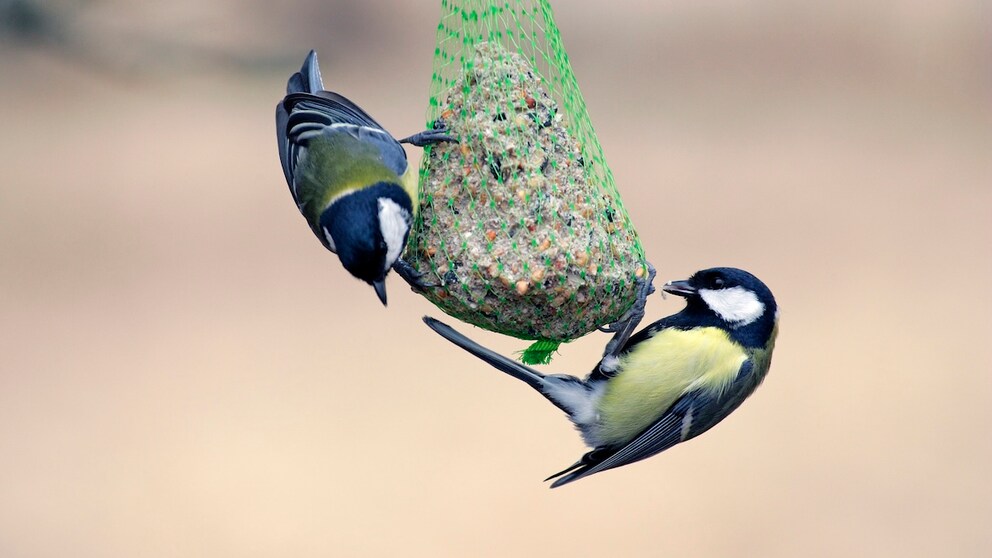
When it gets cold outside, many nature enthusiasts turn to suet balls to support native birds. However, the widely used feed balls in green plastic nets pose unexpected risks–both for the animals and the environment. A NABU expert explains why this type of feed is problematic and what alternatives exist.
Dangerous Nets: Suet Balls with Risks
The popular suet balls in nets can become deadly traps for birds. “We also advise against offering netted suet balls as feed,” warns Silvia Teich, spokesperson for the Nature and Biodiversity Conservation Union (NABU), in an interview with myHOMEBOOK (part of the BOOK family by Axel Springer, like PETBOOK). The fine plastic mesh can be dangerous: Birds can get caught with their beaks or claws and potentially suffer severe injuries.
But it’s not just the risk of injury that’s a problem–the environment also suffers. “Additionally, the empty nets often remain in trees, bushes, or on the ground, where they slowly become brittle due to weathering,” Teich continues. The result: Microplastics are created, entering the soil and possibly the food chain.
How to Feed Properly–Without Plastic and Risk
Despite the risks, NABU says there’s nothing fundamentally wrong with suet balls. On the contrary: “Suet balls are beneficial because they provide birds with seed feed and fat.” This combination is particularly energy-rich and helps birds get through the cold months.
However, the form of presentation is crucial. “We recommend offering the balls in suet ball dispensers,” Teich advises. Metal dispensers are particularly suitable because they are easy to refill. For those who like to get creative, Teich suggests using household items: “You can also use old whisks as suet ball dispensers.” Simply clamp the balls in the whisk, turn it upside down, and hang it in a sheltered spot.
Feeding with a System: Feeders Instead of Birdhouses
Even those who want to forgo suet balls entirely can find alternatives. “Additionally, you can offer seed feed in feeders, where the feed slides down.” The advantage: This feeding method is more hygienic than a traditional birdhouse, as the feed doesn’t come into contact with the birds’ feet.
How to Make Birdseed with Just a Few Ingredients

How to cat-proof your balcony and keep it varied
DIY Instead of Disposable: Make Suet Balls Yourself
Bird feeding becomes even more sustainable when you make suet balls yourself–completely without plastic. You often already have the ingredients at home. Additionally, kitchen waste such as orange peels can be put to good use. PETBOOK offers a simple DIY video guide.
Pay Attention to Good Quality
It’s not just the packaging that matters, but also the content. “You should also pay attention to the quality of suet balls,” emphasizes Teich. Her recommendation: Balls from specialty stores, preferably organic, as they are usually made with high-quality ingredients.
Those who want to make their garden bird-friendly can achieve a lot with simple means–provided they avoid plastic nets and pay attention to quality and proper presentation.