


July 31, 2026, 6:37 am | Read time: 4 minutes
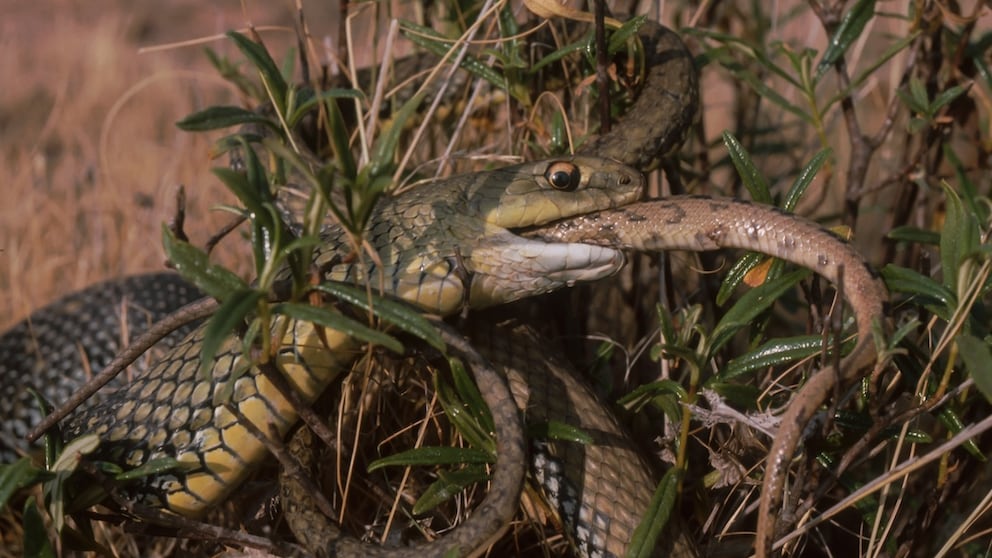
Many are familiar with the symbol of the snake biting its own tail–the so-called Ouroboros. While it appears as a mystical motif, it actually occurs in reality. However, there’s no mystery behind it, but usually a problem: When snakes attack themselves, it’s often a sign of stress, overheating, or confusion. PETBOOK editor and biologist Saskia Schneider explains why this behavior occurs and what owners should definitely do in such a case.
The Mystery of the Ouroboros
A snake biting its own tail–almost everyone knows this image. As the so-called Ouroboros, it appears as early as antiquity, such as in ancient Egypt. It stands for eternity, rebirth, and the cycle of life.
But contrary to what many think, it’s not just symbolism. This behavior also occurs in reality–albeit rarely. And when an owner suddenly observes their own snake doing this, it can be quite disturbing.
The good news: There’s no “mystical” behavior behind it. The less good news: It’s often a warning signal.
Why Do Snakes Bite Their Own Tails?
When a snake attacks its own body, it’s not normal behavior from a biological perspective. However, there are several plausible explanations–and they usually have to do with stress, captivity, or confusion. This behavior is mainly observed in snakes in captivity. It occurs much less frequently in the wild. 1, 2
Overheating–a Common Trigger
Snakes are cold-blooded. This means their body temperature depends entirely on the environment. If it gets too warm in the terrarium, their metabolism can increase significantly. The animals then suddenly appear “hungry”–even if they aren’t. At the same time, they can become disoriented. In the worst case, they mistake their own tail for prey.
Stress and Overwhelm
Stress is a central factor. Too-small terrariums, lack of retreat options, or constant disturbances can lead snakes to react unusually–such as with uncoordinated biting movements.
Mistaking for Prey
Snakes have an extremely strong feeding reflex. Especially species that eat other snakes can simply make a mistake. It sounds trivial, but it’s actually one of the most plausible explanations: They don’t “think” long but react instantly to movements.
Illness or Pain
In some cases, there’s more behind it. Animals that are severely weakened or sick can also start biting themselves. This is then a serious warning signal.

These Snake Species Are More Often Affected
Videos of snakes eating themselves circulate repeatedly. The most famous example is a YouTube video from 2014 showing a Western hognose snake biting its own tail and continuing to swallow its body while blood dripped from its jaw. Several media outlets picked up the case–including the “Daily Mail.”
Often these are isolated cases–yet there are some snake species where the behavior is said to occur more frequently. Among them are colubrids and cobras. Both belong to species that eat other snakes or even smaller conspecifics. Here, a “mix-up” can occur, especially when the animals are under hunger stress.3
How to Release the Snake Bite
Since this behavior mainly occurs in snakes in captivity, snake owners occasionally face it. The problem is: Once the snake has “bitten,” it often has difficulty letting go–its teeth are designed to hold prey. In the worst case, the behavior can even end fatally.
In forums and on social media, snake owners exchange various tips on this. One of them is to apply a small amount of hand sanitizer or alcohol to the animal’s mouth. Many snakes then abruptly release the bite. However, alcohol or sanitizer can also be toxic to snakes. But if it’s about saving an animal’s life, it’s worth a try.
If the tail cannot be released or has already disappeared further into the mouth, you should not waste time and consult a veterinarian.
These Animals Eat Their Own Kind—for Good Reason
This Snake Has the Longest Fangs in the World
When to See a Veterinarian?
This behavior usually occurs rarely. However, there are cases where snakes repeatedly attack their tails. In such cases, the behavior should definitely be clarified.
You should definitely see a veterinarian if:4
- the snake does not let go on its own
- parts have already been swallowed
- wounds or blood are visible
- the animal appears apathetic or unusual
A reptile-savvy veterinarian can carefully release the jaw, treat wounds, and clarify the cause.
Conclusion
As fascinating as the image of the Ouroboros is–in reality, it has little to do with mythology. When a snake bites itself, it’s almost always an alarm signal.
Usually, stress, husbandry errors, or health problems are behind it. For owners, this means: pay close attention, react quickly–and critically review the husbandry conditions.