


August 25, 2026, 9:52 am | Read time: 5 minutes
Encountering a snake in Germany often causes initial alarm, and the grass snake is frequently mistaken for being dangerous. But how risky is an encounter with Germany’s most common snake? Can it bite humans, and if so, what happens then? The grass snake has lived in close proximity to humans for centuries and was even considered a good luck charm in the past. PETBOOK editor and biologist Saskia Schneider explains why the grass snake (Natrix natrix) is a fascinating and important creature in our native environment.
How to Recognize the Grass Snake
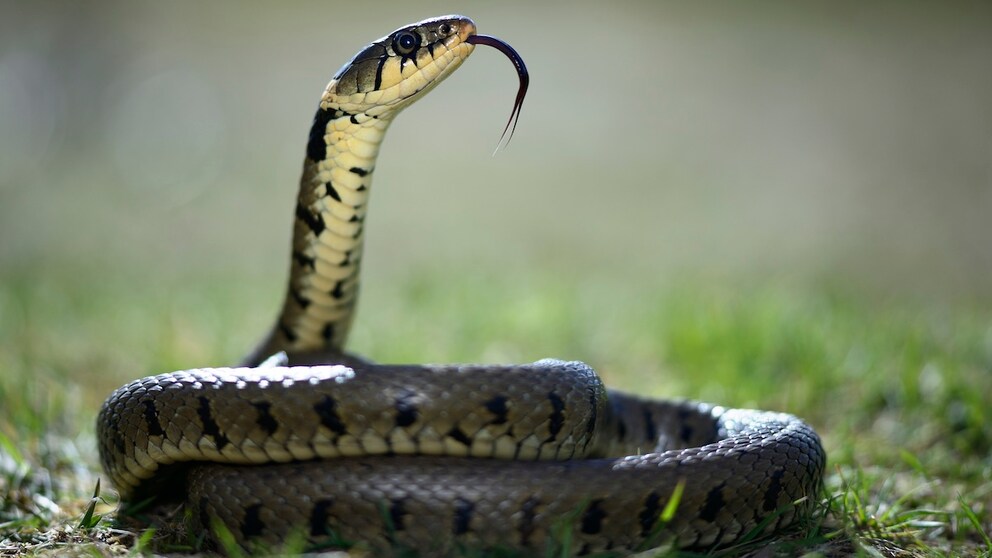
The grass snake is relatively easy to identify: The most distinctive features are two bright, usually yellowish to white crescent-shaped spots on the back of its head. Its body is gray to olive green on top with dark spots, and the underside is lighter. Adult snakes reach lengths between 80 and 120 centimeters, with females growing up to 150 centimeters. Also typical are the round pupils and large scales on the head.1
In addition to the grass snake, the barred grass snake (Natrix helvetica) is also found in parts of Germany. It was long considered a subspecies of the grass snake but is now recognized as a separate species. It differs from the grass snake mainly by the often distinctly pronounced dark crossbands on its sides. For laypeople, distinguishing between the two is often difficult, as they are very similar in appearance and behavior. In fact, determining the species from photos is not always possible.2
Are Grass Snakes Venomous?
No—the grass snake is non-venomous. While it does have glands that can secrete a weak substance, this is only significant for its prey, such as amphibians. It is completely harmless to humans and pets. Unlike “true” venomous snakes, the grass snake does not have fangs; it does not kill its prey with toxins but swallows it alive or subdues larger animals by constriction.
Are Grass Snakes Dangerous?
Again, the answer is clear: no. Grass snakes are shy and will immediately flee when disturbed. Only if they feel cornered will they try to impress with threat displays such as hissing, puffing up, or mock attacks. Some even play dead—with an open mouth and protruding tongue. They pose no threat to humans.3
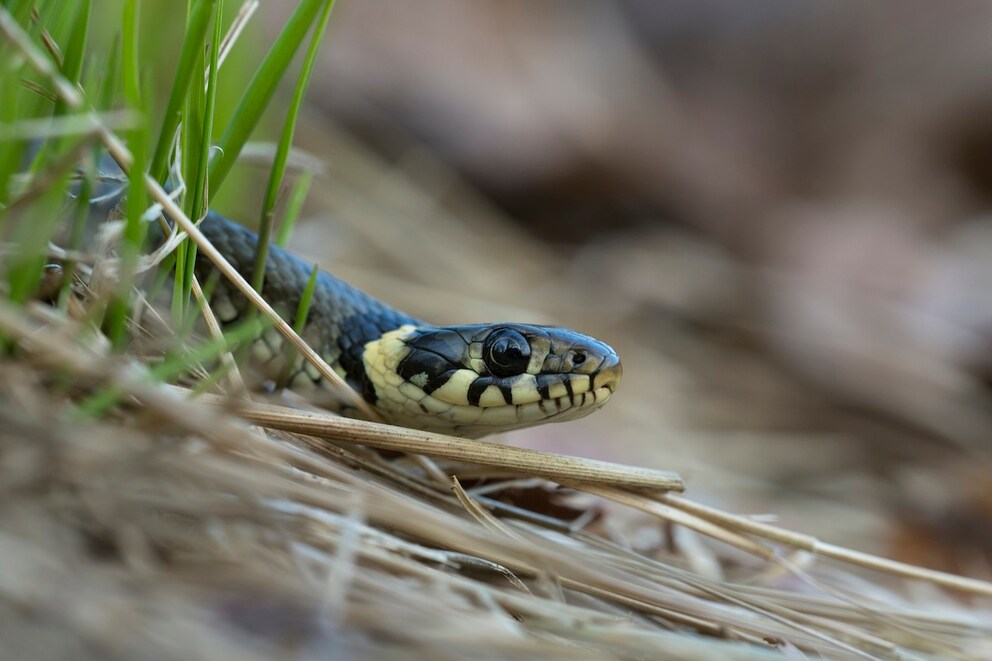
Even if a grass snake bites, there is no cause for concern. Bites are rare and occur only if the snake feels threatened or is held. The small, sharp teeth can leave painful scratches or puncture wounds, but the bite is harmless to humans. The wound should still be cleaned as a precaution to prevent infection. If unusual symptoms occur or the area becomes inflamed, a doctor’s visit is recommended.
What Do Grass Snakes Eat?
The grass snake’s diet consists mainly of amphibians: frogs, toads, newts, and tadpoles are among its favorite prey. But it also eats small fish, lizards, mice, or snails. Juveniles initially feed on smaller prey such as earthworms or tadpoles. Grass snakes find their prey by constantly flicking their tongues—a way to “taste” smells.4
Where Do Grass Snakes Live?
Grass snakes are closely tied to water bodies, as their main food source lives there. The Latin name Natrix natrix means water snake and is fitting. If the grass snake had a hobby, it would be swimming and diving. The animals prefer wetlands, ponds, lakes, rivers, or swamps and can also be found in natural gardens or along railway embankments, as long as water is nearby. There, they seek sunny spots to warm up and sheltered hiding places for the night or winter. Their winter quarters are usually in compost heaps, burrows, or tree stumps.5

The 7 Native Snake Species of Germany and How to Identify Them

This Snake, Which Can Grow Up to 1.5 Meters Long, Lives in German Lakes
What Should I Do if I Find a Grass Snake?
The most important thing: stay calm and keep your distance. The grass snake is not aggressive and will flee on its own as soon as it has the chance. If you encounter one, do not block its path; simply take a few steps back. Under no circumstances should you touch, capture, or kill the animals—this is not only unnecessary but also legally prohibited.6
Are Grass Snakes Endangered?
Although the grass snake is still quite common in Germany, it is now on the watch list of endangered species. In some regions, such as Baden-Württemberg, it is even considered endangered. The main reasons are habitat loss—wetlands are being drained, water bodies developed, and landscapes fragmented. Additionally, traffic accidents and, unfortunately, killing by people who mistakenly believe the snake is venomous contribute to their decline.
They are already protected: Under the Federal Nature Conservation Act, they may not be captured, injured, or killed. Their eggs and habitats are also protected. Measures such as the restoration of wetlands or the creation of egg-laying sites in natural gardens can help the grass snake.
About the Author
Dr. Saskia Schneider is a biologist with a Ph.D. During her studies at the Free University of Berlin, she focused primarily on zoology and animal behavior.