

July 28, 2026, 3:06 pm | Read time: 4 minutes
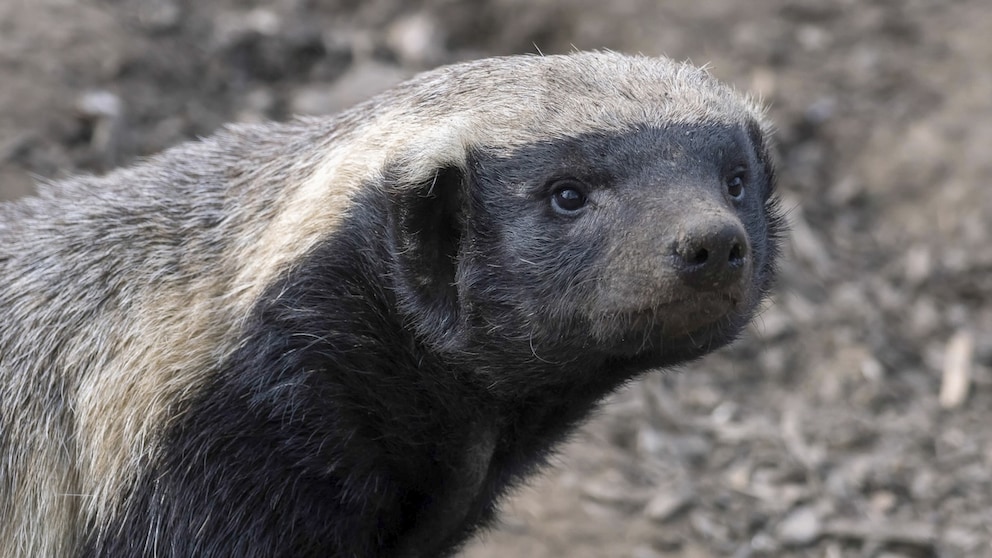
Far from small and harmless: The honey badger is considered one of the most fearless animals in the world. Although it only grows to about the size of a dachshund, it is said to take on lions, leopards, and hyenas. This tough predator owes its reputation to a range of extraordinary adaptations—from its thick skin to its remarkable resistance to snake venom. PETBOOK introduces Africa’s most impressive survival artist.
Why Honey Badgers Impress Even Large Predators
The honey badger (Mellivora capensis), also known as the ratel, belongs to the weasel family. Weighing usually only six to a maximum of 15 kilograms, it initially seems unimpressive. Nevertheless, this wild animal enjoys an almost legendary reputation across much of Africa. It takes on opponents many times its size, defends itself against lions, leopards, and hyenas, and even eats highly venomous snakes.1
The reason for this is a combination of extraordinary defensiveness, toughness, and a remarkable fighting spirit. Guinness World Records has already listed the honey badger as the “world’s most fearless mammal.”

Skin Like Armor
One of the honey badger’s most important weapons is hidden right under its fur. Its skin is exceptionally thick, providing protection against bites, stings, and scratches. At the same time, it is surprisingly loose. If a lion, leopard, or hyena grabs it, the honey badger can twist within its skin and snap at the attacker. This often allows it to bite back even when already caught. Additionally, this makes it difficult for large predators to hold onto the animal.
Why Even Cobras Are on the Menu
Honey badgers are omnivores, but they do not shy away from dangerous prey. A surprisingly large part of their diet consists of reptiles, including venomous snakes like cobras and mambas.
Researchers have discovered that honey badgers have special adaptations in their nervous system. These ensure that certain neurotoxins from venomous snakes are much less effective than in many other mammals. While the animals are not completely immune, their resistance to snake venom is still exceptionally high.2
Long Claws Make the Honey Badger a Jack-of-All-Trades
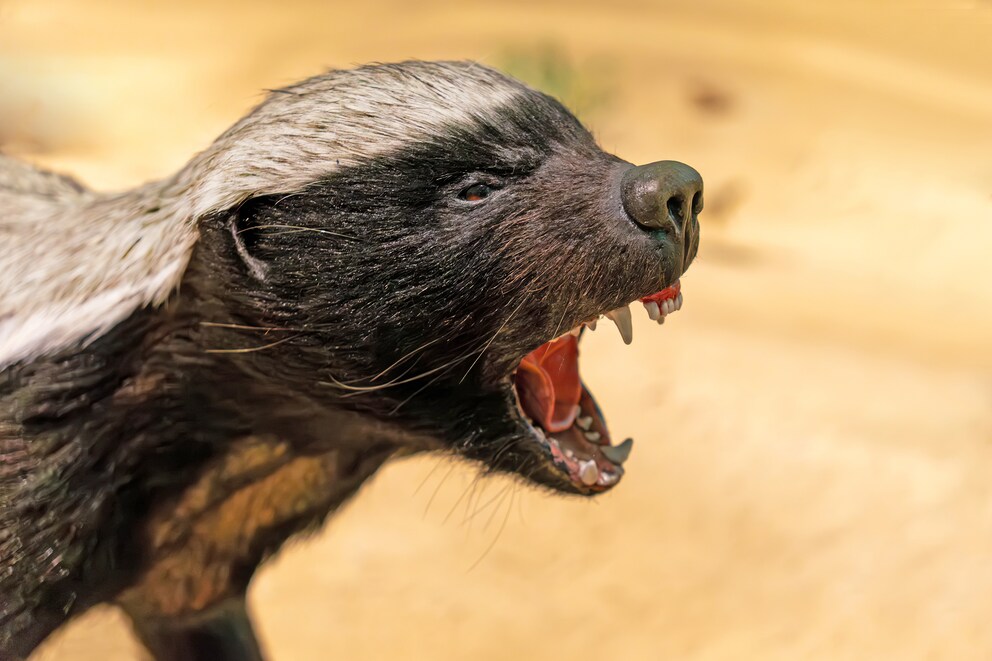
In addition, the honey badger has strong front paws with claws more than three centimeters long. With them, it digs, opens termite mounds, and even tears open beehives.
Incidentally, it owes its name to its fondness for honey. Honey badgers regularly raid beehives and eat not only the sweet natural product but also the energy-rich larvae of the insects. Besides the long claws, its thick fur also benefits it here, protecting the small predator from bee stings.3
A Foul-Smelling Secret
If skin, teeth, and claws are not enough, the honey badger has another defense weapon. Similar to skunks, it can release a strong-smelling secretion from its anal glands. The musky odor serves both to mark territory and to deter potential enemies.
Why This Frog Doesn’t Die From Its Own Poison

The Most Poisonous Animals in the World
Where Do Honey Badgers Live?
The honey badger’s range extends from much of Africa south of the Sahara to Saudi Arabia, Iran, and India. The animals are considered highly adaptable and are found in savannas, semi-deserts, forests, and even mountainous regions. During the day, they often retreat to burrows they dig themselves or take over from others.
Not Invincible
Despite their reputation, honey badgers are not invincible. Young animals, in particular, occasionally fall prey to leopards, jackals, or birds of prey. The greatest threat today, however, comes from humans. In some regions, honey badgers come into conflict with beekeepers and poultry farmers. There are also dangers from traffic accidents, traps, and poisonings. Although the species is currently classified as not endangered by the International Union for Conservation of Nature (IUCN), populations are declining significantly in some areas.