

September 24, 2025, 4:02 pm | Read time: 4 minutes
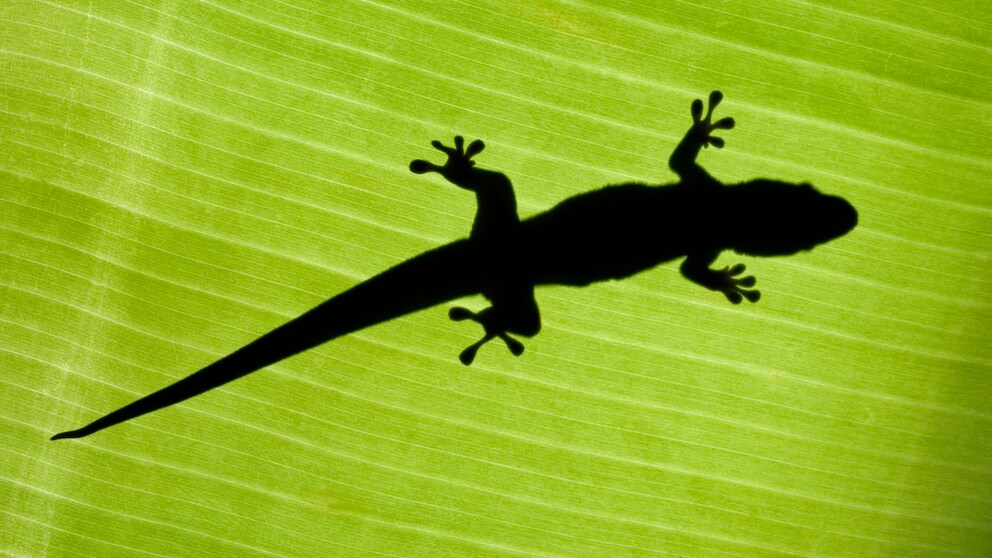
In the rainforests of New Guinea and the Solomon Islands lives a small species of lizard that could make even the Hulk envious with its unusual trait: Its blood is bright toxic green–a feature that is not only visually striking but also presents a significant biological mystery about the lizard.
Toxic Green Blood of Lizards as a Genetic Curiosity
Lizards of the genus Prasinohaema appear at first glance to be ordinary tree dwellers: scaly, elongated, with small legs and a big appetite for insects. Yet, their insides hold a biological sensation–they are the only known vertebrates with green blood. While the cause is known, the reason remains a mystery.
The so-called Prasinohaema skinks are found almost exclusively in New Guinea, a region with exceptionally high biodiversity. One species also lives on the Solomon Islands. What sets them apart from all other vertebrates: Their blood is green. And not just that–their bones, organs, and even their tongue shimmer in the same color.
Toxin as the Cause of the Green Color
The green coloration can be explained biochemically: The lizards have extremely high levels of the bile pigment biliverdin in their blood. In humans and many other animals, the protein hemoglobin carries oxygen in the blood–and colors it red. When hemoglobin breaks down, bilirubin and biliverdin are among the byproducts. These are usually excreted through the bile into the intestine. Biliverdin is known for its greenish color–it appears in humans during a healing stage of bruises.
While such pigments are considered waste products in most organisms, their extremely high concentrations in Prasinohaema skinks result in the striking green color. They possess the highest recorded biliverdin content of any organism. The effect is visible throughout the body: “The bones are green, the muscles are green, the tissue is green, the tongue and the mucous membrane are green,” explained reptile and amphibian biologist Christopher Austin to the U.S. broadcaster NPR.
Why Don’t the Lizards Die from Their Blood?
What particularly puzzles researchers: Biliverdin is considered highly toxic in large doses. Even small amounts in the human bloodstream can lead to jaundice–usually a sign of liver problems or an immature liver in newborns. If untreated, elevated bilirubin or biliverdin levels can even be fatal. “It is surprising because, at these concentrations of bile pigments in the blood, [the skinks] should be completely jaundiced, if not dead,” Austin continued.
Yet, the lizards have apparently developed a biological strategy to tolerate the toxic substances. Austin suspects an evolutionary advantage behind the green color: The high concentration of biliverdin could offer protection against certain parasites–particularly against Plasmodium: These single-celled organisms cause malaria not only in humans but also in birds and reptiles.
Austin speculates that the toxic biliverdin makes it difficult for Plasmodium to infect the skinks by altering the blood environment: Instead of encountering hemoglobin, the parasite faces a harmful environment.

The 8 Most Common Cat Eye Colors and How They Develop
Why Birds Are Actually Reptiles
Green Blood Has Evolved Four Times
Another research team has also addressed the question of lizards with toxic green blood. It is now known that this color has evolved not just once, but four times. The frequent appearance of this unusual trait suggests that it offers evolutionary advantages, indicating that it is more than just a random occurrence.
A research team from Brigham Young University (Utah, USA) led by Taylor S. Probst has, for the first time, decoded the complete genome of a green-blooded skink (Prasinohaema aff. favipes) from a historical museum specimen. The results were published in March 2025 in the journal “Journal of Heredity.”
The lizard was collected in Papua New Guinea in 2000 and is part of the only known vertebrate group with permanently green blood. The study used the latest long-sequencing technology to unravel the evolutionary and molecular foundations of this unique phenotype.
Does a Gene Protect the Lizard from Its Toxic Green Blood?
This over twenty-year-old museum sample contained a striking gene that could code for a modified form of a protein called alpha-fetoprotein (AFP). This protein could play a key role in the toxic green blood color. “It is plausible that AFP can bind biliverdin,” the researchers write in their publication, “allowing the toxic bile pigment to remain in the bloodstream without causing cell damage.”
However, how exactly this protective system developed remains unclear. But the scientists emphasize: “Understanding the genomic background for [the high concentrations of biliverdin] will provide a solid foundation for answering these ecological and evolutionary questions, and we believe that a high-quality reference genome is an excellent first step toward achieving this goal.”
The green lifeline of these lizards remains a fascinating mystery for now–but perhaps their genome will soon provide answers to one of the strangest survival strategies in the animal kingdom. 1