

September 20, 2026, 9:12 am | Read time: 9 minutes
Blue whale, elephant, and polar bear reach enormous sizes. But Germany’s forests, meadows, and mountains are also home to surprisingly large animals. While some are firmly part of the native fauna, others were long hunted, nearly exterminated, and later reintroduced. PETBOOK presents the nine largest animals in Germany and shares interesting facts about their habitat and behavior.
1. Moose
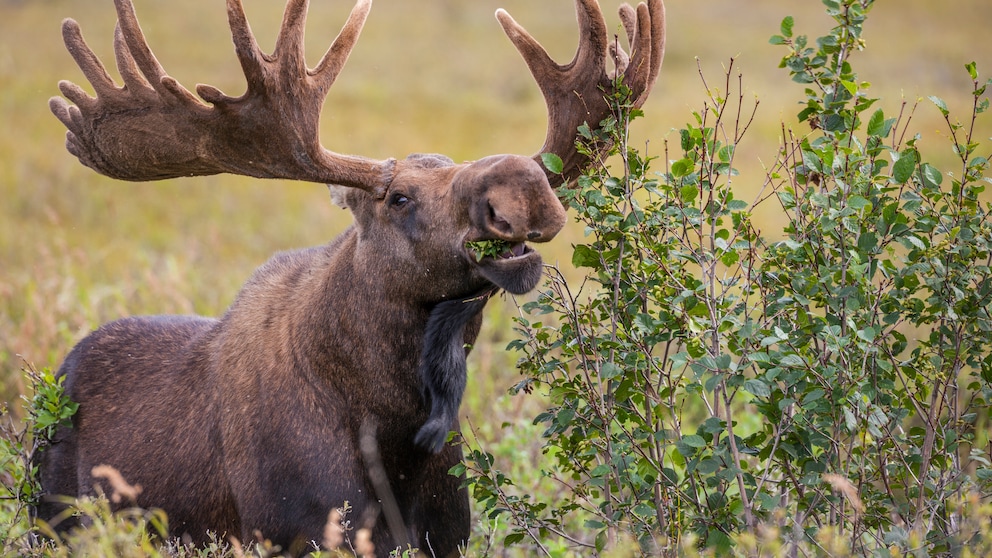
The moose, with a shoulder height of up to 2.3 meters and a weight of up to 500 kilograms, is among the largest animals in Germany. Currently, only one moose lives permanently in the country: The male moose “Bert” appeared in 2018 in the Nuthe-Nieplitz Nature Park in Brandenburg and unusually joined a herd of cows. He now wears a tracking collar.
More moose continue to migrate from Poland to Germany, where their population has recovered in recent years. These animals can cover ten to 15 kilometers daily. A typical feature of male moose is their antlers: The well-known shovel shape usually develops only in older animals, while younger ones often have antlers with a beam shape.
2. European Bison
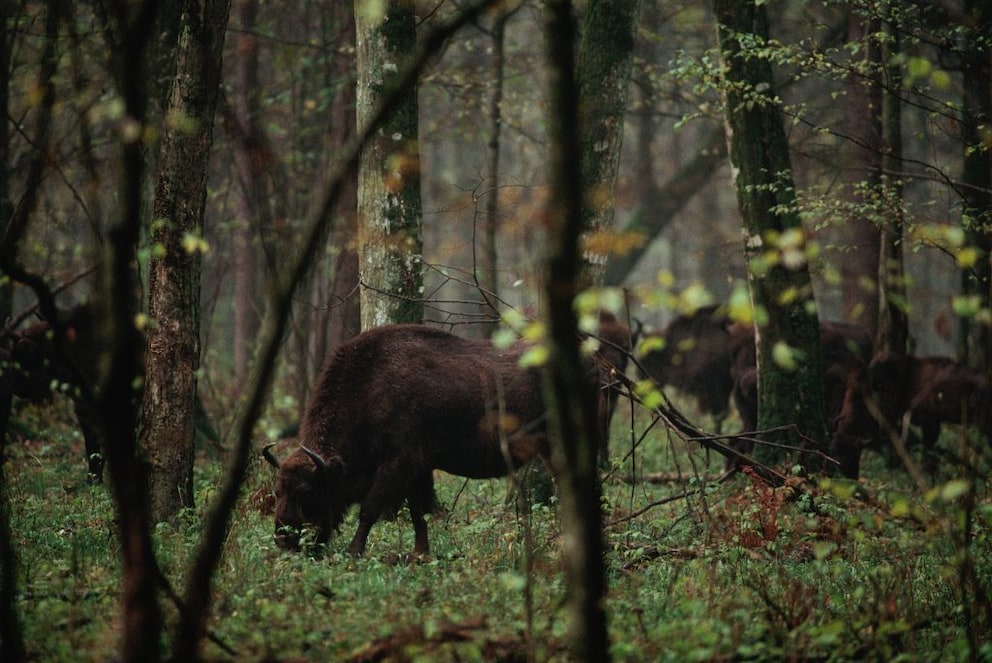
Another giant and one of the largest animals in Germany is the European bison. This cattle species weighs more than 600 kilograms, grows up to two meters tall, and has a body length of up to three meters. The animals inhabited the vast Eurasian continent until the Middle Ages but were nearly exterminated by hunting–only 12 specimens in animal parks and zoos remained. They are the ancestors of all European bison living today. In Europe, there are now about 7,000 free-living animals, including a herd in the Rothaar Mountains in North Rhine-Westphalia.
In 2013, an attempt was made to release European bison into the wild, and currently, around 25 animals live in the herd. The future of this project is currently uncertain, as reported by the regional daily newspaper “Ruhr Nachrichten.” The habitat of these large herbivores is mainly in forest areas, but open pastures with herbs and grasses are also important. European bison are herd animals with a pronounced social behavior.
3. Wild Horse
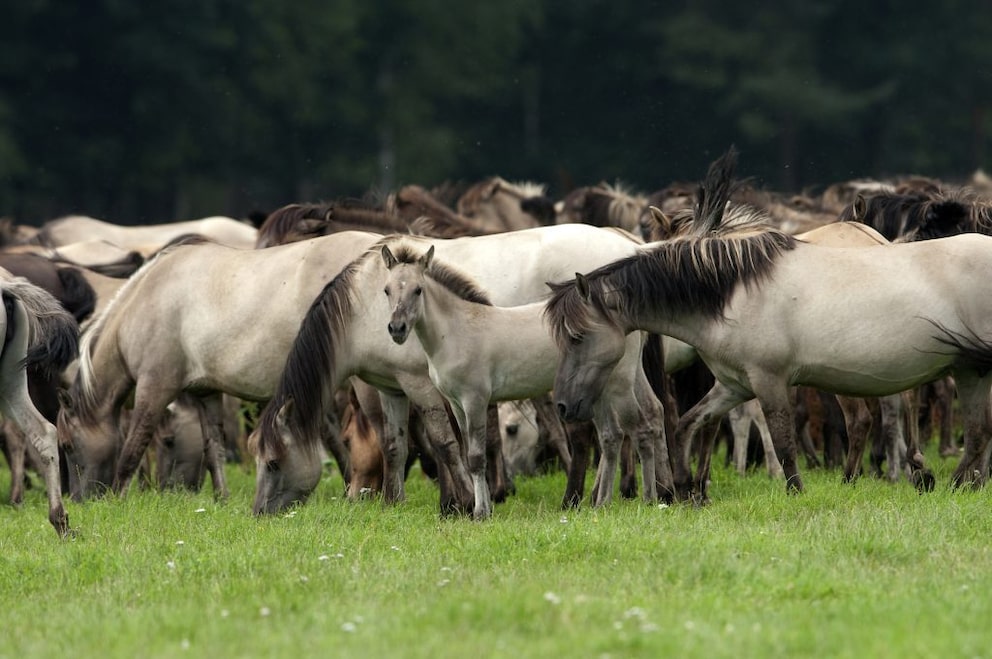
With a height of 125 to 135 centimeters, the Dülmen horse ranks third. Around 400 animals live in the Merfelder Bruch in Münsterland. They are among the oldest horse breeds and are considered the last wild horses in Germany. Other free-living populations largely lost their habitat between 1830 and 1850 due to land division.
Zoologically, Dülmen horses are not true wild horses, as there have been repeated crossbreeds with escaped war and farm horses, and young stallions are removed. Nevertheless, the animals live largely without human contact and have survived in a unique way to this day.
Tip: From early March to early November, the wild horses can be visited in the protected area. Learn more in the article by TRAVELBOOK.
4. Gray Seal
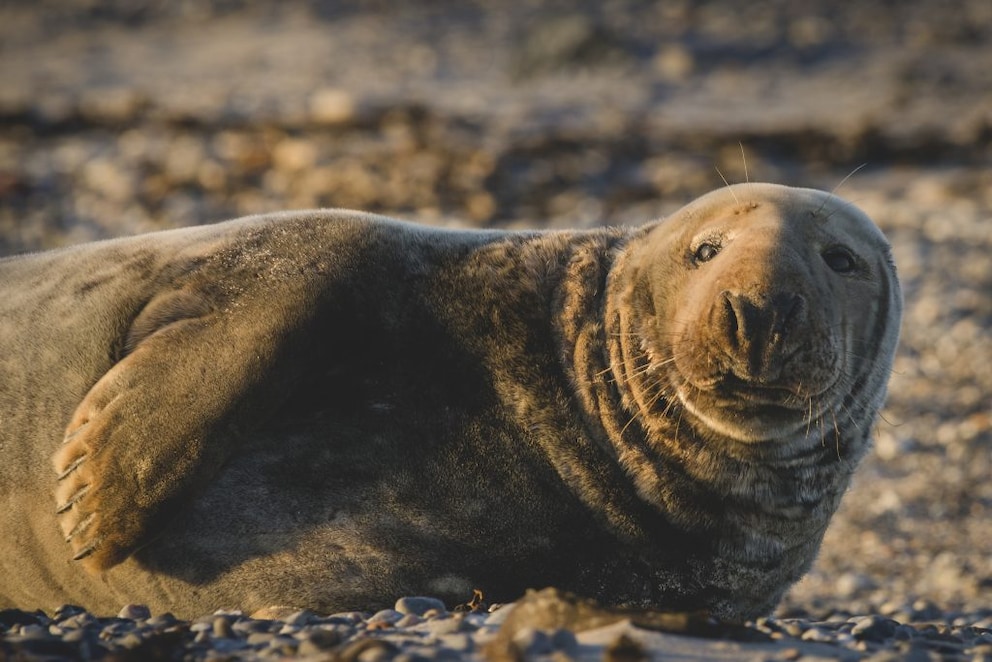
Another animal with particularly large dimensions follows: the gray seal. It has a species-typical and eponymous cone-shaped head and a massive body. Gray seals grow up to 2.5 meters long and can weigh up to 300 kilograms. Typically, the bulls, as with many other animal species, are at the upper end of the size spectrum. The habitat of German gray seals extends mainly over the Baltic Sea, but the species is also widespread in other maritime areas. These include the waters of the British Isles in the eastern Atlantic and the coasts of Canada in the western Atlantic. The animals particularly like coastal waters and rocks.
Many gray seals can also be found on the sandbanks and in the harbor during a visit to the North Sea island of Helgoland. On land, the large seals appear clumsy, but in the water, they hunt fish skillfully and can dive for up to twenty minutes without taking a breath. And not only that, gray seals are the largest predator in Germany. At the beginning of the 20th century, the animals were almost exterminated in the Baltic Sea, but they have been protected since the 1990s.
5. Red Deer
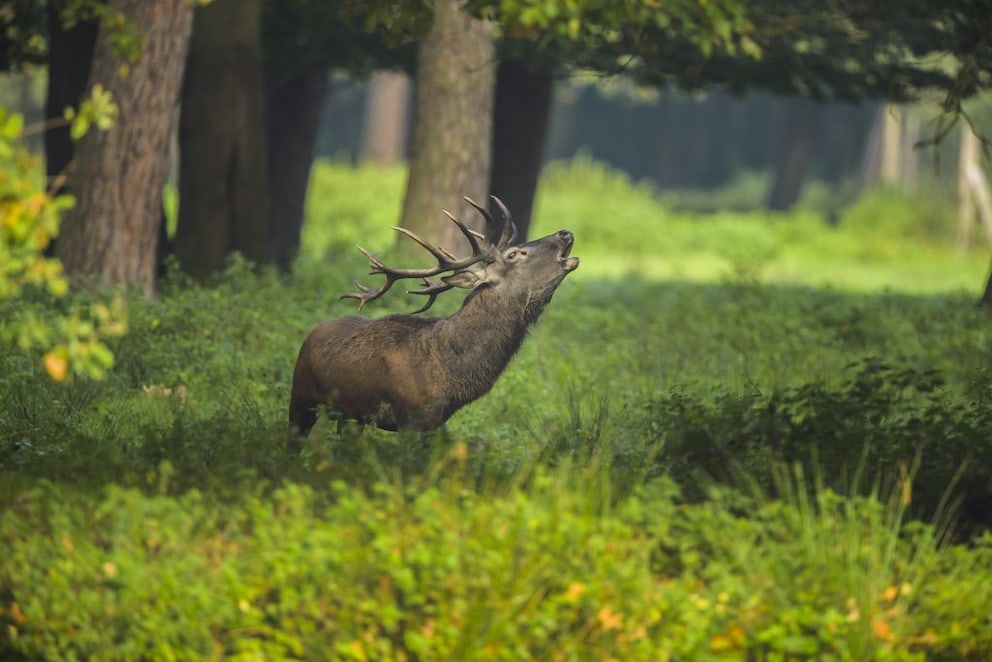
During the rutting season, the calls of red deer echo in rural areas of Germany
If the moose living in the Nuthe-Nieplitz Nature Park is not counted, the red deer is the largest deer species in Germany. About 220,000 animals live here, often only in designated red deer areas in forest regions. They have a shoulder height of up to 1.5 meters and can weigh up to 205 kilograms. The male red deer carries antlers weighing up to seven kilograms, which the deer shed each year, only to regrow them in about 140 days.
During the rutting season in September, the penetrating calls of the male red deer can be heard–during this time, older stags typically even have a pronounced mane. The very social animals live most of the year in herds, consisting of separate groups of female and male animals. During the mating season, the stags follow the females to so-called rutting grounds. The size of these groups varies–in open landscapes with a higher proportion of grassland and less forest, the number of red deer can increase significantly. In winter, these animals’ energy reserves quickly run low, as the food supply decreases significantly. To have the best chance of survival during the cold season, red deer reduce their digestive organs and cool down their extremities.
Also interesting: The differences between winter rest, hibernation, and winter sleep
6. Wild Boar
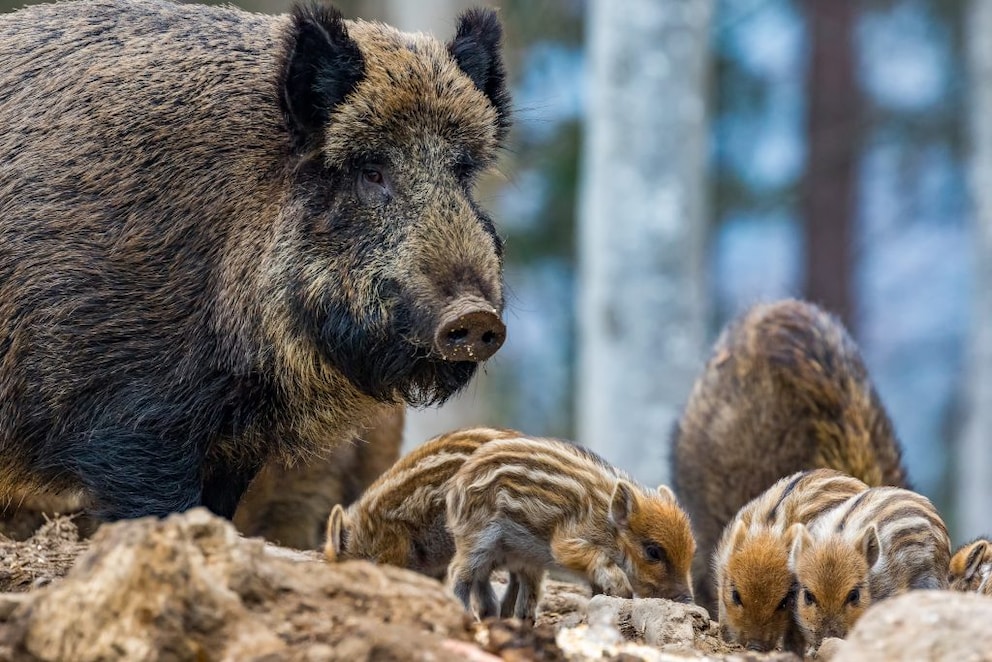
The wild boar is also among the largest animals in Germany–and ranks just behind the slightly taller red deer with a weight of up to 200 kilograms. Although wild boars reach “only” a shoulder height of just under a meter, their appearance is unmistakable. Their build is stocky, the snout of these pigs is very pronounced, and their fur is dark and bristly–except for the piglets, as the wild boar piglets have light brown fur with yellowish stripes. The versatile omnivores are widespread in large numbers in this country, with up to 1.5 million of them. These large wild animals live both on most Baltic Sea islands and in the foothills of the Alps and in various regions in between.
7. Wolf
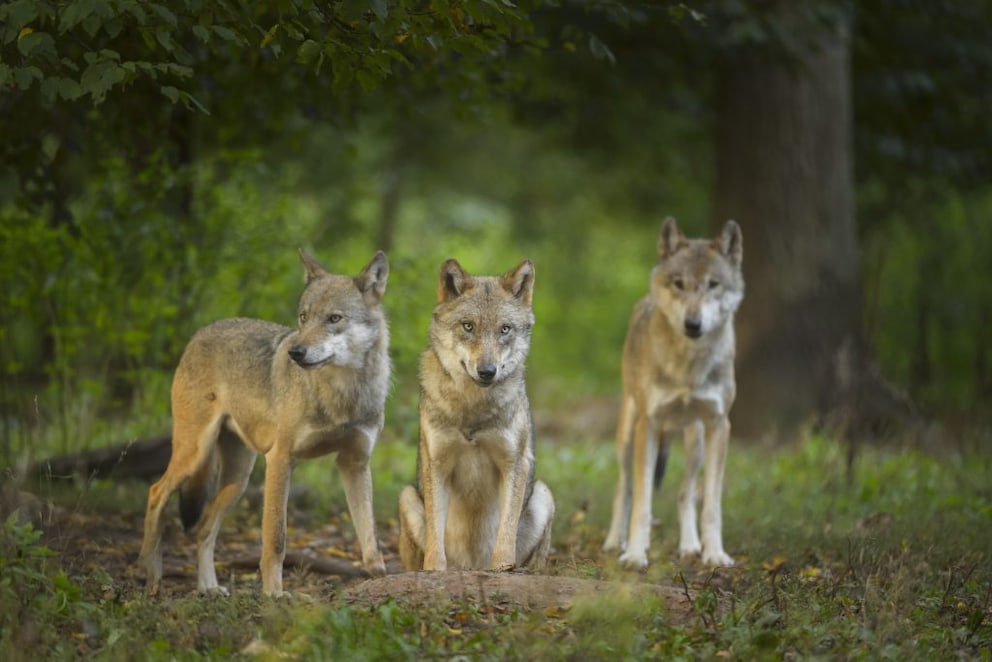
Another animal that ranks among the largest in Germany is the wolf. Its habitat once spanned the entire Northern Hemisphere, but hunting drastically reduced their numbers–wolves were extinct in this country for 150 years. Twenty-three years ago, wolf pups were born in the wild in Germany for the first time again. Since then, they have spread in various regions–not without conflicts with humans. To survive, wolves do not even need the wilderness, as long as they find enough food, they manage well. Their excellent sense of smell also helps them: They can smell animals from a distance of 2.5 kilometers.
Although the Eurasian wolf is one of the largest animals in Germany, in other regions of the world, the predators are even larger. With a weight of up to 45 kilograms and a shoulder height of up to 90 centimeters, the wolf of Central Europe is smaller than, for example, the wolves found in northern Canada–these can weigh up to 70 kilograms and are larger.
Also interesting: How a virus causes the number of black wolves to increase

The Siberian tiger even hunts bears.

Gold Jackal, Wolf or Fox: How to Tell the Differences
8. Wels Catfish

Another aquatic inhabitant among Germany’s largest animals is the European wels catfish, a popular angler fish found in almost all waters in this country. This fish reaches a length of up to 1.5 meters and a weight of up to 50 kilograms, but there are also significantly larger specimens of this species. In the past, catches of wels catfish weighing more than 100 kilograms have been documented, as reported by “SWR” about a wels catfish caught in the Rhine in Rhineland-Palatinate. The body of the wels catfish is scaleless and long, becoming very robust towards the head. On the underside of its broad head are four short barbels, and two long barbels originate near the corners of the mouth on the upper jaw. These serve the fish as sensory organs.
9. Lynx
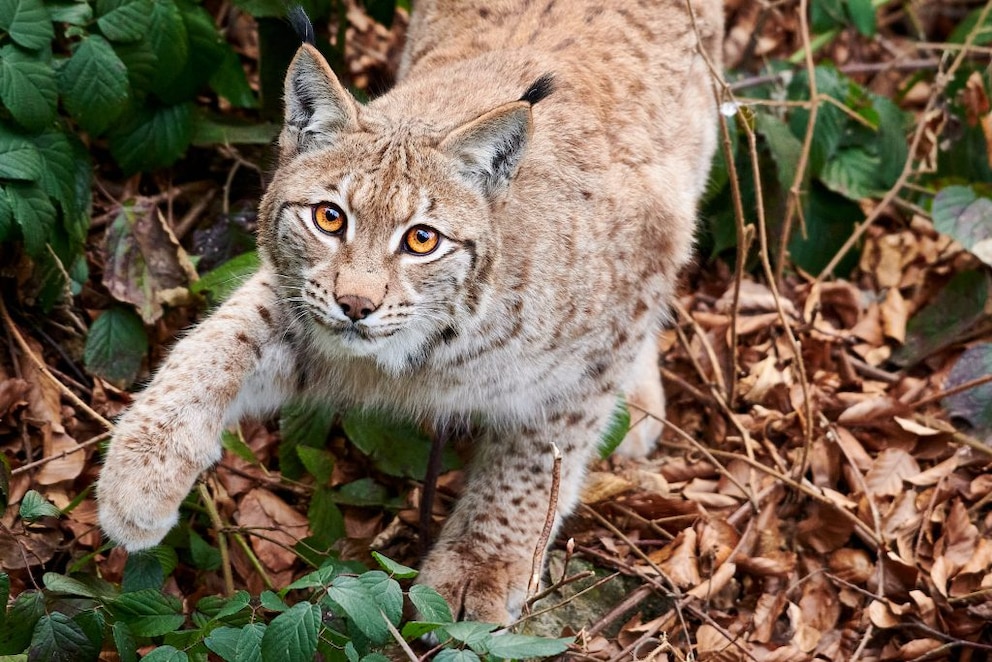
The Eurasian lynx was native to almost all German forests until about the mid-19th century. However, due to hunting, the animals were almost completely exterminated until they were reintroduced in the 1970s. Their habitat is in the German low mountain ranges. The lynx has a body size of about 70 centimeters, making it one of the largest animals in Germany, with males weighing up to 30 kilograms.
Two exceptional abilities of this animal are its hearing and vision. The following example underscores this: A lynx can hear a mouse from a distance of 50 meters. The tufts of hair on its ears support its hearing ability, while its pronounced cheek whiskers likely act as reflectors for sound waves. Lynxes are solitary animals, hunting mainly at dusk and night, retreating during the day. The territories of these animals vary greatly in size, but those of males are generally larger than those of females.
Also interesting: Thuringia creates retreats for lynxes
- NABU.de, “Germany’s largest predator” (accessed on 09/16/2026)
- NABU.de, “Wolves in Germany: The most important facts at a glance” (accessed on 09/16/2026)
- NABU.de, “Species profile: The Wolf (Canis lupus)” (accessed on 09/16/2026)
- NABU.de, “Mute Swan (Cygnus olor)” (accessed on 09/16/2026)
- Deutschewildtierstiftung.de, “Red Deer: King of the Open Land” (accessed on 09/16/2026)
- Deutschewildtierstiftung.de, “Wild Boar: Black and bristly, clever and successful” (accessed on 09/16/2026)
- Deutschewildtierstiftung.de, “Lynx: Solitary with fantastic hearing” (accessed on 09/16/2026)
- Deutschlands-natur.de, “Wels Catfish (Silurus glanis)” (accessed on 09/16/2026)
- Nationalgeographic.de, “European Bison in Germany: The return of the ancient giants” (accessed on 09/16/2026)
- Spektrum.de, “The Return of the Giants” (accessed on 09/16/2026)
- Wildtierportal.bayern.de, “Moose” (accessed on 09/16/2026)