

October 6, 2025, 12:06 pm | Read time: 6 minutes
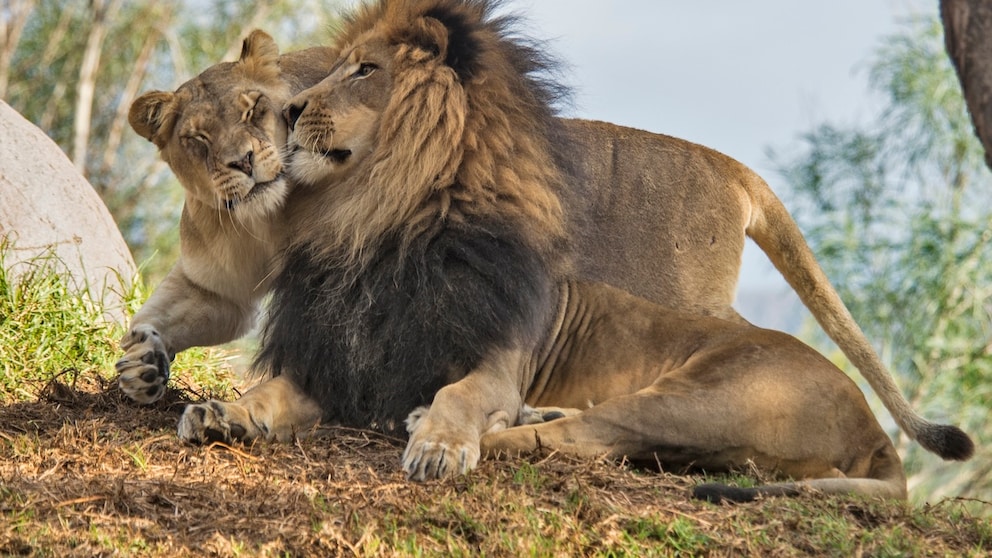
Peacock males display their magnificent plumage, lion males fight bloody battles for a pride—and both pay for it with years of their lives. What appears to be heroic courtship rituals or fierce competition in the animal kingdom comes at a high cost: Males of many species die earlier than their female counterparts. This pattern is no coincidence—and in some animals, it even reverses. A new large-scale study shows that reproductive strategies deeply impact life expectancy—even when animals live in zoos.
Why Male Mammals Often Die Earlier
Life expectancy systematically differs between genders in many species. On average, women live about 5.4 years longer than men worldwide. This pattern is similar in mammals, while in birds, it often reverses: Here, males often reach a higher age. One explanation is the so-called “heterogametic sex hypothesis.” It suggests that the sex with two different sex chromosomes (XY in male mammals, ZW in female birds) is more susceptible to harmful genetic effects and therefore dies earlier.
But genetic explanations alone are not enough. Lifestyle, reproductive costs, or gender-specific physical traits like sexual dimorphism (different body sizes) could also play a role. An interesting explanatory approach for gender-specific differences in life expectancy is the so-called handicap hypothesis. This theory, formulated in 1975 by Israeli biologist Amotz Zahavi, suggests that animals with conspicuous but disadvantageous traits—such as a large peacock feather, a dense lion’s mane, or oversized horns—succeed in mate selection precisely because these traits are “costly.” They signal to the female: “I am viable despite this handicap–therefore, I am particularly fit.”
In the context of the study by Staerk et al., this is relevant because many of the analyzed species with pronounced sexual dimorphism (i.e., noticeable size or trait differences between genders) also showed stronger differences in life expectancy. Especially males, forced by sexual selection to invest in elaborate traits or behaviors, seem to die earlier on average. This suggests that the costs of such “handicaps” are real, and thus could provide an evolutionary explanation for the shortened life expectancy of males.
The Effect Was Even Measurable in Zoos
The research team led by Johanna Staerk from the Max Planck Institute for Evolutionary Anthropology (Leipzig) and Fernando Colchero from the University of Southern Denmark investigated exactly this. The study was published on October 1, 2025, in the journal “Science Advances.”
It is based on the evaluation of data on over 1,100 mammal and bird species living in zoos, supplemented by information from wild populations. Why did the researchers demonstrate this in captive animals? If it is a profound evolutionary mechanism, the different aging should also be detectable in protected environments like zoos. In the natural environment—so the thesis goes—the effect is even stronger.
To this end, the researchers analyzed data on the adult life expectancy (“adult life expectancy,” ALE) of 528 mammal and 648 bird species kept in zoos worldwide. Additionally, wild data from 110 species were included. The analysis was based on demographic data from the ZIMS system of Species360 and used Bayesian survival modeling.
Life expectancy was calculated from the age of first reproduction. The difference between female and male ALE was expressed as a ratio, with positive values indicating an advantage for females and negative values an advantage for males. Additionally, factors such as mating system (monogamous or not), sexual body size difference, and parental care were statistically considered.
72 Percent of Female Mammals Live Longer
In zoo populations, females lived longer than males in 72 percent of mammal species—on average, their advantage was 12 percent. In birds, however, a male advantage was observed in 68 percent of species, averaging 5 percent. This pattern was also confirmed in wild populations, where the differences were even more pronounced. The life expectancy advantage of females in mammals was 18.6 percent, while that of males in birds was even higher at 26.6 percent.
Notably, chromosomes alone did not explain these differences. Rather, it was shown that in species with polygynous or promiscuous mating behavior (i.e., with strong competition for reproduction) and significant sexual body size differences, the gender difference was particularly strong. Females in non-monogamous mammal species had an ALE advantage of 15 percent, while in monogamous species, it was almost none.
In birds, the male advantage was also present in monogamous species. Parental care also played a role: Females who cared for offspring alone had a higher life expectancy. Overall, pre-copulatory selection mechanisms (e.g., body size, competitive behavior) could mainly explain the differences.

Queer Behavior Observed in 6,000 Animal Species

Why Kittens from the Same Litter Often Look So Different
Limitations of the Study
With over 1,100 species examined, the study represents the most comprehensive analysis of gender-specific life expectancy in vertebrates to date. By combining zoo and wild data, it offers a robust picture of evolutionary patterns.
However, there are limitations: Zoo animals live under conditions that do not correspond to natural behavior. They have medical care, are subject to selective breeding, or have limited social contacts. This influences behavior and lifespan. Additionally, some animal groups are overrepresented in zoos (e.g., large mammals), while others (e.g., bats) are underrepresented.
That this pattern persists even under controlled conditions in zoos, where many environmental factors such as predation or food scarcity are absent, suggests that genetically anchored, evolutionarily shaped mechanisms play a central role.
Do the Results Also Have Significance for Humans?
Additionally, the study provides explanations for why women in humans, despite different living conditions, usually live longer than men worldwide. This appears to be a trait deeply rooted in the evolutionary history of primates—including us. However, not all explanatory models applied universally: In lemurs, for example, no advantage for females was found despite polygamous systems.
Finally, it should be noted that reproductive systems in the wild can be more complex than can be represented in binary categories like “monogamous/non-monogamous.” Nevertheless, the results show a high consistency across classes and orders. The study primarily shows that sexual selection—the evolutionary pressure from mate choice and reproductive competition—significantly influences the differences in life expectancy between genders. Particularly in species with strong male competition behavior and polygynous systems, this pressure negatively impacts male life expectancy.
Thus, it provides the most comprehensive evidence to date that gender-specific differences in life expectancy in birds and mammals are primarily determined by sexual selection and physical traits—not solely by genes or the environment. For animal lovers and researchers alike, this is equally exciting: The lives of animals—and our own—are more influenced by reproductive strategies than they might seem at first glance. 1