

October 30, 2026, 9:51 am | Read time: 6 minutes
Hardly any Halloween celebration is complete without them: the black cat on the pumpkin, the bat on the garland, and the owl in the ghostly forest. Yet, these are just ordinary animals that are active at night. Their eerie reputation stems from centuries-old superstitions, church-created enemy images, and spooky stories. PETBOOK explains the origins of the ghostly animal legends surrounding Halloween and what remains of them.
Where does Halloween actually come from?
The roots lie in the British Isles. There, the Celts celebrated the festival of Samhain every fall, which is considered a likely precursor to Halloween. According to the Celtic calendar, October 31 was the last day of the year. It was believed that the boundary between the world of the living and the realm of the dead was thinnest on this night. This explains why ghosts are still part of Halloween today. According to Bat Conservation International, the Celts wore costumes to protect themselves from the spirits.
Later, the church set All Saints’ Day on November 1, and the evening before became known as “All Hallows Eve,” which evolved into Halloween. Irish immigrants brought the custom to the U.S. in the 19th century. In the darkness of this night, stories emerged in which animals played a role.1,2
Why are black cats considered bad omens?
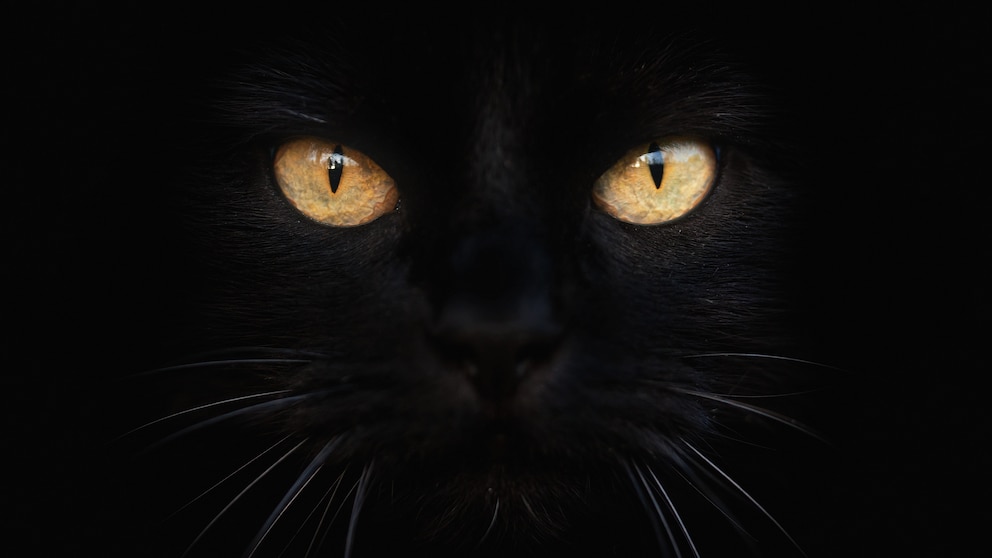
Black cats have been seen as harbingers of doom for centuries. In the Middle Ages, the church viewed the cat as a symbol of paganism and thus evil, with black being considered a demonic color. Some believed witches could transform into black cats to wreak havoc unnoticed, while others saw the animal as the devil himself. Their silent stealth and nocturnal activity also contributed to their association with black magic. This image still influences Halloween decor, where the black cat sits next to the witch and cauldron.3
Also interesting: Are black cats really in danger on Halloween?
The papal bull “Vox in Rama” from 1233 is often cited as the start of cat persecution. Pope Gregory IX depicted cats as tools of the devil. However, the story is less clear-cut than often told. The bull describes alleged rituals of a supposed devil sect and does not call for the killing of cats. There is no evidence of an organized hunt for cats in the Middle Ages. The frequently repeated claim that the disappearance of cats contributed to the spread of the plague is also considered exaggerated.4,5
What do bats have to do with Halloween?
There is a rather straightforward explanation here. During Samhain, the Celts lit fires. The flames attracted insects, and the insects attracted bats. What the Celts thought of the animals, however, is unclear.
The bat later became a creature of horror due to the European image of the devil. Bats, like wolves and owls, were considered helpers of the devil, and demons were early depicted with bat wings. Additionally, the animals live in the dark, and their use of echolocation was long unexplored, leading to them being attributed with magical powers.6
The vampire has the greatest influence on this image. Since Bram Stoker’s 1897 novel “Dracula,” vampires in images often wear a cloak reminiscent of bat wings. Stoker is said to have been inspired by bat species from Latin America that actually feed on the blood of other animals.
Also interesting: Are there blood-sucking bats in Germany?
In China, bats are considered good luck charms. In Europe, they are seen as “signs of doom, death, and the devil,” as the German Digital Library puts it. Incidentally, just before Halloween, they are still active, as their hibernation begins only in early November.7
Why is the owl said to announce death?
The call of the owl has long been considered a bad omen. In ancient Rome, it was believed that the call announced the imminent death of a person. In the Middle Ages, owls were called “death birds.” Tawny owls flying around houses where a wake was being held were interpreted as messengers to the afterlife, although they were merely hunting insects attracted by candlelight. Owls were also seen as bringers of plagues and misfortune and as helpers of witches and the devil.
Also interesting: Do owls really attack people?
In the 20th century, rural residents even nailed live owls with outstretched wings to barn doors to protect the farm from lightning, fire, hail, and plagues. There is no direct connection to Samhain or Halloween. However, the owl fits the image of a night focused on death, ghosts, and witches.
The owl can also be seen quite differently, as shown in Athens. There, it stood for wisdom. Even today, it is the emblem of many schools, universities, and publishers.8
Are Black Cats Really in Danger on Halloween?
The Coolest Vampire Animals–From Real Bloodsuckers to Eerie Namesakes
How strong is the owl superstition today?
Surprisingly strong. A team from the University of Lausanne, led by biologist Alexandre Roulin and social scientist Christine Mohr, has documented owl superstitions worldwide. By December 2020, around 10,000 people had participated in an online survey in 35 languages. According to the survey, the superstition is much stronger in Africa than in India and English-speaking countries.
The examples vary greatly. In Bern, the call of an owl is said to announce the birth of a child rather than a death. In Mongolia, it is said that owls steal people’s fingernails at night. In Cameroon, the owl is considered so evil that it has no proper name. It is referred to as the “creepy bird.”9
Also interesting: 7 animals that look like they’re from a horror movie
What are the animals really?
In reality, these animals are simply very useful nocturnal creatures. Bats catch insects, owls hunt mice and rats, and the black cat is, like any other cat, a pet with a fur color. In the “Peace Owl” project, farmers in the West Bank and Jordan use owls to control rodents, reducing the need for chemicals. Roulin says, “To better preserve these birds of prey and ensure their survival, we must show that they are useful.”
Also interesting: What does human blood have to do with the love life of this spider?
So, those who hang up Halloween decorations can do so with a clear conscience. The important thing is that the fun of the spooky season doesn’t turn into prejudice against real animals.