


March 18, 2026, 10:25 am | Read time: 4 minutes
Researchers from Germany and Laos have discovered a previously unknown diversity of spiders in the limestone caves of Southeast Asia. Particularly astonishing: Some of the newly discovered spider species, only millimeters in size, carry their eggs or even already hatched young spiders in their fangs—a behavior that seems unusual even among spiders.
Tiny, Delicate–and Hardly Noticeable
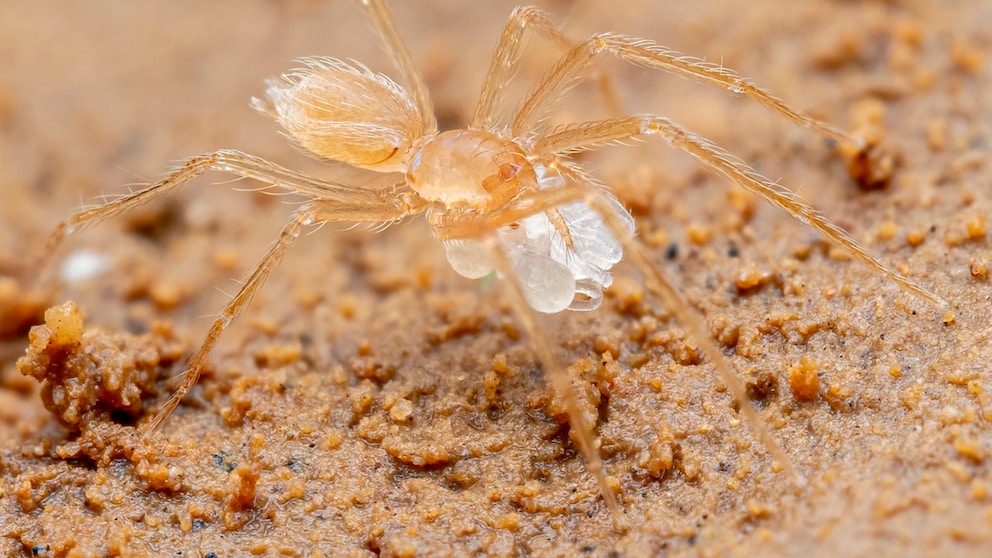
If the cover image alone gives you the creeps, rest assured: The spider shown here is tiny. It measures just about a millimeter. It almost seems like a miracle that it was discovered at all.
A research team led by Frankfurt arachnologist Dr. Peter Jäger from the Senckenberg Research Institute, along with a colleague from the National University of Laos, has described several previously unknown species—including tiny “cave dwarfs,” shimmering “blue legs,” and even a completely eyeless spider, as reported by the Senckenberg Society for Nature Research in a press release.
Only Those Who Look Closely Can Discover “Beautiful” Spiders
There’s no need to fear them—rather, fear accidentally squashing them. “Humans are 2,000 times larger than the Vangvieng cave dwarf,” Jäger explains to PETBOOK. Only those who look very closely can discover these “beautiful” spiders—and observe their behavior.
The creatures live in one of the most specialized habitats on Earth: the limestone caves of Laos. These are considered biodiversity hotspots but are also extremely sensitive. Many species are found exclusively there—and often only in a single cave.
Babies Carried in the “Mouth”
Particularly surprising: Some of the newly discovered spiders take great care of their offspring—carrying eggs or even hatched young with their fangs.1
What sounds unusual is not so rare in the spider world. “Carrying the cocoon in the fangs is also normal for native species like cellar spiders or wolf spiders,” says Jäger.
What stands out here, however, is something else: the small number of eggs. Instead of many small offspring, these cave spiders focus on fewer, but larger young. The reason lies in their habitat: In the nutrient-poor caves, there is little prey. “The mother invests her energy in fewer young, which then have a greater chance of survival,” the researcher explains.
Living Without Eyes–But With Fine Senses
One of the newly discovered species manages completely without eyes—an extreme adaptation to life in total darkness.
These spiders are not disoriented, however. On the contrary: They possess a highly developed sensory system. With tactile and auditory hairs, special sensory organs in their bodies, and chemical cues, they can precisely perceive their surroundings.
Newly Discovered Spiders Have Shimmering Legs
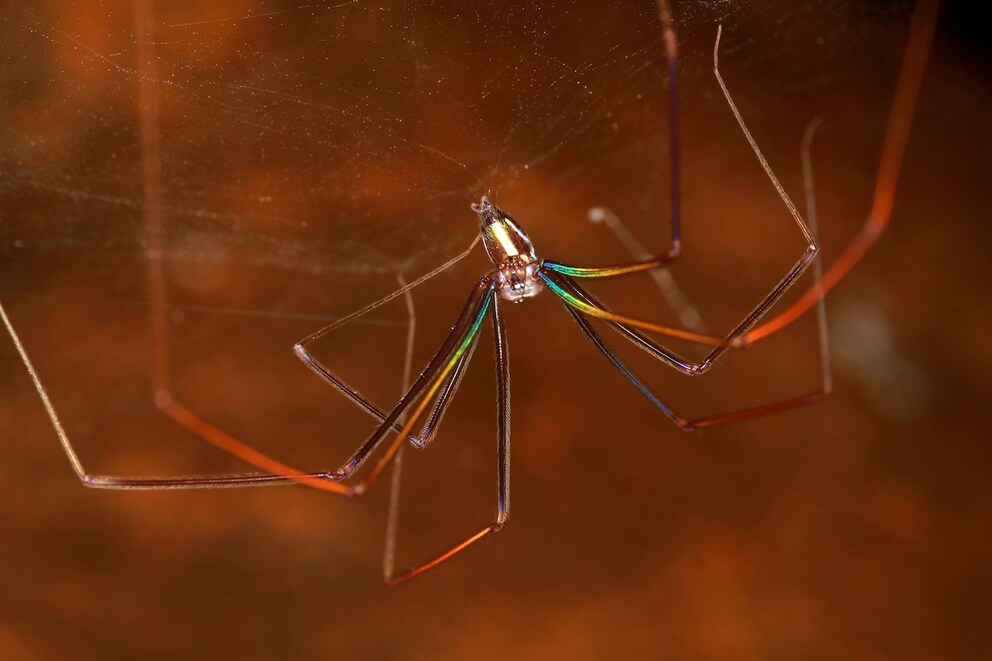
Also curious: Some of the new spider species have brightly colored legs—even though they live in complete darkness. There is no clear function for this yet. “It could be a side effect of the surface structure,” Jäger explains. Similar to butterflies, these colors could have entirely different effects in light—even if they play no role in everyday cave life.
Extremely Rare–and Extremely Endangered
Many of the newly discovered spider species are so-called microendemics. This means they are found only in a tiny area, sometimes even in a single cave.
This makes them extremely vulnerable to changes. Even small interventions can have fatal consequences. “Every disturbance of their fragile habitat has enormous significance,” Jäger warns. Artificial lighting, rising temperatures due to altered cave entrances, or limestone mining could lead to these species disappearing forever.

Is There a Difference Between a Tarantula and a Bird Spider?
New Spider Species Named After Pink Floyd
Decades-Long Search for Tiny Creatures
The discovery of the spiders was anything but easy. Jäger found some species only after many years of intensive research.
“It took me over 20 years to find these spiders in the last chamber of some caves,” he reports. Only with a trained eye can one recognize the tiny creatures—and later wonder how they were overlooked for so long.
Fascination in the Hidden
What particularly excites the researcher: the insights into a world that usually remains hidden. Observing how the small spiders care for their offspring is particularly fascinating. “You dive into a miniature spider world,” says Jäger. And this fascination can help to understand the larger connections—and better protect sensitive habitats.
Because it is clear: The caves of Laos still harbor many unknown species. And each new discovery shows how little we know about these hidden ecosystems so far.