

September 10, 2025, 4:21 am | Read time: 5 minutes
In one of the most mysterious regions of our planet–more than 4,000 meters below the ocean’s surface–researchers have discovered three new species of deep-sea snailfish. These remarkable fish live in complete darkness and under immense pressure. One of them even resembles the robust little monsters found in popular video games. The discovery of these species offers insight into the world of “deep-sea Pokémon” and demonstrates the diversity of life in the most extreme habitats.
Cute Deep-Sea Creature Resembles Pokémon
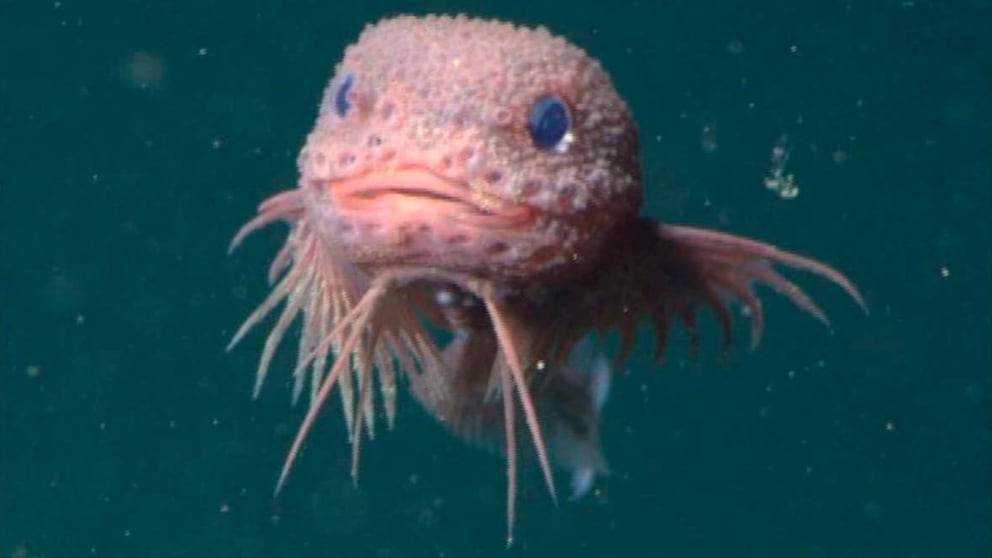
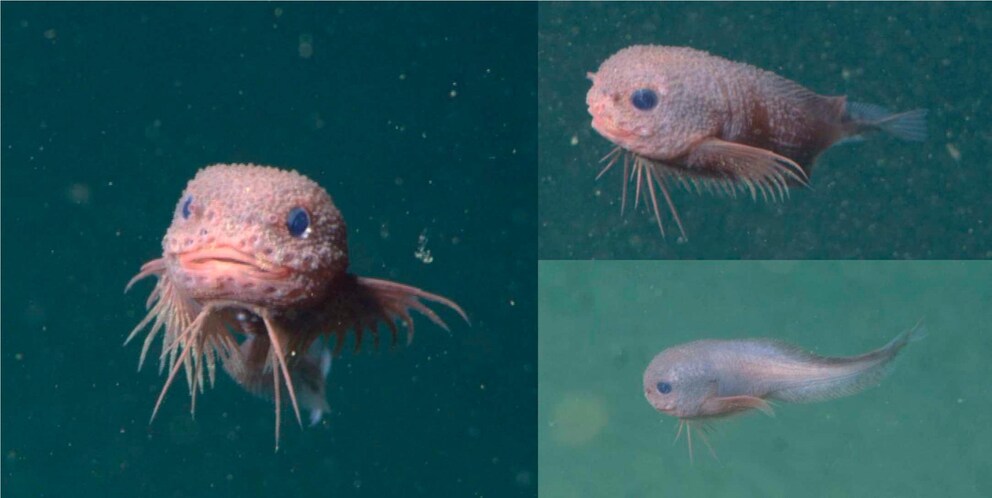
A research team from the State University of New York at Geneseo, along with colleagues from Montana and Hawaii, has discovered three new snailfish with unique body shapes. One of them is particularly delightful. It is pink, has superpowers like suction discs, pressure insensitivity, and fleshy sensors. In short, it looks like a water Pokémon.
What sounds like pure fantasy is reality–Careproctus colliculi, the “Bumpy Snailfish,” is one of the three new species found by researchers in the eastern Pacific. They show how astonishingly diverse life in the deep sea truly is–and how much remains undiscovered.
Deep-Sea Pokémon Largely Unexplored
Snailfish of the family Liparidae are found worldwide, inhabiting environments from the coast to depths of over 8,000 meters. In shallower waters, they use their ventral suction disc to cling to rocks. This feature has given them the English name “snailfish” and the less elegant German name “Scheibenbauch” (disc belly).
In the deep sea, however, many of their biological characteristics remain largely unexplored. So far, few fish from the so-called abyssal zone (3,000–6,000 meters deep) have been documented. It was suspected that this was due more to a lack of sampling than an actual absence of species. The newly presented study fills this gap by showing that snailfish do indeed live in the abyss–and exhibit remarkable diversity there.
The fish live in complete darkness and under immense pressure, as the researchers write in the journal “Ichthyology & Herpetology” (Vol. 113, No. 3, 2025). The discovery is based on findings from depths of over 3,000 meters, collected using manned and remotely operated deep-sea submarines. The three new species–Careproctus colliculi, Careproctus yanceyi, and Paraliparis em–show not only external but also genetic differences from all previously known snailfish. Their description significantly expands our knowledge of deep-sea biodiversity.
Also interesting: How do animals survive in the deep sea?
Why the Blobfish Actually Looks Quite Unique

Giant Fish Weighs More Than a Car
What the Three New Species Look Like
As early as 2019, researchers collected individual specimens from depths between 3,268 and 4,119 meters using submersibles. The animals were collected using suction devices and then genetically and morphologically examined. This included DNA analyses (COI gene and 16S rRNA), micro-CT scans, and classical morphological measurements. The study objects have since been transferred to museum collections and now serve as holotypes of the newly described species.
The researchers described three new species:
- Careproctus colliculi (“Bumpy Snailfish”) is pink, has prominent fleshy skin bumps on the head, and a large suction disc. It has 22 pectoral fin rays (with notably elongated upper rays) and eight caudal fin rays. Genetically, it belongs to the so-called Osteocareprocta clade and is closely related to species from Antarctica.
- Careproctus yanceyi (“Dark Snailfish”) is completely black, has a moderate suction disc (<3% of body length), a small gill opening above the pectoral fin, and simple teeth. It is genetically distinct enough to likely represent its own clade within the family Liparidae.
- Paraliparis em (“Sleek Snailfish”) has an elongated, black body, no suction disc, five gill arch rays (instead of the usual six), a slanted jawline, only one pectoral radial bone, and a very small gill opening. Genetically, it is closely related to Paraliparis wolffi–a species from the Indian Ocean.
Each of the new species shows clear genetic and morphological distinctions from previously known snailfish. Their discovery points to previously overlooked diversity in the deep sea.
Cryptic Deep-Sea Species Need Better Research
These findings provide several important insights: First, they confirm that snailfish are native to abyssal depths–a habitat that has been scarcely sampled. Second, the genetic analyses show that some of these species have close relationships with Antarctic or deep-sea species from other oceans. This could indicate evolutionary distribution pathways from polar regions.
Third, the discovery of so-called “cryptic species”–outwardly similar, genetically different–illustrates the importance of capturing deep-sea fauna not only visually but also genetically. This has direct implications for our understanding of life on the ocean floor and the evolution of marine organisms.
Careproctus colliculi, Careproctus yanceyi, and Paraliparis em are three new pieces in the puzzle of marine biodiversity. They also serve as evidence that the deep sea still holds many surprises. For those interested in bizarre creatures and the extremes of life, these fish are more than just scientific objects. They are real examples of how alien and fascinating life in the deep sea can be. Their discovery is a reminder: The world far below the ocean’s surface deserves our attention–biologically, ecologically, and technologically. 1