


October 28, 2025, 10:22 am | Read time: 6 minutes
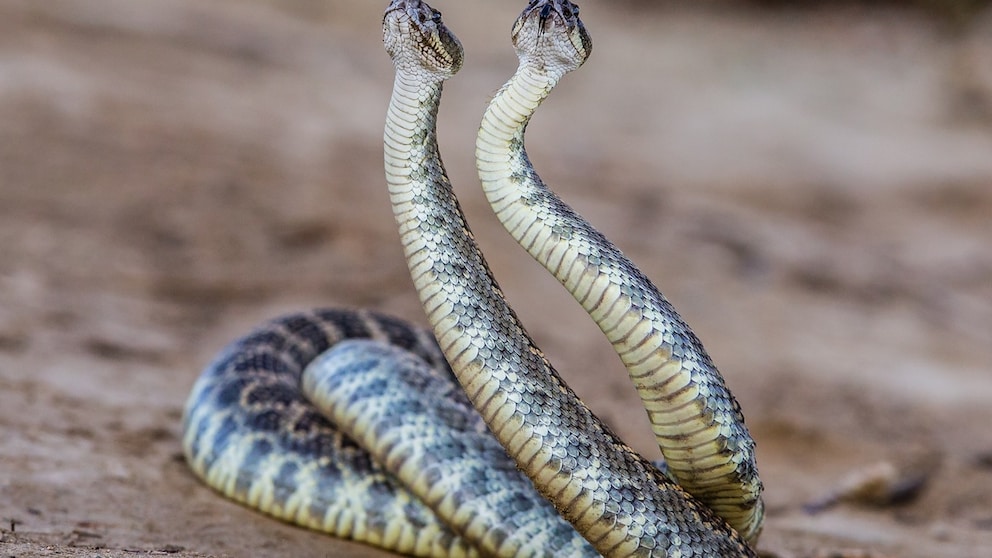
Snakes are considered one of the most feared animals worldwide, but an innovative wildlife camera in Colorado might change that perception. A research team set up a livestream at a rattlesnake den housing hundreds of snakes. The viewers’ reactions were surprising: Many lost their fear, developed empathy, and actively participated in the research. What is behind this success?
Who would have thought that people would not only celebrate videos of cute cats or dogs but also become enthusiastic about rattlesnakes? Typically, these animals are not at the top of the popularity scale—and there’s a reason for that: Media sensationalism and deeply rooted fears negatively influence public perception, especially for “unpopular” species like snakes.
However, studies show that nature experiences—even virtual ones—can have positive effects on well-being and environmental behavior. While livestreams have mostly been used for popular species like bears or birds, they have rarely been utilized for highly stigmatized animals like rattlesnakes. With the “RattleCam” project (translated as “Rattle Camera”), scientists from Colorado, USA, aimed to change that.
Hundreds of Snakes Enthrall Viewers
Since 2021, a team of scientists led by Owen Bachhuber (California Polytechnic State University) has been streaming a small snake den in California. However, it was the significantly upgraded Colorado stream that enabled the continuous and worldwide observation of a so-called “mega-den,” a large den with hundreds of snakes in the U.S. state of Colorado. Initially, this might sound creepy to most people. Yet, the images seemed to be well-received by viewers. The results of the comprehensive study were published in the journal “Frontiers in Amphibian and Reptile Science” and show that wildlife cameras with livestreaming could be an effective tool for environmental education. 1
Viewers from Around the World Followed the Snakes in the Livestream
The study describes in detail, for the first time, how a fully self-sufficient wildlife livestream can be technically implemented—from the wildlife camera model to the power supply and remote control. The chosen location was a mega-den of prairie rattlesnakes (Crotalus viridis) on a private ranch in Colorado.
The animals leave their winter hideout in the spring, while pregnant females remain in the den to give birth to their young in late summer. An Axis Q6225-LE PTZ camera transmitted live images on YouTube 24/7 from May 15 to November 5, 2024. The entire setup—including solar panels, batteries, and protective measures—was specifically designed for extreme weather conditions and autonomous operation.
A team of students and volunteers remotely controlled the camera and moderated the live chat during the day, actively engaging viewers worldwide. The project was approved by the Cal Poly IACUC and the Colorado Parks and Wildlife authority.
Over 1.6 Million Views and Many Positive Comments
The results are multifaceted—and impressive. During the seven-month period, people from 122 countries watched the livestream. The number of subscribers on the YouTube channel “Project RattleCam” increased from 813 (May 2024) to 14,576 (November 2024). Overall, the stream was viewed over 1.6 million times, with a total watch time of over 175,000 hours.
Two targeted media campaigns (in July and August 2024) led to significant increases in viewership and subscribers. Importantly, many viewers actively participated as “community scientists.” They reported sightings, helped identify individual animals—23 snakes were individually named through a public “Name-a-Snake” program—and engaged in respectful discussions in the chat.
Also interesting: Smallest Snake in the World Rediscovered in Barbados After 20 Years
“You Helped Awaken My Compassion”
Numerous comments showed that viewers lost their fear of snakes through the stream and instead developed respect and fascination. Zoos in the U.S. also integrated the livestream into their educational offerings and reported positive audience reactions.
The scientific journal “Phys.org” quotes some user comments as follows:
I really learned something here while watching, because I am actually afraid of even worms! But I never knew how attentive these mothers are to their babies… incredible.
I used to think it was okay to harm these snakes. I feel so terrible that I ever thought that. Thank God I never hurt one. You helped awaken my compassion and stay alert.
I have disliked snakes my whole life (I’m not young anymore)! and I stumbled upon this channel and now I just keep watching (I LOVE the video where one of them sheds its skin)!
Wildlife Cameras Can Change Attitudes Toward Animals
The study vividly demonstrates how technological innovations like wildlife camera livestreams can not only provide scientific data but also change societal attitudes. Especially for negatively perceived animal species like snakes, generating empathy is challenging—yet the Colorado RattleCam project succeeded.
The ability to observe snakes giving birth and their social behavior in real-time strengthened viewers’ compassion and changed their perspective. The project uniquely combines environmental education, community science, and public outreach. For people with limited access to nature—such as those in big cities or with physical limitations—such livestreams offer a realistic alternative that is both emotional and informative. From a technical standpoint, the project is groundbreaking: The extensively documented implementation provides a blueprint for building similar wildlife cameras worldwide.

People Attribute Emotions to Animals—but Not Thoughts

Anxious Cats May Suffer More Frequently from Bladder Infections
System Costs Amounted to About $12,000
The study is the first of its kind to comprehensively document the technical aspects of a self-sufficient wildlife camera and evaluate its use. It provides valuable insights for environmental education and research. At the same time, the method’s limitations are evident: The system costs amounted to about $12,000, making implementation challenging for many institutions.
The livestream also requires a stable cellular connection or satellite-based alternatives—both of which are not available everywhere. Technical issues and outages were observed during extreme weather conditions. A systematic evaluation of changes in viewer perceptions was not part of the study, so statements about the impact and sustainability of attitude changes remain anecdotal. Additionally, camera movement could affect individual animals (e.g., birds)–an aspect that requires further research.
Despite these limitations, the study makes an important contribution to the question of how modern technologies can positively influence the relationship between humans and nature.
Conclusion: Wildlife Cameras with Livestreams Can Help Overcome Deep-Seated Fears and Prejudices
The study and the RattleCam project demonstrate that wilderness livestreams can offer much more than beautiful images. They enable scientific observation, promote active public participation, and help overcome deep-seated fears and prejudices—even toward highly stigmatized animals like rattlesnakes. The technology is complex but reproducible, and the educational potential is immense.
For educational institutions, zoos, and research facilities, new ways are opening up to bring nature experiences into digital spaces. Future studies should systematically investigate how livestreams influence attitudes—the Colorado RattleCam project has already laid important groundwork for this.