

December 30, 2025, 6:47 am | Read time: 12 minutes
Falconry is not just a centuries-old tradition. It involves the training of birds of prey and hunting with them. Animal welfare organizations sometimes criticize it harshly. But not only falconers push back against this criticism. PETBOOK asked an expert for insight and presents the opposing positions.
What Is Falconry?
Falconry is a hunting method over 4,000 years old, with origins in Asia and the Middle East. It spread in Europe during the so-called Migration Period. Frederick II of Hohenstaufen was particularly fond of falconry. In the 13th century, he even wrote an influential falconry manual.
To this day, falcons are used to hunt so-called feathered and furred game, such as ducks, pheasants, hares, and similar, mostly smaller animals. Also included are the art of flying and show falconry, which many may know from castle festivals and medieval events. Birds of prey are also sometimes used for deterrence, such as at airports to drive away geese or flocks of crows.
Cultural Heritage, Conservation, or Animal Cruelty?
In 2014, the UNESCO World Heritage Commission added falconry in Germany to the list of national intangible cultural heritage. In 2016, German falconry was also included in the international list of intangible cultural heritage. However, falconry, which involves the keeping, training, and use of birds as hunting assistants for humans, is controversial.1,2,3
Falconry also includes the rehabilitation of injured birds. Ferdinand Baer, a member of the German Falconry Order, the association for falconry, bird of prey protection, and bird of prey science, has cared for, trained, and released numerous birds back into the wild during his career. For this work, he was awarded the Animal Welfare Prize by the Bavarian State Government in 2015. “This is also falconry,” he says.4,5,6
“Falconers Are Double-Certified Animal Keepers”
To call oneself a falconer and hunt with a bird of prey in Germany, one must first have a hunting license. Additionally, a separate falconry exam must be passed. Typically, four major components are taught and ultimately tested, according to falconer Ferdinand Baer.
“Falconers are double-certified animal keepers, which is not the case for dog and cat owners,” says Baer. The birds of prey that a falconer is allowed to keep must be registered, and ownership must be reported to the respective hunting authority. Furthermore, a falconer may keep a maximum of two birds. Exceptions can only be made for breeders. Incidentally, most birds of prey used in falconry come from breeding.7,8
“It’s Hare Against Bird, Not Hare Against 40 Shot Pellets.”
Supporters of falconry appreciate not only the collaboration with the bird, which is usually accompanied by a specially trained dog during the hunt. “This type of hunting is natural and fair,” says falconer Ferdinand Baer. “Either the bird catches the hare, or it doesn’t.”
This type of hunting represents equal opportunity. “Hares are clever and dodge, so older, experienced animals are rarely caught by birds of prey during falconry hunts.” Baer explains the balance of power with an example of a hunt where nine birds of prey were used. Of about 40 hares spotted, only six were caught. “It’s hare against bird, not hare against 40 shot pellets.”
“As a Falconer, You Have an Intense Bond with Your Birds.”
Moreover, a bird of prey does not leave lead residues in the hunted animal, as is the case with other hunting methods. Working with the animal is fascinating and requires a close bond between bird and human, based on trust.
Ferdinand Baer confirms this. “As a falconer, you have an intense bond with your birds.” This bond is mutual. The animals could fly away at any time, but they don’t. The birds have learned through training that they achieve hunting success faster with their falconer and his hunting dog, reports the portal “Greifvogelgeflüster”.9
These Birds Are Used for Falconry
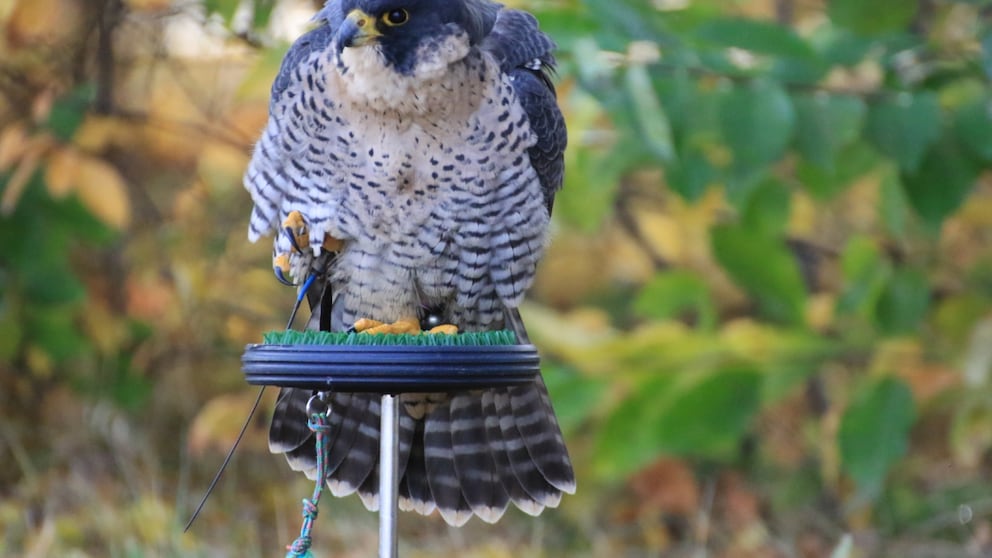
Even though the name might suggest otherwise: In Central Europe, and thus in Germany, falconry (hunter’s term for hunting with specially trained, or “broken-in” birds of prey and falcons) does not only involve falcons. Birds of prey like Harris’s hawks and goshawks are more commonly used, followed by peregrine falcons and occasionally golden eagles. Incidentally, falcons are technically not birds of prey but are biologically more closely related to parrots and songbirds, forming their own group.
How Birds Are Trained for Falconry
Unlike hunting wild birds in nature, where the prey often escapes, and the bird then receives no food, a trained bird always receives food from its falconer at the end of the day, “and does not have to spend the night with an empty stomach,” according to a blog entry on the portal.
Harris’s hawks also have a special social structure, which they show even in the wild, and they like to hunt in family groups, as falconer Baer reports. This is also evident in their work with humans and dogs. Birds of prey and falcons learn only through positive signals, such as rewards. Punishments, strictness, or shouting do not succeed in training the animals, as falconry associations repeatedly emphasize.
Criticism of Falconry
Numerous animal welfare groups would prefer to ban falconry. However, falconry is not fundamentally controversial even among animal welfare organizations—just like hunting itself. The Bavarian Association for Bird and Nature Conservation (LBV), for example, is not an outright opponent of falconry. In a position paper, the LBV states: “The LBV demands that falconry should only be practiced on peregrine falcons, goshawks, and golden eagles and only with birds bred in captivity.” Falconry with individual non-native species, such as the Harris’s hawk, which is already widespread in German falconry, could be permitted after careful examination.10
PETA Calls Falconry Animal Cruelty
The German Nature Conservation Association (Nabu) recognizes in an official resolution on the “Orientation of Hunting in Germany” that nature-compatible hunting is a “legitimate form of land use.” Hunting must be sustainable and not contradict ethical principles. Hunted animals must be used sensibly, and hunted species must not be endangered.11
According to this paper, falconry should be abolished, as keeping and training birds of prey and hunting with them contradicts nature and animal protection. Only stationary and driven hunts with lead-free ammunition should be allowed. The German Federation for the Environment and Nature Conservation (BUND) stated upon PETBOOK’s request that there is no official position on falconry and falconry hunting from the association. All opinions are private. The animal welfare organization PETA vehemently opposes hunting with birds of prey and calls falconry animal cruelty. Birds of prey are “abused” for hunting other living beings, as the animal welfare organization states on its homepage.12,13
“Imprisoned and Tied Up”
The list of accusations made by PETA and other opponents of falconry, such as the organization Pro Wildlife, is long: The kept birds of prey are imprisoned, and the keepers let them starve to successfully chase other wild animals during the hunt. “In the wild, birds of prey hunt to survive—in falconry, however, they are degraded to weapons and abused for killing,” says PETA. The birds are imprinted on humans and only return to them because of their hunger. Moreover, they are mostly tied to the falconer’s arm and eventually “give up” trying to fly away.
To calm the kept birds of prey, they are often fitted with hoods that deprive the animals of all sensory stimuli, as PETA further states. “As a result, the animals are blind and almost deaf and have no way to react to external stimuli.”14, 15,16,17
Classification by Falconer: “Wrong and Illogical”
Falconer Ferdinand Baer, who cares for injured wild birds at the LBV and is also a member of the German Falconry Order, shakes his head at such statements. That keepers let their birds, which they train and use for falconry, starve is wrong and illogical. “Starving in the sense of suffering from hunger is pointless because then the bird cannot perform. Performance is part of hunting.” The animals must be in good condition and constitution, be able to build muscle, and want to hunt. With real hunger, none of this works, says Baer.
Appetite, on the other hand, is a motivation for a bird to be able and willing to hunt. Young birds, such as falcons, also learn to hunt from their parents. And appetite, Baer emphasizes, is different from hunger. “A falconry bird must never starve.” Therefore, falconers must regularly weigh the kept birds of prey, at least once a day. They must not be too light, but also not too heavy, which can occur in nature.
Terms Like “Chase Hunt” Are Technically Incorrect
In nature, birds sometimes eat more than they can process when there is an abundance, and then store it as fat reserves, as reported by the “Magazine for Practical Falconry and Bird of Prey Protection.” Birds in private care receive their share of the hunted game and are additionally fed according to their needs.
Falconers and hunters also reject terms like “chase hunt” and the idea that birds are chased after their prey. Not only because chase hunting, where an animal is chased until it gives up from exhaustion, is banned in Germany. They are also factually incorrect, as the portal “Greifvogelgeflüster” writes. A bird of prey pursues its prey only as long as it can see it. “If the prey disappears into cover, the hunting flight is over.” The hunt is brief, not until the prey is exhausted. It’s not a chase.
“A Bird Only Flies When It Has To”
Anyone who keeps a bird of prey must not only care for it but also meet the requirements set out in the holding report, such as aviary sizes and species-specific needs. While no captivity can fully replace nature, the image that the animals are locked away or prevented from flying is incorrect.
Baer explains: “It’s important to know that birds don’t fly around constantly in the wild, and certainly not for fun.” Flying costs a lot of energy. “A bird only flies when it has to, such as for hunting.”
“Greifvogelgeflüster” also emphasizes that flying primarily serves nutritional and territorial purposes. Many birds of prey are inactive up to 95 percent of the day, depending on the species and season, and fly only about one and a half hours daily. “They don’t glide through the air to enjoy nature…” Records show peregrine falcons have only a few minutes of hunting time per day. The rest of the time is spent resting, grooming, and sunbathing. “The movement needs of birds of prey are often overestimated,” according to the information sheet of the Veterinary Association for Animal Welfare.
Free Flight and Falconry Are Mandatory for Falconers
Nevertheless, a falconer must regularly be out with his bird, hunt, and allow the bird to fly freely if it wishes. During the falconry season, this must happen at least three to four times a week, as the German Falconry Order states. The season begins no earlier than late summer and lasts until the end of winter, aligning with the hunting seasons of hares, rabbits, and ducks. During this time, the bird also receives flight training. It also shows that birds do not only return because they are hungry or tied up, says Baer.
He is often out with his bird, which moves independently in nature and from tree to tree. “It can fly away, but it doesn’t.” The keeping of falconry birds is only allowed in connection with free flight. “It becomes clear that the animals are not kept in permanent tethering all year round and prevented from flying,” reports the blog “Greifvogelgeflüster.”18

Falcon Species in Germany and How to Identify Them

Up to 200 Miles Per Hour! The Fastest Animals in the World
Birds Mostly Without Hoods
That birds of prey constantly wear hoods is not true, emphasizes falconer Baer. “The hood is not used on every bird; with goshawks and buzzards, hoods are almost never used, with eagles rarely, and if so, only during the hunt to prevent the bird from rushing off immediately.” With falcons, it is used more often, but the animals are accustomed to the hood and accept it voluntarily: “Like a dog jumping into the box in the trunk when you open the door.”
The head shaking after putting on the hood is normal and serves to adjust feathers and the hood, not a rejection. “When you put a hat on a child, it first adjusts its hair and fiddles around, that’s all the falcon’s shaking means.” A diurnal falcon becomes calm immediately with the hood.
The hood calms the bird until the hunt begins. It prevents premature flying off, as the falcon would become restless at the sight of the dog. Removing it signals: “Now it’s my turn.” The hood also protects falcons from unnecessary stimuli, such as on the way to the hunting ground or at the vet.
Conclusion: “Black Sheep Exist Everywhere, Even Among Falconers”
Falconry and the topic of falconry stir emotions. Its opponents see this type of bird of prey and falcon keeping as animal cruelty and call the hunt “abuse of birds as weapons.” Additionally, a wild animal is kept in captivity and cannot develop as it would in the wild. Falconers and associations that accept falconry see falconry as a natural and fair hunting method that also gives the game the chance to escape. They argue that the birds voluntarily stay with their falconers through training, receive sufficient food and free flight, and are only allowed to be kept under strict conditions.
“Black sheep, however, exist everywhere, even among falconers,” says Ferdinand Baer. Misconduct must be addressed. Even among falconers, some methods are controversial, such as hunting with golden eagles for deer and fawns. While captivity cannot fully replace nature, the animals are kept according to legal requirements, fed appropriately, and receive regular free flight. Falconers also have the task of rehabilitating injured wild birds, preparing them for a life in freedom after care.