

June 23, 2026, 3:17 pm | Read time: 4 minutes
Voted the world’s ugliest animal, turned into an internet star, and yet completely misunderstood: The blobfish is probably the most famous face of the deep sea. Why the famous photo is misleading and what secrets the fish still holds today.
From Deep-Sea Fish to Internet Star
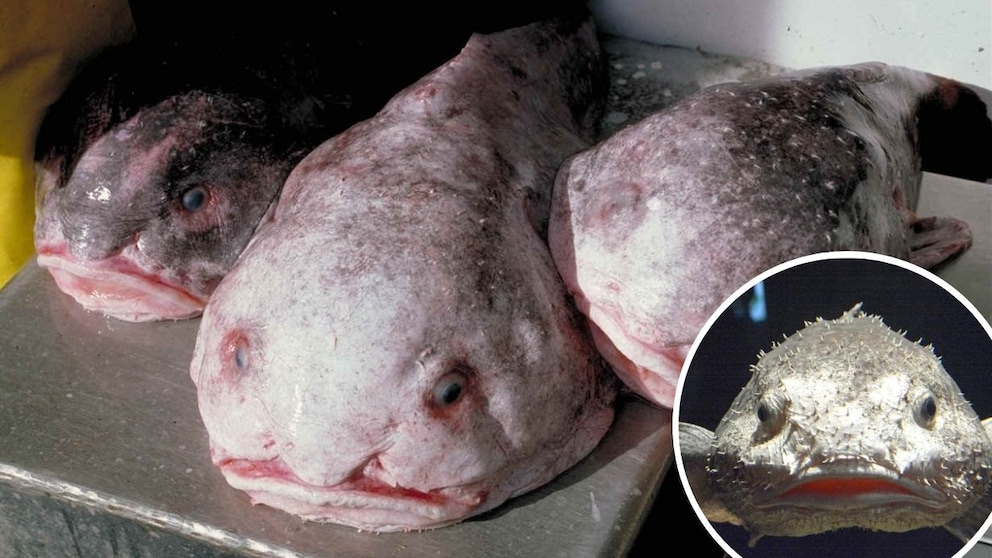
The blobfish (Psychrolutes marcidus) is likely one of the few deep-sea creatures known even to people who aren’t particularly interested in fish. It became famous through a 2003 photo showing a pink, droopy-looking fish with a large nose and a seemingly sad face. Within a few years, the deep-sea fish became widely known beyond scientific circles.
Its seemingly sad expression especially drew attention and led to the blobfish being voted the “world’s ugliest animal” in a 2013 poll by the Ugly Animal Preservation Society. Since then, it has not only been the subject of numerous memes but also appears on plush toys and in TV shows.1
Why the Blobfish Doesn’t Actually Look Like That
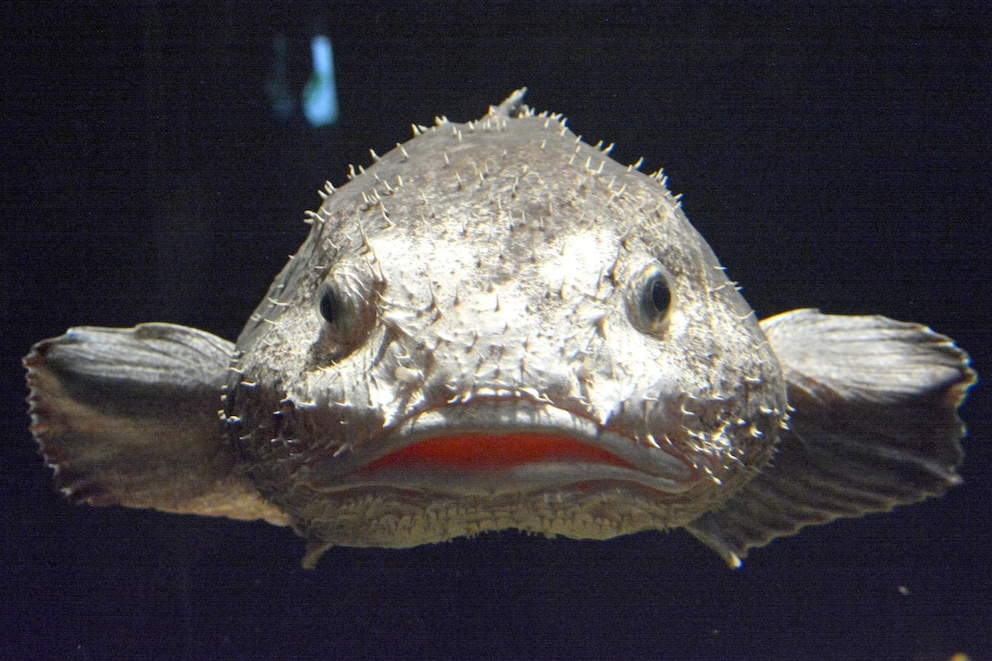
The blobfish has what might be called an “image problem.” It became globally known through a photo where it appears as a pink, melted mass with a sad face. However, in the deep sea, the fish presents itself quite differently.2
There, it lives at depths of up to 1,200 meters and uses the enormous water pressure to maintain its soft body structures. It’s only the journey to the surface that causes it trouble: The sudden pressure change alters its body, giving the blobfish the appearance that made it famous.
Life in the Depths of the Ocean
The blobfish spends its entire life far from sunlight. It inhabits the waters around Australia, Tasmania, and New Zealand. At depths of up to 1,200 meters, there is almost complete darkness. Food is often scarce, and many areas of the seabed resemble a barren underwater desert.
To conserve energy in the ocean’s depths, the blobfish moves very little. Instead of actively hunting, it waits for prey to come near. Its diet includes small crustaceans, snails, and other invertebrate sea creatures. Researchers still know surprisingly little about the blobfish’s life. Since these animals live in hard-to-reach deep-sea areas, much of what is known comes from accidental catches or recordings by underwater vehicles.
Also of interest:REMOVED LINKThese are the 8 creepiest deep-sea fish
Researchers Discover Deep-Sea Pokémon
Ghostly new shark species discovered in the deep sea
Reproduction and Secrets of the Deep Sea
Little is known about the reproduction of the blobfish. Researchers find it difficult to observe these animals in their natural habitat. Therefore, many questions remain unanswered, such as about mating behavior or the development of young fish.
There are some insights, however. Females likely lay thousands of eggs on rocky surfaces on the seabed. The eggs are often closely packed in large nests. Researchers suspect this strategy better protects the offspring. Observations of related species also suggest that the parents guard the nests.
How long blobfish live is also unclear. Since many deep-sea fish grow slowly and reach sexual maturity late, scientists assume a relatively high life expectancy.
Threats and Importance for Conservation
How many blobfish live in the world’s oceans is still unknown. Therefore, researchers cannot say for sure whether the species is endangered. However, human activities threaten their habitat, particularly deep-sea fishing and bottom trawling. Blobfish often end up as bycatch in nets.
The effects of climate change could also impact deep-sea dwellers. Rising sea temperatures alter the living conditions of many species. What impact this has on the blobfish is still largely unexplored.
Despite many unanswered questions, the blobfish has taken on an important role in conservation. As the “world’s ugliest animal,” it draws attention to species that otherwise receive little notice. Conservationists use its fame to highlight the protection of the deep sea and its often-overlooked inhabitants.