

June 2, 2026, 3:30 pm | Read time: 8 minutes
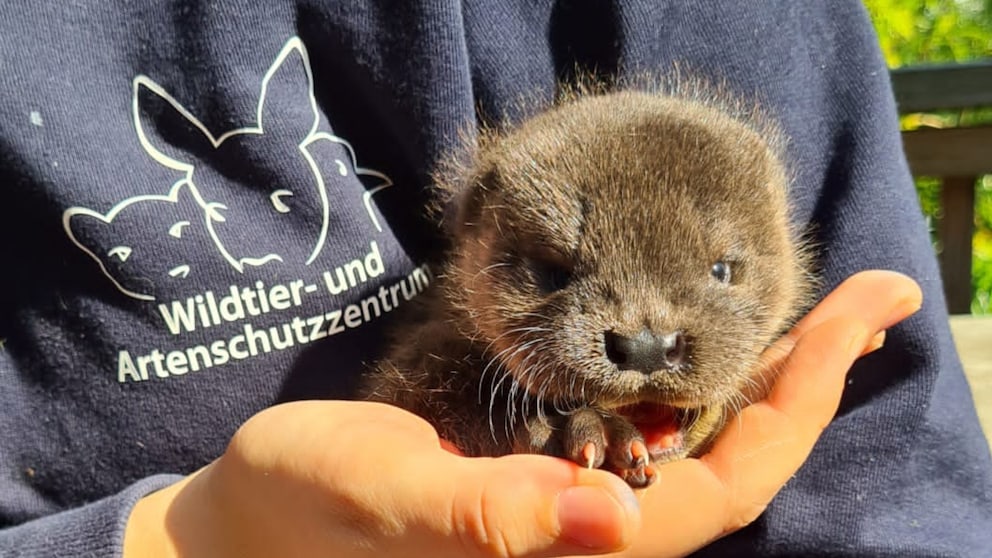
Alone, weak, defenseless, and completely dehydrated–that’s how four baby otters were found by animal rights activists in recent months. There’s no trace of their parents or siblings. Now, the orphaned young animals are being nursed back to health and prepared for release at the Wildlife and Species Protection Center in Klein Offenseth-Sparrieshoop, Schleswig-Holstein.
This summer, it should be time, says Katharina Erdmann, head of the Wildlife and Species Protection Center. She spoke with PETBOOK about the situation of the four orphaned animals and what needs to be considered during their release.
PETBOOK: How did you come across the animals? In what condition did you find them?
Katharina Erdmann: “We have four young animals from different origins that were found as orphans. They found their way to us because the finders made an effort to find an appropriate place, and so they all eventually ended up with us.”
Are all the animals from Germany?
“Yes, because we generally don’t take animals from abroad. Otherwise, it’s a distance that might not be in the best interest of the animals. It would only mean stress for them.”
Also interesting: Is it permissible to keep wild animals as pets?
“The amount of fish an otter consumes is not insignificant.”
Were these the first otters, or have you had them more often?
“We’ve occasionally had otters, but it’s rather rare for us. The fact that four otters have ended up with us in just a few months is both a good sign, as it shows the species is reestablishing itself here, but it also means more animals are getting into accidents or distress and need help.”
How are the otters fed, especially when they are young? And what needs to be considered when nursing wild animals in this case?
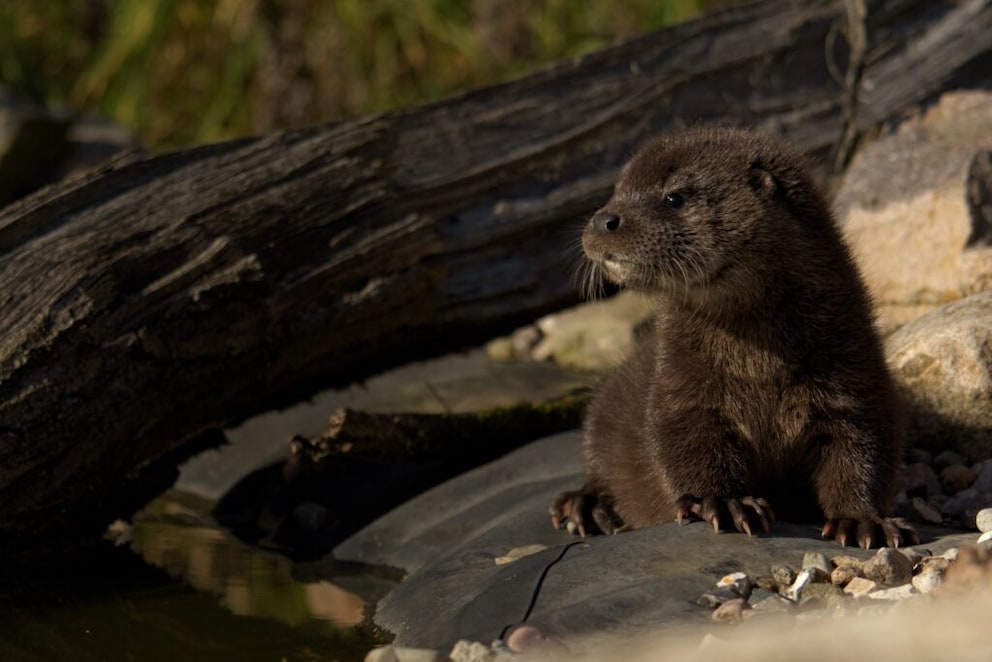
“Ultimately, they need to be fed what they naturally require. For every mammal, that means milk in the first weeks. We provide them with rearing milk. Since we raise many animals with bottles each year, and often use the same rearing milk, we have it on hand. Once they are old enough to be weaned off the bottle, they need to be fed appropriately. For an otter, as the name suggests, that means primarily fish. The amount an otter consumes is not insignificant. A fully grown otter needs a few kilos of fish a day. It’s great that angling clubs and others who have good access to fish support us by providing fish.”

“You have to care for the animals around the clock”
What does a typical day look like for the animals with you, and how do you keep them occupied?
“If they are still bottle-fed, they need meals several times a day, including late at night and early in the morning, just as they would naturally receive from their mother. We try to mimic that as closely as possible, though it’s not always feasible. We also need to sleep, so we try to stretch it out a bit to get some rest at night. If the animals are very weak, you have to set an alarm and feed them. Once they are stable and start eating on their own, things become more relaxed.”
“Despite everything, they need daily care. This means you have to care for them around the clock and have staff who know what they’re doing. It’s not something you can do on the side. You also need an appropriate enclosure where the animals can grow up in a natural environment. This is necessary for their release. They need to know their habitat, learn appropriate behavior, and be able to practice it. Therefore, raising them in a group is important so they don’t become too tame and can be released at the right age to be suitable for the wild.”
“You can’t just do it because it’s so cute”
Will the four be released as a group?
“It depends. We don’t decide that alone. We coordinate closely with the upper nature conservation authority. Since otters are strictly protected, we can’t decide where to release them. But we do try to release two animals that have bonded during rearing together or in a group.”
Speaking of release: How close do the caretakers get to the animals? Otters are usually shy and avoid humans in the wild …
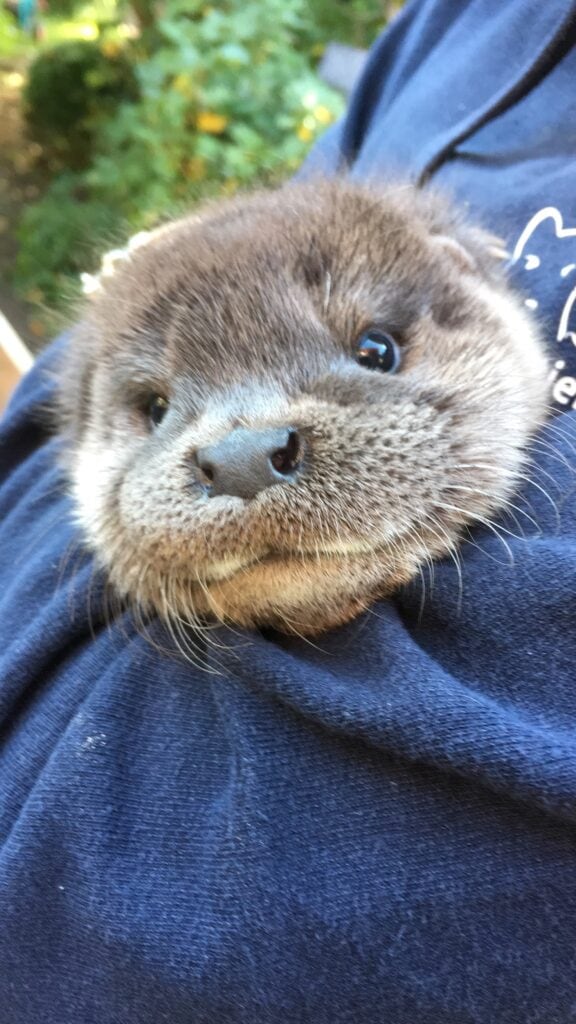
“To bottle-feed them, you have to get close. Since they are essentially babies, they might be shy and reserved at first, but once they learn that this person provides them with milk and satisfies their hunger, it’s usually not a problem. You need to have a knack for it and develop a sense of what you’re doing. You can’t just do it because it’s cute; you need some experience. Especially with young animals, it’s like with humans: They can have stomachaches, diarrhea, intolerances, and you need to react appropriately. Once the animals can eat independently, it’s ‘hands off’ and reduce contact to a minimum. This means we only enter the enclosure to feed them, and even then, we do it when they’re sleeping, so they have almost no contact with us.”
How does a release work for you?
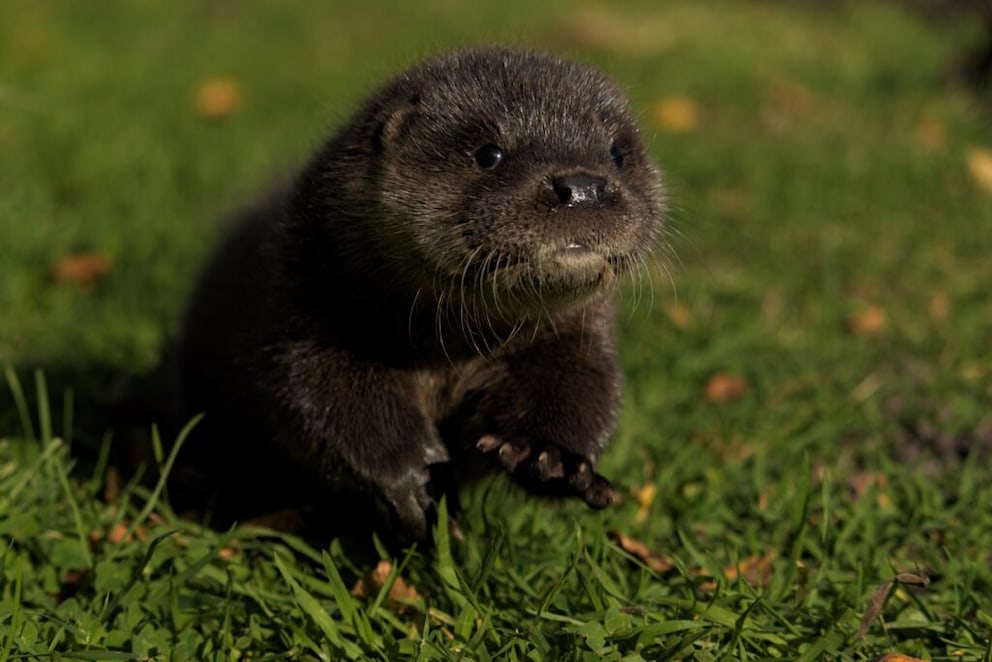
“It depends on the species. We try to release all animals without having to capture them. Birds can fly where they want. With an otter, it’s different. We have to take it to its habitat, which unfortunately isn’t right outside our door. Therefore, we agree with the upper nature conservation authority to find a place where the otters are more protected and there’s less traffic. As far as I know, the official numbers from last year alone in the Bad Segeberg district are 40 otters killed in traffic, and that’s just in one district in one year and only those found. The dark figure must be alarmingly high, so it’s important to bring such an animal to a place where the nearest road is further away.”
“It can’t be in a person’s interest to keep such an animal as a pet”
Some people find otters incredibly cute, and some even keep them privately on social media. Why aren’t otters suitable as pets?
“Fortunately, I haven’t heard of anyone keeping an otter as a pet or wanting to. With other animals, you hear it more often–for example, with exotic animals. Why do people keep African grey parrots, snakes, or some lizards, or even kangaroos and silver foxes? It’s something we encounter more often, and I can only wonder what some people think about animal love or the lack thereof.”
“Otters aren’t suitable as pets because they are wild animals that don’t want to live with humans. Of course, I can raise an otter pup to bond with me, but then it’s no longer an otter, just some cute mammal that will likely become aggressive with maturity because it’s imprinted incorrectly. It can’t be in a person’s interest to keep such an animal as a pet because there will eventually be conflicts, and it’s not about having an otter, but some creature that doesn’t even know what it is.”

Should Cats Drink Milk? Expert Warns Urgently

Exposing the Biggest Pet Food Myths
“We can only do this work because we receive support”
Is there anything else important to you in this context?
“Even if some might not want to hear it anymore, it’s simply important: We can only do this work because we receive support. But not from the state, only from the public through donations. Only this way can we pay the staff needed to perform this specialized work. Funding from the state or public side is only available for certain projects that must be applied for. Therefore, it’s a shame that this work, despite the strict protection status of this species, can only be done if you bring the necessary volunteer commitment or are willing to work for minimum wage.”
“We don’t nurse animals that naturally shouldn’t have grown up further”
What other animals are you currently nursing at the rearing station?
“It’s young animal season, meaning most native wild animals are being born or have already been born. We already have some fox pups here in rearing. We are also currently caring for squirrels, young hares, the first songbirds, young ducks, and geese. All the animals that, for some reason, have lost contact with their parents or lost them entirely. Either because they were victims of traffic, barbed wire, or dogs and cats. We don’t nurse animals that naturally shouldn’t have grown up further.”
“It’s important to us not to disturb the ecological balance. However, the question arises whether there is even an ecological balance in that sense anymore. Habitat loss, disruptions, stress, noise, poison–it’s a big issue that many underestimate or don’t have on their radar. Everything outside looks so beautiful and green now, but you can’t really speak of a free wilderness anymore. It’s all a cultural landscape shaped by humans. For wild animals, that’s a big problem.”