


February 5, 2026, 10:06 am | Read time: 4 minutes
Whether in the basement or the shed, there’s almost always a corner where that one spider lurks. Is it always the same one? And: How old do spiders actually get? PETBOOK editor and biologist Saskia Schneider has a fondness for small and large eight-legged creatures and has explored this question.
How Old Do Spiders Get?
This cannot be answered universally—after all, the group of spiders worldwide includes at least 120,000 species.1 Some orb-weaving spiders are said to live only a few months, but there is little reliable information on this. It’s different with the longest-living species. Without a doubt, this includes the Australian trapdoor spider Gaius villosus. In captivity, the famous laboratory spider “Number 16” reached the documented age of 43 years, thus having the longest scientifically recorded lifespan of a spider.2
However, this does not mean that there aren’t spiders that are even older. Many of these creatures live well-hidden, and little is known about their lifestyle or age.
Males Live Significantly Shorter
What applies to almost all spiders is that males generally live significantly shorter lives. This is particularly striking in tarantulas: While females of many species can reach 20 years or more, males usually die after three years, rarely reaching ten years or older. Other male spiders don’t even make it a year, and there are several reasons for this.
Often, males of many species fall victim to their partners after or sometimes even during mating. The black widow (Latrodectus) is even named after this behavior. But even if the males survive, they are not granted a long life. At least in tarantulas, the last molt often marks the end. While females continue to molt regularly, male tarantulas die within a few months after their maturity molt.
But what about the spiders that like to come into the house? Can they also survive for years?
Spiders in the House Can Live for Several Years
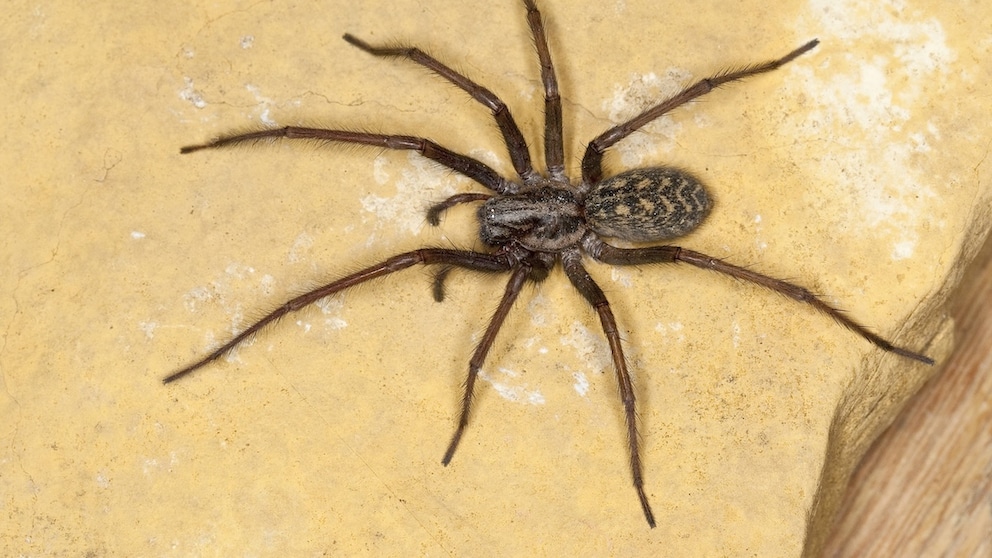
Among the spiders we most frequently encounter in the house are the giant house spider (Eratigena atrica), which looks eerie with its large, hairy body but is completely harmless, and the cellar spider, usually found on the ceiling with its long, hair-thin legs. Both can survive for several years in the house: cellar spiders up to three years and giant house spiders even up to six years.3, 4
Sometimes you also find wolf spiders (Lycosidae) in the house or shed. They look similar to the giant house spider but do not have webs; instead, they hunt their prey on foot. They can be very fast and are not exactly popular house guests, although they are also completely harmless. On average, wolf spiders live for two years.5
Spiders in the Garden
We also encounter spiders in the garden and around the house. One of the most well-known is the garden spider, which—depending on the species—can live for two to three years. A previously rare species that is now increasingly common is the wasp spider (Argiope bruennichi). Although this species rarely stays in gardens or near houses, it stands out due to its coloration and size. Female spiders can reach a body length of up to 25 millimeters. However, with a lifespan of only one year, they are among the shorter-lived examples of eight-legged creatures.6, 7, 8
A frequent garden and house visitor, often mistakenly thought to be a spider, is the harvestman. With its knobby body and eight long, hair-thin legs, it looks similar to cellar spiders. However, it has neither venom glands nor spinnerets and therefore does not build webs. Nonetheless, it should be mentioned here, even though it typically only lives for one year.
How Dangerous Are Wolf Spiders and How to React Properly
Aggressive and Equipped With Giant Genitalia: Researchers Identify Four New Tarantula Species
How Long Do Spiders Live as Pets?
As mentioned above, and to the delight of many terrarium enthusiasts, tarantulas are true Methuselahs among the eight-legged creatures. Many species reach 20 years in captivity, with a few even reaching 25 to 30 years. Anyone who gets one as a pet should be aware of the long-term responsibility.9
Also increasingly popular as pets are jumping spiders. With their forward-facing eyes, knobby legs, and beautiful colors, they not only look cute but also enjoy exploring their owner’s hand and are quite cost-effective in terms of housing and food. Already a star on social media, these small eight-legged creatures have one downside: They typically live only a few years, similar to a hamster.10
Conclusion: Most Spiders Can Live for Several Years
Even though it’s impossible to make a general statement about age, it can be said that many spider species live more than a year. Especially large species live long. So if you see a spider sitting in the house, basement, or shed corner, you can be sure it will still be there next year.