


January 14, 2023, 2:48 pm | Read time: 4 minutes
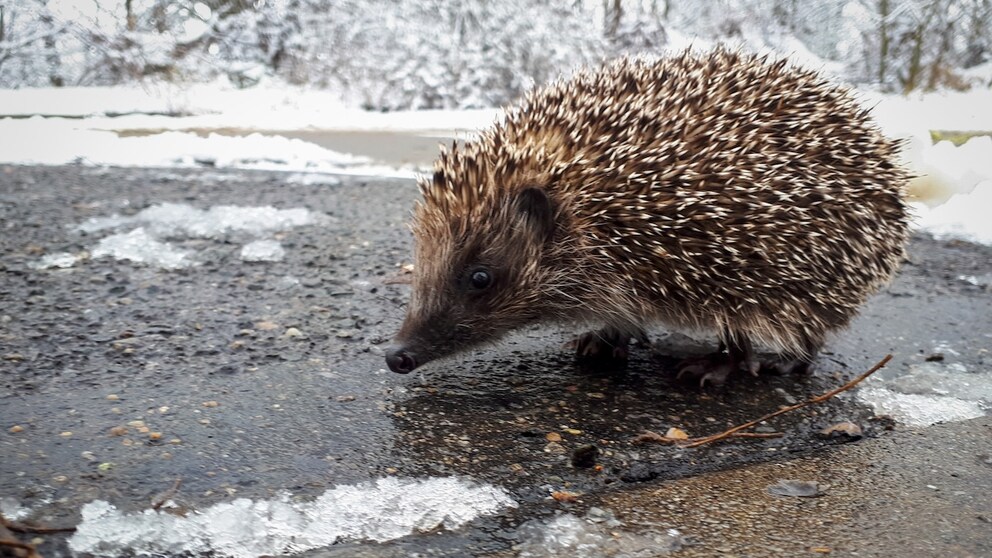
“A January on a High”: That’s how the German Weather Service described the temperatures at the start of 2023. But does the mild winter harm animals and plants? What happens to hedgehogs that wake up too early from hibernation?
Bees fly over meadows in search of blossoms, hedgehogs awaken from hibernation: What usually signals the start of spring is happening partly in January this year. Mild temperatures are throwing nature out of sync. “Our ecosystem is coordinated,” explains Julian Heiermann, a conservation expert at the Nature Conservation Union (Nabu). Insects that fly earlier also need food plants. “This is usually synchronized in nature. If it becomes even more extreme and there might be no winter at all someday, I worry that it will fall out of rhythm.”
Exceptionally Mild Temperatures at the Start of the Year
The temperatures at the start of the year have been exceptionally mild. “January is on a steady high in terms of temperature,” wrote the German Weather Service (DWD) after the first week of January. It has been changeable for weeks, they recently reported. “It feels more like windy autumn weather than winter.”
Due to climate changes, there are more weather anomalies such as dry, hot summers or warm and too dry winters, says Derk Ehlert, a wildlife expert at the Berlin Environmental Senate Administration. These changes affect plants and animals differently–mostly to their detriment. A healthy, strong population can better cope with such changes, says Ehlert. “But animals and plants weakened by dry summers, heat, and drought might react to it.”
The specific impact of the weather varies from animal to animal. The rough control of hibernation and winter dormancy, for example, works through an internal clock, says Heiermann. “But if it’s very mild for a long time, the fine control doesn’t work. This can lead to animals becoming active even though it’s still too early.”
If a hedgehog, for example, wakes up from hibernation earlier than usual, it also needs energy earlier. It uses what’s called brown fat for this, says Ehlert. This can be quickly converted into energy. “If it gets colder again, the animals then lack this energy for the actual start of spring.”
Also interesting: Why Warm Winters Are a Threat to Bees

Hedgehogs Need Year-Round Support–Here’s How to Help

How to Tell if Your Hamster Is Hibernating
Not Only Hedgehogs Wake Up from Hibernation, Other Animals Are Affected Too
But other animals can also have problems with mild temperatures. For honeybees, for example, it can be fatal, says Ehlert. They would then fly out and find no blossoms. “Frogs can also start spawning too early.”
However, mild winters also have winners. “The wild boars are certainly happy about the weather conditions,” says Ehlert. “They can easily dig into the ground and search for food.” Birds from Northern and Eastern Europe also benefit from loose soil and find more food, according to experts. “We notice this directly at the feeding stations. They are not visited at all because the birds have enough food.”
And what about the mosquitoes, which are more of a nuisance to humans? Do they also benefit from the temperatures? “With mosquitoes, there are so-called population waves: If there is a short winter and a late winter onset at the end of the year, mosquitoes form more generations than in a shorter growing season,” explains Heiermann. “This multiplies quickly.” However, it is still too early to draw conclusions about the coming summer. “It’s true that more insects survive the winter, but the question is whether they also make it through the spring.”
Renewed Cold Spells Could Become a Danger
So it’s not necessarily the warm January that’s a problem for the hibernation of hedgehogs and some other animals–but possible cold spells after the mild phase. This is also problematic for plants. Late frost events could harm plants that have already sprouted, says Heiermann.
This could also become a problem in agriculture. “If winter crops in agriculture shoot up earlier in winter due to mild temperatures, the grain plants are more sensitive to subsequent frost than if they are small. And this can lead to crop failures.”
Overall, drought and dryness in summer are a much bigger problem for nature than mild winters, says Ehlert. “Many species are weakened by this.” Therefore, one should be happy about every rain at the moment. “A good news for January is that we have already reached the necessary amount of rain for the first half of January,” he emphasizes. “The more rain falls in the winter months, the stronger nature enters spring.”
With material from dpa