

April 21, 2026, 4:33 am | Read time: 3 minutes
What looks like a colorful songbird from the rainforest is actually a small biological marvel of the animal kingdom: The hooded pitohui is one of the few known poisonous birds. Its bright plumage seems almost inviting–but the opposite is true. PETBOOK explains how dangerous the hooded pitohui really is and what it has in common with the poison dart frog.
Bird Lives in the Tropical Forests of New Guinea
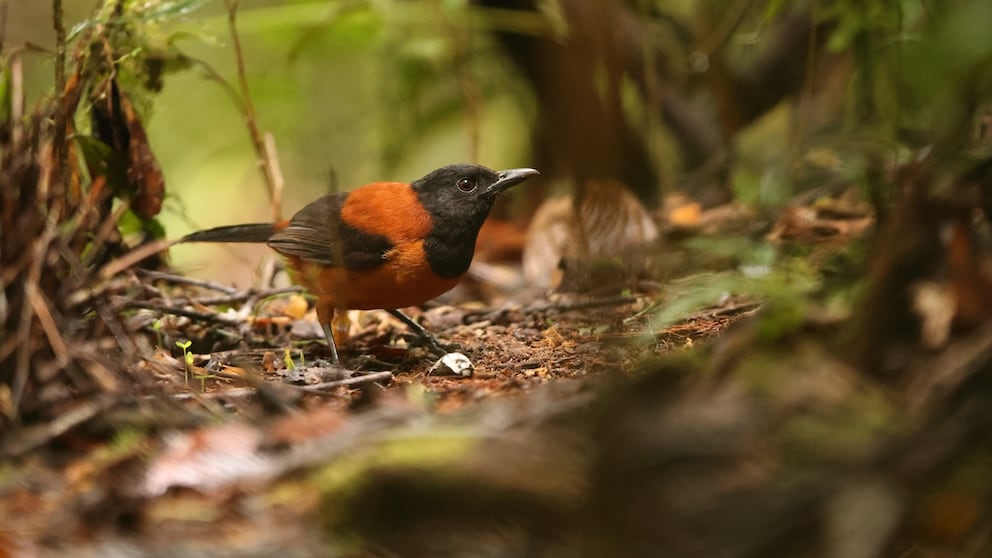
With its plumage, the hooded pitohui (Pitohui dichrous) is hard to miss: a black head and a bright orange body. It lives in the tropical rainforests of the island of New Guinea, where it usually stays high up in the treetops. Although visually striking, the bird was long considered harmless. It wasn’t until 1990 that researcher Jack Dumbacher made a curious discovery: The 22 to 23 centimeter hooded pitohui carries a potent neurotoxin, batrachotoxin.1
A Bird with Poison in Its Feathers
The poison is found exclusively in the bird’s plumage and skin. The toxin disrupts nerve signal transmission and can lead to paralysis in animals, and even be fatal for small creatures.
Batrachotoxin is particularly known from the golden poison dart frog native to tropical regions of Central and South America. However, it was unexpected in the hooded pitohui, but later found to serve as protection against parasites and predators.2
Why This Frog Doesn’t Die From Its Own Poison

The Most Poisonous Animals in the World
The Poison Is “Eaten”
But how does such a small bird acquire such a potent toxin? The answer is less spectacular than one might think: through its diet. Researchers believe that certain insects and fruits the bird consumes contain the toxin. For example, beetle species like the Choresine beetle are known to have batrachotoxin in their blood. The hooded pitohui then stores these substances in its body–a principle also known from other animals like poison dart frogs.3
This occurrence shows how closely diet and defense mechanisms can be linked in nature. It is believed that the bird would be completely non-toxic without its prey.
Is the Bird Dangerous to Humans?
Batrachotoxin is among the strongest known neurotoxins. It works by keeping the so-called “sodium channels” in nerve cells permanently open. As a result, nerves can no longer send normal signals, leading to paralysis or heart problems.
But don’t worry: The amounts absorbed through contact with feathers and skin are so small that they pose no life-threatening risk to humans. However, one should avoid consuming the hooded pitohui. It’s unlikely anyone would want to taste the bird anyway, as it reportedly produces an incredibly bitter taste in the mouth. Thus, a pleasurable meal is not possible. This is likely the main reason why the hooded pitohui has no natural predators, which is remarkable for a bird of its size.