


February 12, 2026, 7:48 am | Read time: 4 minutes
Sparrows are part of our daily lives–or rather, they used to be. Their numbers are dwindling, especially in cities. Many people want to support these native birds. But what do sparrows eat throughout the year? And is it really beneficial to feed them? PETBOOK editor and biologist Saskia Schneider explains why the little birds are more troubled by a lack of housing than hunger today—and how we can help them with simple measures.
What Do Sparrows Eat Throughout the Year?
Sparrows are considered adaptable, and this is particularly evident in their diet. Adult house sparrows primarily feed on plant-based food. Grains, seeds, and cereals form the basis of their diet year-round.
In a diverse landscape, they find this food in fields, along roadsides, or in gardens with wild plants and grasses. In cities, the availability is significantly more limited. There, sparrows resort to whatever they can find—from fallen crumbs to food scraps.
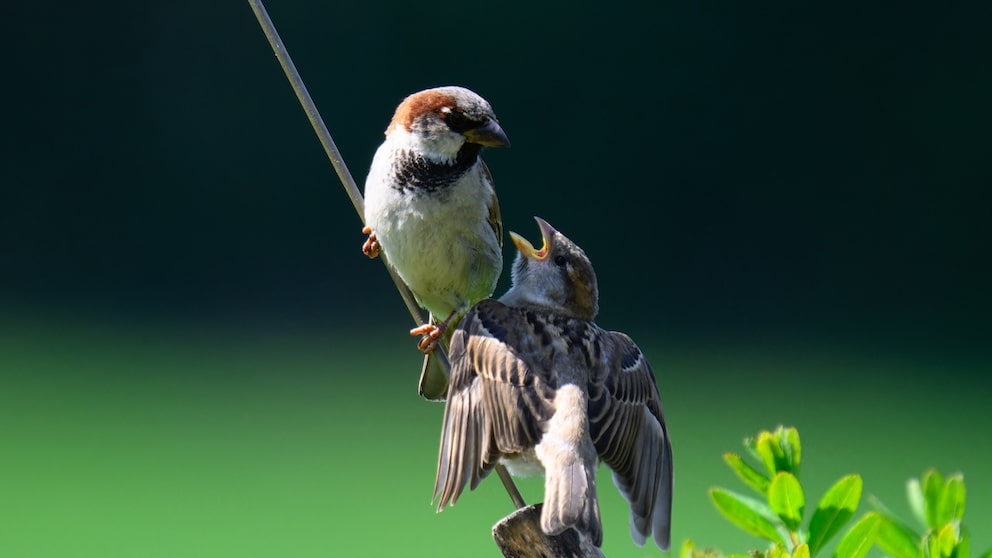
This flexibility helps them in the short term, but it’s not an ideal substitute for natural food. It becomes especially critical during the breeding season. While adult sparrows can manage with grains, their young need animal protein. Young sparrows are fed almost exclusively on insects. If these are lacking, due to sealed surfaces, sterile gardens, or pesticide use, many chicks fail to thrive—even if the adult birds seem to have enough to eat.1
What Do Sparrows Eat in Winter?
Even in winter, sparrows stay close to us, as they are resident birds and do not migrate to warmer regions. Their diet then consists mainly of grains and seeds. In a natural environment, they find these on grass seed heads, harvested fields, or along roadsides.
In cities, however, the supply is severely limited, so sparrows are particularly reliant on feeding stations. In winter, they readily accept grain, millet, sunflower seeds, or other untreated seeds. Since insects are scarcely available during this season, they play no role for adult sparrows in winter.
However, it is crucial that the birds find enough energy-rich food to survive the cold nights. Winter clearly shows how important structured gardens and responsibly designed feeding offer are for the survival of sparrows.2
Should You Feed Sparrows?
The question of whether to feed sparrows cannot be answered universally. In cities, targeted, clean feeding can certainly help, especially when natural food sources are lacking. Sparrows readily accept seed feed made from untreated seeds. Feeding columns have proven effective, as they are more hygienic and reduce the risk of disease transmission.
However, it is crucial to understand feeding as support, not a solution to all problems. Bird feed cannot replace missing insects. Especially for raising young, an insect-rich habitat remains indispensable. Those who feed sparrows should also consider making the environment sparrow-friendly.3

Interesting Facts About Chickadees That You Didn’t Know Yet
Do You Know Them All? These 6 Types of Tits Are Found in Germany
How Else Can You Support Sparrows?
The biggest problem for sparrows today is not a lack of food, but the loss of nesting sites. Modern, renovated buildings with smooth and insulated facades leave little room for gaps or cavities. This is dramatic for sparrows, as they almost exclusively nest on buildings in the city.
With special sparrow nest boxes, which are attached directly to the house facade, this housing shortage can be specifically alleviated. Since sparrows are very sociable, multiple nesting opportunities in close proximity are particularly well received. Even with new buildings, you can plan ahead by integrating nesting stones directly into the masonry. Additionally, anything that makes the habitat more diverse helps—especially a natural garden or balcony.4
Tips on How We Can Provide a Home for Sparrows
Sparrows thrive where it’s a bit lively and not perfect. Gardens with native plants not only offer seeds for adult birds but also provide habitat for insects, which are essential for raising young. Dense hedges serve as retreats and sleeping places.
Water also plays an important role, as sparrows not only like to drink but also love to bathe. Besides water, they use dust baths for feather care—hence the nickname “dirt sparrow.” Even a small sand dish or a shallow depression in the garden is sufficient for this.
Sparrows have accompanied humans for about 10,000 years. Whether we will continue to hear their chirping in the future largely depends on how much space we leave them in our immediate surroundings.