

January 4, 2026, 2:57 pm | Read time: 4 minutes
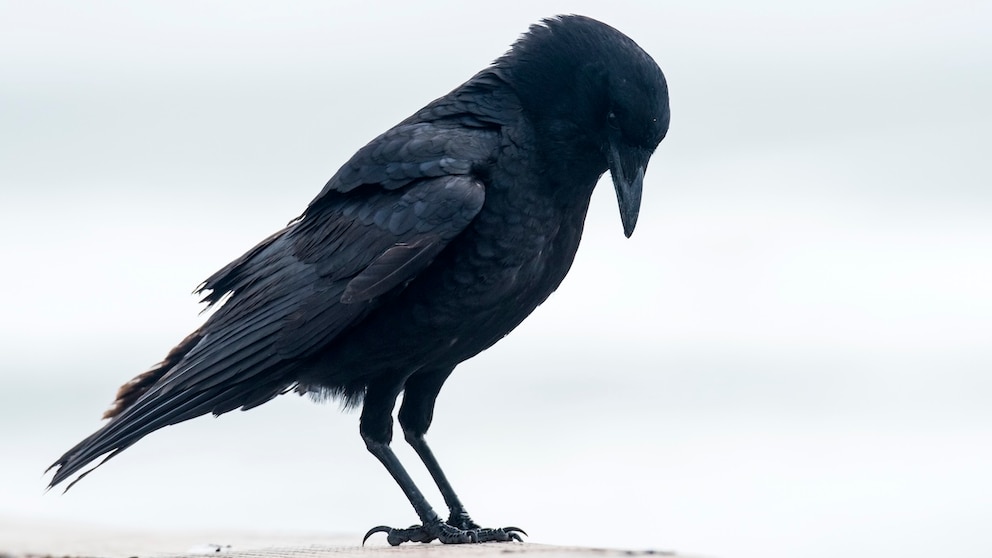
Crows, ravens, and magpies exhibit many fascinating behaviors. For instance, when a fellow bird dies, you can see them sitting in trees, calling loudly. They repeatedly fly down to the body and sometimes observe it for minutes. Are they holding “funerals”? PETBOOK explored what research says about this and what these “funerals” reveal about the thinking of corvids.
Corvids Are Highly Intelligent and Social
Anyone who has witnessed crows or ravens gathering around a dead fellow bird won’t forget the scene quickly. The birds appear alert, agitated, or tense; some emit alarm calls, while others sit quietly, as if scrutinizing the body. For years, there has been debate about whether this could be something akin to mourning. However, from a scientific perspective, the behavior is understood differently.
Corvids are among the most intelligent birds in the world. They recognize each other as individuals, remember social relationships, and use flexible strategies to navigate complex group structures. Many of their behaviors are based on social learning: They observe how fellow birds react to threats, remember potential risks, and adjust their own behavior accordingly. 1, 2, 3
Researchers today suspect that gathering after the death of a fellow bird has less to do with mourning in the human sense and more with information processing. A dead bird can indicate a potential danger to the entire group if it died from a predator, a traffic accident, poison, or another threat. In short, the death of a fellow bird can signal that something has happened here that the group needs to understand to survive.
Also interesting: Why crows look different in eastern Germany

Why Crow Flocks Are Now Perching in Trees
Smarter Than Expected! Crows Also Have Consciousness
How Do Crow Funerals Occur?
The behavior at the death of a fellow bird is by no means always the same. Sometimes only a few birds gather, sometimes dozens. Some call loudly, others remain silent. Some birds quickly fly away, while others stay longer. Research suggests that these reactions are closely linked to social relationships, experience, and group dynamics.
Young birds are more oriented toward older ones—experienced crows can assess situations more quickly and react more calmly. The gathering also serves to coordinate within the group—not all birds have the same information, and not all draw the same conclusions from the event.
To humans, such behavior may seem like a ritual or ceremony. This is mainly because we interpret what we observe through human categories. Researchers emphasize that while corvids are very social and capable of learning, there is no evidence that they “mourn” like humans. What we see is more a mix of curiosity, caution, and collective learning. The behavior appears ceremonial because it is repeated and several birds display it simultaneously. However, the underlying function is pragmatic: assessing danger, sharing information, protecting the group.
Information Sharing and Collective Learning
Several studies show that corvids can learn quickly and permanently in the face of threats. Crows, for example, remember the faces of people who posed a danger to them and can distinguish them from harmless individuals even years later. This indicates how important information sharing is for these animals. 4
Additionally, the animals have complex communication. Corvids possess a diverse vocal language that helps them share information: warning calls, contact calls, aggressive calls, or signals of uncertainty. When several crows call at a dead animal, they can not only alert the group but also signal that an investigation of the site is necessary. Silence can also be a signal and interpreted as caution due to uncertainty. Studies show that when crows recognize a danger afterward, they often display the same reactions as with immediate threats: They warn each other, call loudly, or show mobbing behavior against potential enemies. 5
In summary, crows do not “mourn” their dead, but they use the moment to understand what has happened. Their gatherings offer us a glimpse into how corvids perceive the world—very attentively and remarkably reflectively. After all, only animals with differentiated social cognition can learn from the death of a fellow bird.