

August 27, 2025, 3:52 am | Read time: 7 minutes
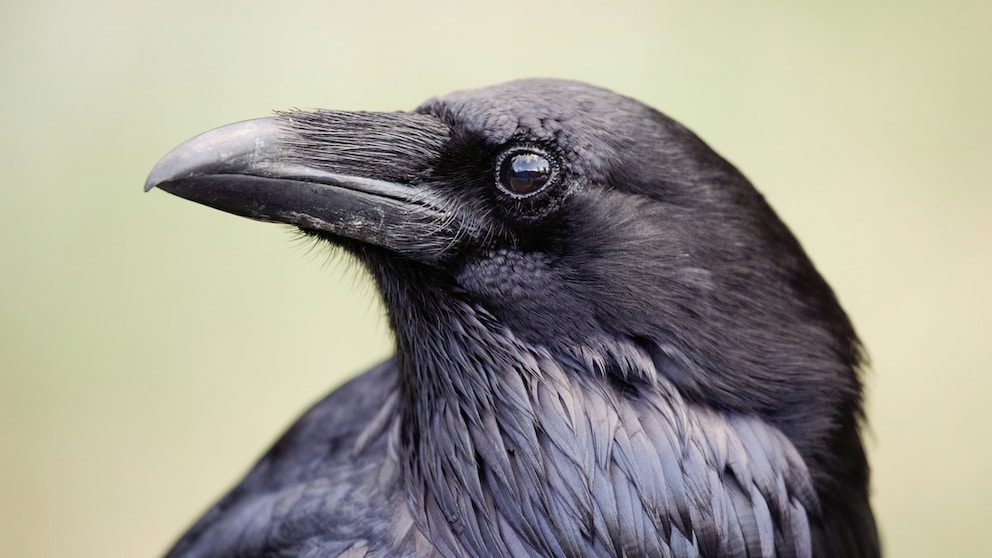
They build tools, recognize themselves in mirrors, and even seem to understand what others are thinking. Corvids have fascinated scientists for years. But do crows, jays, or magpies really have consciousness like humans? PETBOOK analyzed a new meta-study that fundamentally questions our understanding of animal intelligence.
In the journal Animal Cognition, researchers Walter Veit, Heather Browning, and colleagues published a systematic meta-analysis in 2025 titled “Dimensions of Corvid Consciousness.” It is based on a model of the five dimensions of experience originally developed by Jonathan Birch in 2020. The study focuses on the question: How intelligent are corvids like crows really, and what might the consciousness of a corvid feel like—if it has one? 1
The Five Dimensions of Consciousness
We often associate high intelligence and consciousness with certain brain structures or abilities like language. However, the researchers conclude that consciousness is not a binary phenomenon but a spectrum. Even without language or a cerebral cortex, animals can exhibit various degrees of conscious experience—measurable in five areas: sensory richness, evaluative richness, synchronic unity, diachronic unity, and self-consciousness.
These are the five dimensions of animal consciousness:
- Sensory richness: How detailed is an animal’s perception of its environment?
- Evaluative richness: Does it feel pleasure and displeasure, motivation, or mood?
- Synchronic unity: How does it integrate simultaneous experiences?
- Diachronic unity: Can it remember specific events and anticipate future situations?
- Self-consciousness: Does it perceive itself as an individual, and can it empathize with others?
The meta-study shows that the consciousness of corvids like crows runs deeper than many assume.
What Do Crows Feel?
The consciousness dimension “sensory richness” describes how detailed an animal perceives its environment, especially in terms of sight and hearing.
The consciousness dimension “sensory richness” describes how detailed an animal perceives its environment, especially in terms of sight and hearing. Crows, for example, process visual stimuli faster than humans. While we perceive light as continuous at about 60 hertz (Hz), crows can perceive it at a higher frequency. This so-called flicker fusion threshold is similar to that of primates. New Caledonian crows also process visual information in two phases—first unconsciously, then consciously—similar to primates. Additionally, the New Caledonian crow can locate food using only its sense of smell.
Hearing
As for hearing, corvids use it for complex social communication, such as about territories, mate selection, or dangers. They learn calls from each other and can recognize whether an alarm call is from a familiar bird.
Smelling
Long considered unimportant, the sense of smell plays a role for corvids. Magpies found food caches with strong odors more often, and ravens located fish solely by smell.
How Crows Think, Learn, and Compare
In the wild, crows weigh hunger against safety: less dominant birds take more risks when they are hungrier. Such decisions show that they actively assess their situation.
In the meta-study, it was found that corvids can make complex evaluations, even assessing ambiguous stimuli more optimistically after successful tool use. Ravens, after observing other ravens in a bad mood, became more cautious themselves. Whether this is empathy remains debated.
In terms of learning, crows quickly adapt their behavior to new rules—often more successfully than parrots or chickens. They can also adjust their behavior based on new information, even if they receive it later.
Playfulness and Empathy
Ravens play with each other—not for any purpose, just for fun. When others observe the play, they join in. Ravens that see stressed fellow birds become more reserved themselves. Whether this is empathy is still debated.
After conflicts, crows show a kind of comforting behavior: They approach agitated fellow birds and calm them. After conflicts, crows also show a form of consolation behavior: They approach agitated fellow birds and soothe them. They also gather and hold meetings after conflicts.
At the same time, crows exhibit pronounced neophobia, or fear of new things. This behavior suggests a high level of cognitive processing and awareness.
How Do Crows Experience Time?
“Synchronic unity” examines whether and how an animal integrates various sensory impressions into a cohesive experience.
Two Hemispheres–One Consciousness?
Birds do not have a corpus callosum like humans, which connects the two brain hemispheres, but use other brain structures for communication between the hemispheres. Studies show that the avian brain, particularly the pallium, is highly interconnected—a complete separation of perception seems unlikely.
Nevertheless, the brain hemispheres sometimes work in specialized ways: Jays, for example, prefer to use the right eye for remembering objects and the left for remembering locations. New Caledonian crows prefer to use their feet when using tools—a hint at divided control. Even during sleep, one hemisphere can remain awake while the other rests. This phenomenon is called unihemispheric sleep.
Even individual visual stimuli remain partially separate: Crows can use one eye for feeding and the other for spotting predators. At the same time, there are indications of conscious control: Crows can deliberately shift their attention between the brain hemispheres—a sign of executive control.
How Uniformly Do Crows Experience Time?
“Diachronic unity” is the ability to link experiences over time into a coherent stream of consciousness—a concept that William James described as a “stream of consciousness” back in 1890. There is evidence of this form of temporal integration in corvids as well.
Memory and Planning
One factor for diachronic unity is “mental time travel”—the ability to consciously remember and plan ahead. Scrub jays remember what food they hid, where, and when—and retrieve it in time. Magpies and jays also show this episodic memory by recalling specific events.
Additionally, jays flexibly adapt their behavior to new rules, even when they change multiple times, often more successfully than parrots or chickens. In other experiments, they demonstrated value awareness by waiting for a better reward for a behavior.
Planning is also successful: Ravens and crows forgo immediate rewards if they expect a better option later. Scrub jays store food and retrieve it based on anticipated availability. Jays even consider future needs that are not aligned with their current state.
In a specific test, New Caledonian crows could remember which tool they had seen in a previous trial, select it correctly from a set, and use it later without situational cues or prior experience.
Also interesting: 7 Exciting Facts About Corvids

Do Birds Have Consciousness?
Raven or Crow? How to Recognize the Difference
How Do Crows Experience Themselves?
Self-consciousness is the ability to perceive oneself as a distinct individual. This includes physical self-awareness and attributing mental states to oneself and others. The latter is known as “Theory of Mind” (ToM) and is considered an indication of particularly complex consciousness.
Mirror Image and Self-Awareness
The mirror test (MSR) is a common method for testing self-awareness in animals: It involves recognizing a visible mark on one’s own body in the mirror and deliberately removing it. Magpies have demonstrated this behavior; results for other corvids are mixed.
Despite the controversy surrounding the test, there are indications of advanced social cognition. Scrub jays re-hide food—but only if they were observed while hiding it and the observers have since disappeared. This behavior suggests they not only reflect on their actions but also consider the knowledge of others.
Conclusion: Crows have a Consciousness That Is More Than Instinct
The meta-study shows that corvids have a nuanced experience in all five examined dimensions of consciousness. They see, hear, and evaluate, remember, and plan. “Dimensions of Corvid Consciousness” provides strong evidence that the inner experiences of corvids are not merely simple stimulus-response behaviors but resemble human consciousness in some ways, suggesting a deeper level of awareness.