

October 16, 2026, 3:02 pm | Read time: 5 minutes
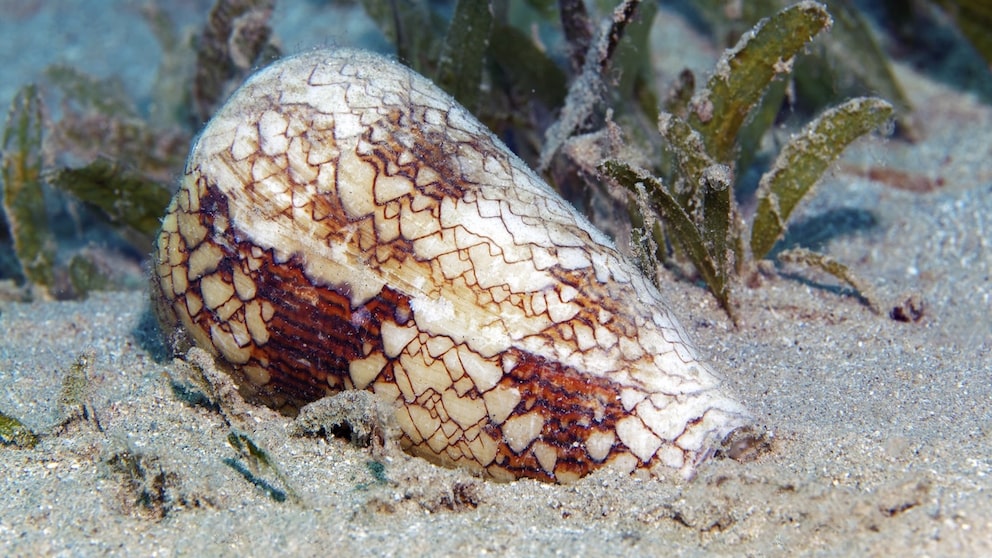
Their intricately patterned shells look like perfect vacation souvenirs. But if you find a cone snail on the beach, do not touch it! Beneath the beautiful shell may lurk a highly venomous predator that strikes with a tiny harpoon and releases a potent neurotoxin. Some species can paralyze fish in no time. Their venom can also be life-threatening to humans.
What Are Cone Snails?
Cone snails belong to the family Conidae. They are predatory sea snails, whose shells typically have a distinctive cone shape and striking patterns. There are said to be more than 500 recognized species in the genus Conus.1
Depending on the species, cone snails hunt worms, other snails, or fish. Fish-hunting species have developed particularly fast-acting venom mixtures. After all, a slow-moving snail must instantly incapacitate its agile prey before it can escape.
Cone snails are mainly found in tropical and subtropical seas. The most dangerous species are primarily in the Indo-Pacific. However, cone snails also occur in the Mediterranean, but the species found there are considered significantly less dangerous. Most reported accidents happen when people touch a live snail or take its seemingly empty shell as a souvenir.2
Why the Beautiful Shell Can Become a Deadly Trap
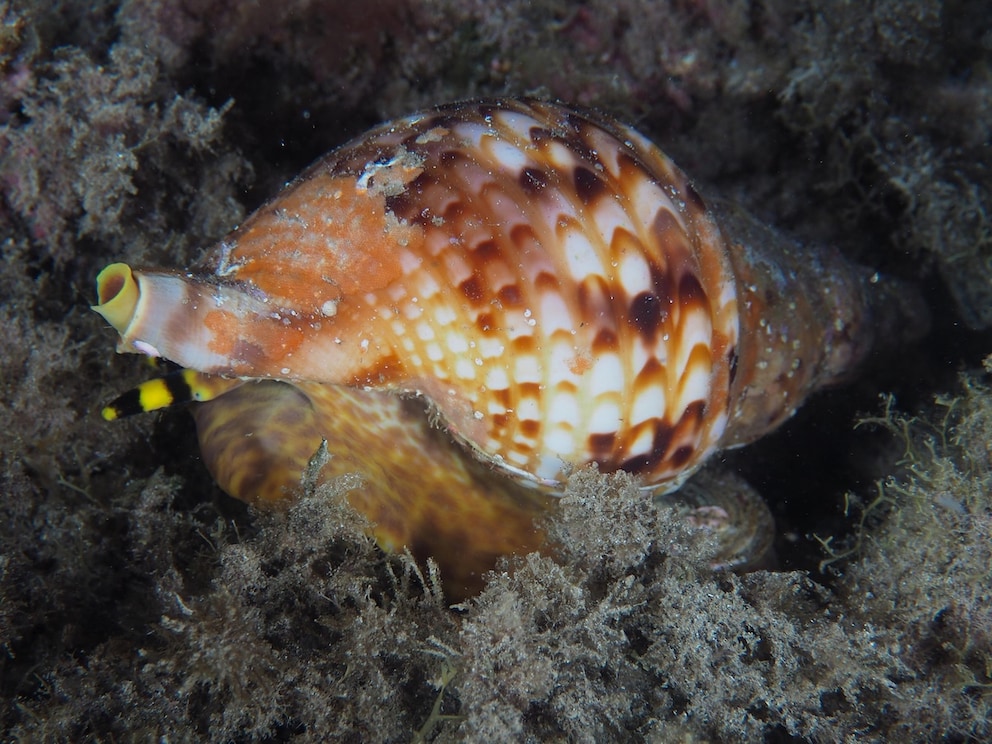
Cone snails often live in shallow water, on reefs, or in the sand. Many species burrow during the day and hunt at night. Their colorful shells make them particularly interesting to beachgoers, divers, and snorkelers–and seemingly beautiful souvenirs.
The problem: The snail can retract so deeply into its shell that it appears empty at first glance. At the same time, it can extend its flexible proboscis far out of the shell and reach a person holding the shell only at the top. Even a diving glove offers no safe protection against the venomous harpoon. Therefore, the rule is not to touch or pocket the animal if found.3
Also of interest: The most venomous animals in the world
Cone Snails Have a Loaded Venom Harpoon
The venom apparatus of the cone snail consists of a venom gland, a venom reservoir, and specialized teeth. These teeth are hollow, barbed, and transformed into small harpoons. Before an attack, such a harpoon is loaded with venom. The snail then shoots the tooth through its extendable proboscis into its prey. The toxins interrupt nerve signal transmission and can immobilize a fish in no time. The snail then draws its victim in and swallows it whole.
What the Neurotoxin Can Trigger in the Human Body
The venom of cone snails is not a single substance. It is a complex cocktail of numerous biologically active peptides, known as conotoxins. These specifically target different ion channels and receptors. Such structures control, among other things, the electrical excitability of nerves and muscles.4
Possible effects of poisoning include:
- Pain, swelling, or numbness at the injection site
- Tingling and progressive sensory disturbances
- Increasing muscle weakness
- Paralysis of the affected body part
- Coordination and balance disorders
- Speech, vision, and swallowing disorders
- Consciousness disturbances up to unconsciousness
- Spread of paralysis to the entire body
- Paralysis of the respiratory muscles and respiratory arrest
It becomes particularly dangerous when the paralysis caused by the neurotoxin reaches the diaphragm and other muscles needed for breathing. Without rapid medical assistance, the poisoning can be fatal. A specific antidote is not available. Treatment focuses primarily on securing breathing and circulation until the effects of the venom subside.
How Many People Have Died from Cone Snails?
Poisonings from cone snails are rare. The available figures are based on documented cases and therefore likely do not capture every incident.
A scientific review recorded at least 141 reported poisonings in humans from 1670 to 2017. Of these, 36 were fatal. The study also concludes that possibly all known fatalities are due to a single fish-hunting species: the geography cone snail (Conus geographus).
Also of interest: This nearly invisible animal is considered the most venomous in the world
The 13 Deadliest Animals in the World–Why Sharks Rank Last

The Most Poisonous Animals in the World
Each Species Has Its Own Venom Cocktail
The research team led by Heinrich Terlau at the former Max Planck Institute for Experimental Medicine studied how individual conotoxins bind to voltage-gated ion channels. According to the research report, the venom of a single cone snail species can contain up to 200 active components.5
Over approximately 50 million years, each species has likely developed its own venom cocktail. In total, this probably results in several tens of thousands of different active substances. Many of these are still not fully researched.
From Deadly Venom to Powerful Painkiller
What paralyzes prey can be very interesting for medicine. The substances in cone snail venom specifically interfere with the transmission of nerve signals. Researchers are therefore studying them as a basis for new painkillers. One active ingredient is already in use: ziconotide. It helps with severe chronic pain. Other components of the venom are also being investigated for their potential medical benefits.6