

March 13, 2026, 3:51 pm | Read time: 5 minutes
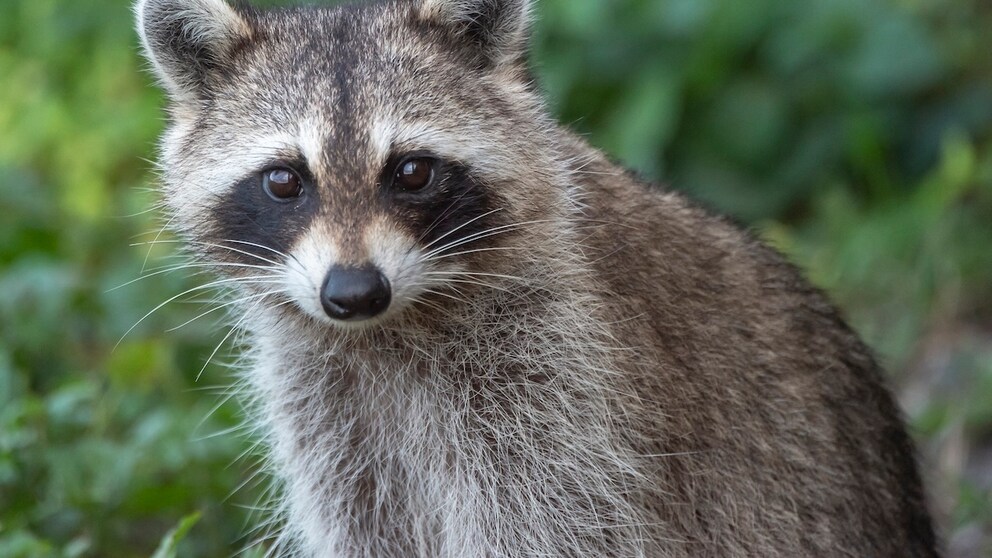
At least since the Disney film “Pocahontas” or at the latest Rocket Raccoon from the Marvel movies, many in Germany have had a soft spot for raccoons. This mix of “cheeky, smart, somehow human” just works—and when TikTok videos appear showing a raccoon trying to wash its cotton candy, only for it to dissolve to its utter despair, some people are smitten: How cute would one be as a pet? But can you keep raccoons as pets here? PETBOOK took a close look at the situation.
Still Wild, Even When They’re in the Living Room
On social media, raccoons (Procyon lotor) seem like perfect pets: They “wash” their food, pad around the living room with their nimble paws, and look simply adorable with their black face mask and mischievous grin. But as cute as the videos—mostly from the U.S.—are, the legal and animal welfare aspects are quite different.
The small bears seem playful—but they are wild animals with a lot of power in their heads and paws. They are extremely skillful, curious, and quick to ignore rules that we humans consider “self-evident.” And: Many who keep raccoons privately (or try to) report a turning point—at the latest with sexual maturity. Then the “clingy young animal” can become an animal that:
- does not accept boundaries
- reacts unpredictably
- bites or scratches
- is hardly “trainable”
The end result is often bitter: Overwhelm, surrender, kennel, rescue center—or in the worst case, illegal release or “disposal.”
Domestication Syndrome Proven in Raccoons
There is even research that at first glance seems to support what many think when watching these videos: Raccoons do benefit from humans and can get used to us. A 2025 study found evidence that urban raccoons differ physically from their rural counterparts—specifically: they have shorter snouts.
The team evaluated nearly 20,000 photos (Citizen Science via iNaturalist) and found an average of about 3.5 percent shorter snouts in raccoons from human-proximate, urban environments. This is part of a package of traits that researchers often summarize under the term “Domestication Syndrome”—typical changes that occur more frequently in domesticated animals (in addition to skull and pigment changes, often also linked to behavioral shifts such as reduced shyness).
The study, therefore, discusses whether urbanization could initiate something like early “self-domestication” in raccoons—not through breeding, but through natural selection pressure in human areas, such as garbage and other food sources, as well as proximity and less flight behavior. But: This is not a free pass for the living room. Even the researchers emphasize that a shorter snout alone is not proof of beginning domestication—further traits and long-term genetic data would be needed for that. 1
Can You Keep Raccoons as Pets Here?
So the rule is: Even if raccoons change in cities, they are (still) wild animals. Their behavior, cleverness, destructive power, and possible aggression do not disappear just because a few TikToks are cutely edited.
The raccoon is therefore not a pet—and in Germany, you are not allowed to acquire one (new). Furthermore, it is considered an invasive alien species of Union-wide concern in the EU. And that is precisely why EU law applies—with quite clear consequences: For such species, EU-wide bans apply, including bans on keeping and breeding, as well as restrictions on trade and transfer.
The main basis is the EU Regulation (EU) No. 1143/2014. It states that listed invasive species may not be intentionally kept or bred (even “under lock and key”). This is precisely the core reason why private acquisition is practically excluded.
Are There Exceptions? Yes–but Not in the Classic “Pet” Sense
The regulation provides for transitional arrangements for animals that were lawfully in private possession before the bans. In this case, “old stocks” acquired before the regulation came into force must be approved by an authority, and their reproduction and escape must be prevented. Exceptions may also be granted for research institutions, rescue structures, and zoos under clear conditions.
In Germany, there are also strict regulations for keeping wild animal species, including small bears like raccoons. What is often referenced: the BMEL Mammal Report (2014).
Minimum requirements for raccoons include:
- Outdoor enclosures (minimum size) for raccoons/coatis: at least 30 square meters per pair (with height specification) and requirements for indoor enclosures, if necessary.
- Enclosure structure & needs: climbing opportunities/hiding places; water basin required; dry, draft-free sleeping/nesting boxes; requirements for escape-proofing.
- The report also includes an animal welfare recommendation with larger areas (e.g., 50 square meters per pair).
According to Section 2 of the Animal Welfare Act, an animal must be kept in a manner appropriate to its species and needs, which includes the above points. Additionally, the necessary expertise is required. Official veterinarians check this very specifically in practice.
What Cute Raccoon Videos Don’t Show

It’s (unfortunately) that easy to keep big cats in Germany
“I Found a Young Animal–Can I Keep It?”
Even in this case, there is no real exception. Many “motherless” young animals are not actually orphans. Raccoon mothers sometimes leave their young alone for long periods while foraging—even over 24 hours.
So if you find an injured or orphaned animal:
- First, observe, do not immediately collect
- Contact a wildlife rescue center or the responsible authority
- Especially important: Raccoons, as an invasive species, must not be simply released back into the wild
And: Depending on the federal state, hunting law may also play a role when raccoons are taken from the wild.
Conclusion
Even though initial studies show that urban raccoons change slightly physically, they are not “half domesticated”—but still wild animals. In addition, there is a clear legal situation in Germany and the EU. If you really want to help, you should not overlook the native wildlife, which is already threatened by raccoons.