


February 4, 2026, 1:43 pm | Read time: 5 minutes
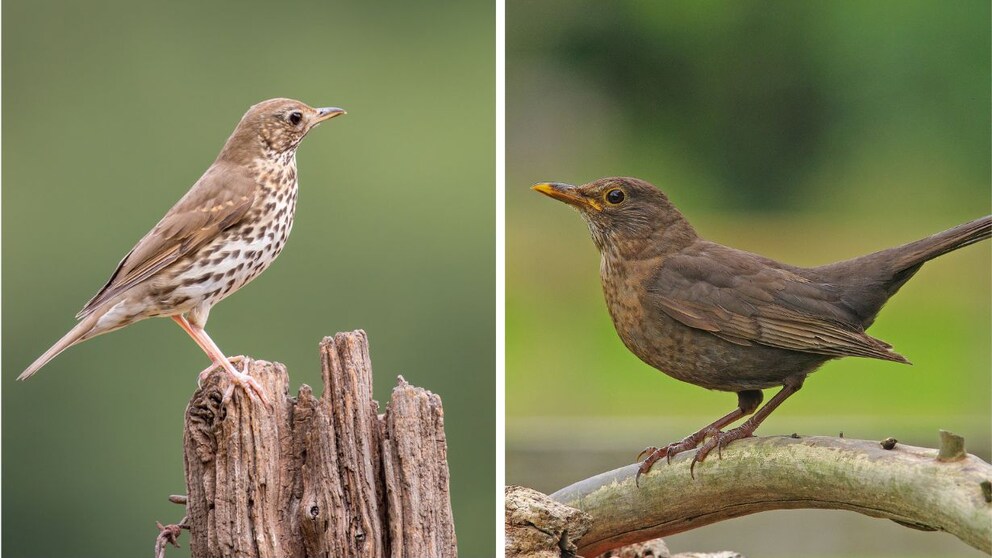
Many people wonder when looking at their garden or park: Is that a blackbird or a thrush? The surprising answer: There’s no real difference. The blackbird is a thrush. PETBOOK editor and biologist Saskia Schneider explains which other species belong to the thrush family and how to identify them.
Blackbird or thrush–is there a difference? “Thrush” refers to a bird family (Turdidae) in biology. This family includes nearly 200 species worldwide. The blackbird’s scientific name is Turdus merula, placing it in the group (genus) of true thrushes (Turdus). Its old German name “Schwarzdrossel” (black thrush) still reveals this relationship today.
The confusion mainly arises because the blackbird is often perceived as its own bird species in everyday life–while other thrushes like the song thrush, mistle thrush, or fieldfare are less known. Biologically correct is: Every blackbird is a thrush, but not every thrush is a blackbird.1
These bird species belong to the thrush family
In Germany, six species of the so-called true thrushes (genus Turdus) are regularly found: 2
- Blackbird (Turdus merula)–the most well-known and common species
- Song thrush (Turdus philomelos)–smaller, heavily spotted, with a distinctive song
- Mistle thrush (Turdus viscivorus)–our largest thrush
- Fieldfare (Turdus pilaris)–often seen in flocks, gray head
- Redwing (Turdus iliacus)–primarily a winter guest, with rusty flanks
- Ring ouzel (Turdus torquatus)–rare, with a distinctive light breast band
All these species are closely related but differ in size, coloration, habitat, and behavior.
How to distinguish blackbirds from other thrushes
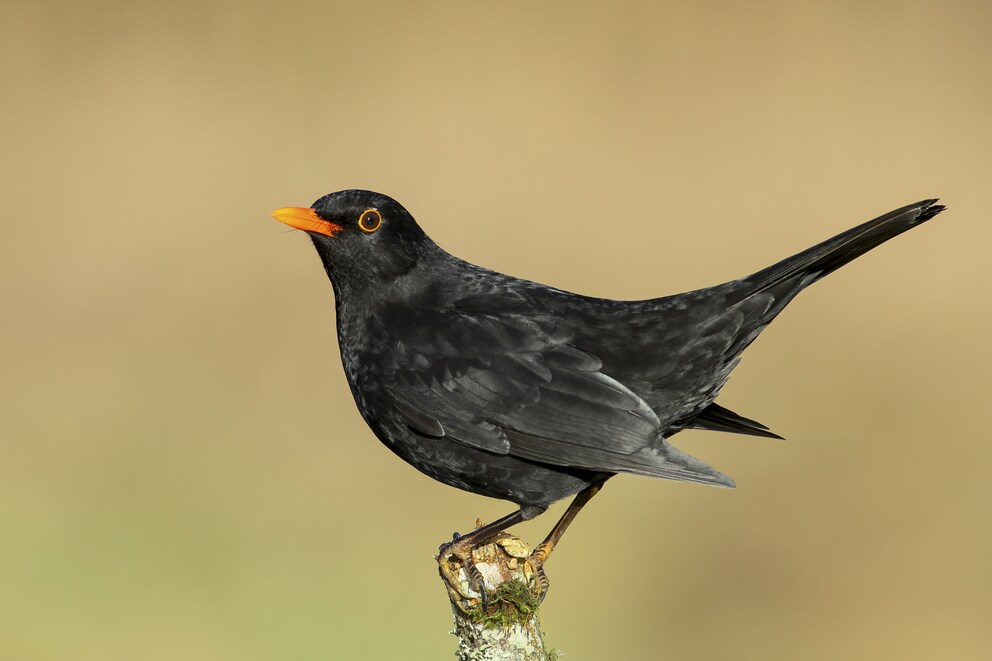
The male blackbird makes it easy for observers: It is deep black with a bright yellow beak and a yellow eye ring–a unique feature among native thrushes.3
It gets trickier with the female blackbird. It is brown with a slightly streaked, lighter breast and can be mistaken for other thrushes at first glance. Here, details help: 4
- Size: Blackbirds are larger than song and redwings but smaller than mistle thrushes
- Breast pattern: Female blackbirds are less strongly and more diffusely spotted
- Behavior: Blackbirds are often seen alone or in pairs, frequently hopping on lawns
- Habitat: Few other thrushes are as commonly found in cities and gardens
A sure sign: Only in blackbirds do males and females differ so distinctly in appearance.
Do blackbirds and thrushes eat the same thing?
Blackbirds and other native thrush species have a very similar diet, as they are soft food eaters. They find most of their food on the ground: earthworms, insects, their larvae, and snails are at the top of the menu. With their strong, versatile beaks, thrushes can search the ground and leaf litter for prey. Song thrushes are particularly known for their “anvils”–hard stones where they crack open snail shells to access the nutrient-rich contents.
The food supply changes with the seasons: In summer and fall, berries, fallen fruit, and other fruits play an important role. Blackbirds are particularly flexible here, using not only berry bushes but also compost heaps or fallen fruit under fruit trees. In winter, when the ground is frozen and insects are scarce, many thrushes rely more on plant-based food. Blackbirds are often seen at feeding stations, where they eat raisins, apple pieces, or oats. Overall, the differences are more in the details–blackbirds and other thrushes generally eat very similarly.5
Why Robins Are Seen More Often in Winter Than in Summer?
Why Birds Suddenly Shred Crocuses
Can you distinguish blackbirds and thrushes by their song?
Absolutely–the song is even one of the best distinguishing features.6
- Blackbird: very melodic, fluting, varied song with clear pauses; often heard in the morning and evening
- Song thrush: also melodic, but with a peculiarity: song motifs are repeated two to four times
- Mistle thrush: loud, somewhat harsher, less variable, often heard very early in the year
- Fieldfare: rather rough, chattering call, little song
- Redwing: high, thin “ziieh” call, especially at night during migration
Those who listen regularly quickly recognize: The blackbird usually sounds like a solo artist, while the song thrush is more like a musician with a loop.
How to support blackbirds and thrushes in the garden
Those who want to support blackbirds and other thrushes in the garden can achieve a lot with simple measures. A natural garden is especially important. Leaves should not be removed everywhere, as thrushes find insects, worms, and other small animals there. Hedges, shrubs, and dense bushes not only provide food in the form of berries but also offer protected nesting sites. Blackbirds often nest surprisingly low–sometimes even in flower boxes, on porches, or under garden sheds.
Open or short-cut lawns are also helpful, as blackbirds can search for earthworms there. In the cold season, the birds appreciate additional food. Since blackbirds prefer to feed on the ground, soft food like oats, raisins, or apple pieces should be offered close to the ground and cat-safe. A shallow water dish for drinking and bathing is valuable year-round–especially in hot summers and during frost.
It’s also important to avoid chemical aids: slug pellets, insecticides, and other poisons not only harm the direct food source but can be life-threatening for the birds themselves. Creating a bird-friendly garden not only helps blackbirds and thrushes but also strengthens biodiversity right at your doorstep.