

March 25, 2026, 11:52 am | Read time: 5 minutes
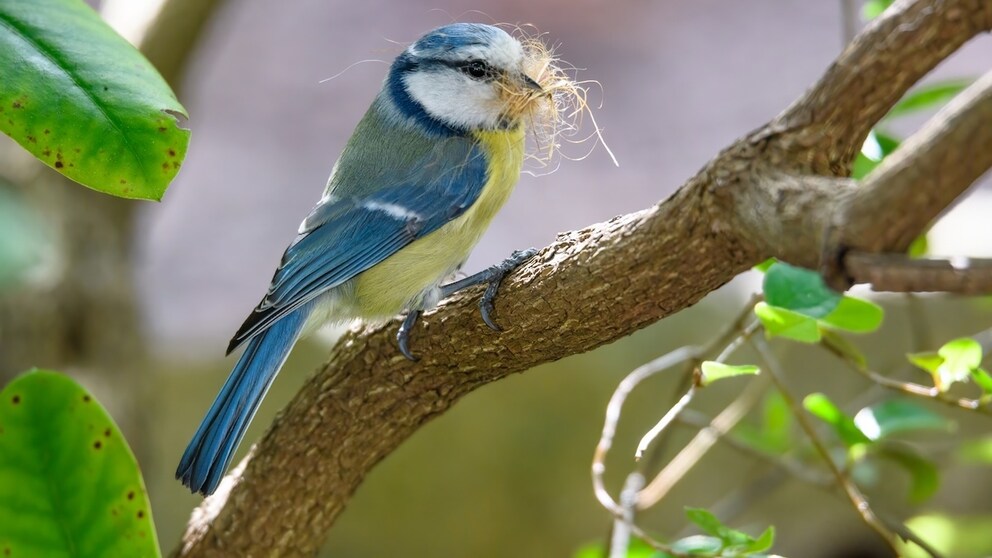
What looks like carelessly discarded trash might have become a survival strategy for urban birds like blue tits: cigarette butts in nests. But what does it mean for chicks when their home smells of cold smoke and is laden with toxins? Are they lacking suitable, “clean” nesting material? Or are they deliberately using human waste? A study aimed to find out.
Birds Get Creative in Nest Building
Birds actively design their nests and use materials purposefully—often with functional benefits. It’s already known that blue tits (Cyanistes caeruleus) incorporate fresh, aromatic plants whose scents can deter parasites. This behavior is interpreted as a form of “self-medication.”
In cities, however, birds have access to additional materials, including human waste. Cigarette butts are particularly interesting to them: They contain nicotine, a substance with insecticidal properties. At the same time, they are heavily contaminated with chemicals and contain thousands of potentially harmful substances like heavy metals or carcinogenic compounds.
Previous observations showed that some bird species already incorporate cigarette remnants into their nests. It was suspected that this could reduce parasites. However, it was unclear whether this effect also occurs in cavity nesters like the blue tit and whether measurable advantages—or disadvantages—result for the young birds. A research team led by Michał Glądalski from the University of Łódź (Poland) has now investigated this and published their study in the May 2026 issue of the journal “Animal Behaviour.”
Do Cigarette Butts Harm Blue Tits?
The focus was on whether this unusual choice of material—often observed in cities—serves a function. To do this, researchers compared natural nests, nests with added cigarette butts, and completely replaced, sterile nests. Various health parameters of the nestlings and parasite infestation were measured.
The field study was conducted in spring 2024 in two areas near Łódź: a city park and a forest area. A total of 33 blue tit nests were examined. The nests were randomly divided into three groups:
- Control group: unchanged nests
- Cigarette group: addition of two smoked cigarette filters on days 5 and 10 after hatching
- Artificial nest group: replacement of the natural nest with a sterilized nest made of moss and cotton
At 13 days, several health parameters were measured in the nestlings:
- Hemoglobin (oxygen transport in the blood)
- Hematocrit (proportion of red blood cells)
- Glucose (blood sugar)
- Wing length as a growth indicator
Additionally, after fledging, the nests were collected and systematically examined for parasites such as mites, fleas, ticks, and fly larvae. All interventions were carried out under official approval and with measures to minimize stress for the animals.
Nicotine as an Insecticide?
The results present a nuanced picture. On one hand, blood values improved. Nestlings in both experimental groups had significantly higher hemoglobin levels.
- Control: 114.8 g/L
- Cigarette nests: 128.3 g/L
- Artificial nests: 138.9 g/L
The hematocrit value was also increased:
- Control: 40.4 percent
- Cigarette nests: 44.2 percent
- Artificial nests: 44.3 percent
These values indicate better physical condition, as more red blood cells improve oxygen transport. There were no significant differences in glucose levels between the groups. Wing length and thus growth showed no differences between the control group and the cigarette butt group. Only in the artificial nest was the number increased (40.4 mm compared to 38.8 mm in the control).
Particularly interesting was the parasite infestation. It was highest in natural nests, less in nests with cigarettes, and almost nonexistent in the sterile control group. Notably, fleas and fly larvae were significantly reduced in artificial nests. In cigarette nests, there was only a weak, partially non-significant decline.
A Matter of Flexibility
The study provides evidence that cigarette butts in nests might serve a similar function to aromatic plants: They may act as a kind of “natural insecticide.” Nicotine and other substances could deter parasites or disrupt their development. Even a moderate reduction in parasites can improve the health of young birds, as there is less blood loss and reduced stress.
The significantly better values in sterile nests also show how strongly parasites can influence development. When they are almost completely absent, the young birds even benefit in growth. The results suggest that urban birds may flexibly respond to new environmental conditions and even functionally use human waste.

Smoking Can Be Deadly–Even for Pets
Black widows use the smell of cheese feet to attract males
Long-Term Effects of Cigarettes Not Captured
Despite the intriguing results, there are important limitations: First, the sample size of 33 nests was relatively small. Some effects—such as the reduction of certain parasites by cigarettes—were only weakly pronounced or statistically unclear.
Second, cigarette butts contain numerous toxic substances. Previous studies show they can cause genetic damage (genotoxicity). The present study only captures short-term effects on nestlings, not long-term consequences for survival or reproduction. Further research is needed here. Third, it remains unclear whether the behavior is actually deliberate (“adaptive”) or rather occurs by chance, such as due to the availability of material in cities.
Conclusion
The study shows: Cigarette butts in nests can be associated with better physical condition of blue tit chicks in the short term—presumably through a partial reduction of parasites. However, this effect is limited and significantly weaker than in completely sterile nests. At the same time, the contained pollutants pose potential risks, the long-term effects of which are still unclear. For research, new questions arise about the adaptability of urban birds. For animal lovers, the insight remains ambivalent: What seems like a clever trick could prove problematic in the long run. 1